
When do the clocks go back? Here's the exact time the clocks change and British Summer Time ends in 2026

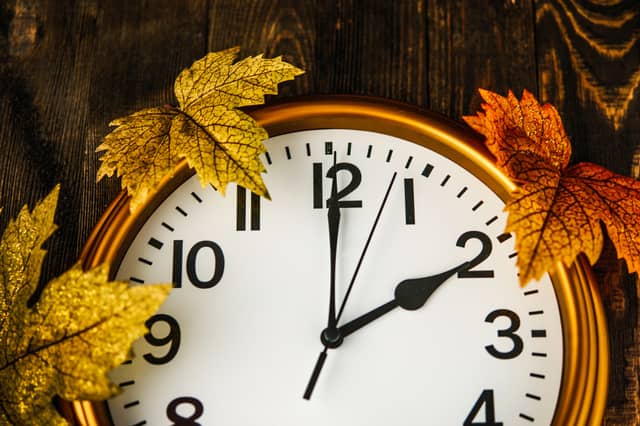

Here is the exact time clocks in the UK will “fall back” this year.
August has now slipped away, with the nights already becoming darker far earlier than in the summer.
As the days get shorter once more, questions about when the clocks change in the UK begin to play on people’s minds.
For some, autumn has already arrived - depending on how one prefers to define the season - while for others this is marked either by indicators such as trees being stripped of leaves, or even the autumnal equinox, which will take place later this month.
READ MORE: When does summer 2026 end? Here's when it's officially autumn - meteorologically and astronomically
Although the clocks change every year, exactly when this takes place varies, leaving many of us becoming confused, especially when it comes to losing an hour.
As the UK prepares to “fall back”, here is everything you need to know about the clocks changing in 2026.
When do the clocks go back 2026?
The clocks will go back at 2am on Sunday, October 25 2026.
It is the official end of British Summer Time (BST), also known as Daylight Saving Time, and the return of Greenwich Mean Time (GMT), with the change always taking place in the middle of the night to minimise disruption to schools and businesses.
Each year, the clocks go back on the final Sunday of October, which also means that Halloween is just around the corner.
What if I’m working when the clocks go back?
If you are among the unfortunate people who will be working when the clocks go backwards this year, it likely means you will have to work an extra hour. However, this will vary based on place of work and as such, employees should be sure to check in with management - and any contracts - if there is any uncertainty.
Make sure you don't miss a moment of breaking news from across Scotland by signing up to our free newsletter here.
Will my clock automatically change?
If you are worried about missing an alarm or being out of sync with the rest of the world, you can be reassured as smartphones, computers and most internet enabled devices will automatically update.
This likely will not apply to vehicles, ovens (and other kitchen appliances) or any other analogue clocks, which means that unless you plan on waiting for the clocks to go forward next Spring, you will need to change these manually.
Why do the clocks go back?
In the UK, the only reason the clocks go backwards is because of a political campaign which was first launched in the early 20th century.
In 1907, William Willet argued that the UK should put the clocks forward in spring, and back again in the autumn. He was an early supporter of British Summer Time, but his campaign was more complicated than the system the UK currently follows.
Willet, who is the great-great-grandfather of Coldplay’s Chris Martin, died in 1915 but it wasn’t until a year later Parliament passed the Summer Time Act to establish the practice of putting the clocks forward. It was enforced largely as a result of World War One and, in part, based on the practices of other European countries.
While we have been changing our clocks in the UK for centuries, it isn’t without controversy with many opposing the practice due to how it disrupts nature and the scant scientific evidence to support its benefits.
Comments
Want to join the conversation? Please or to comment on this article.