
Tour de France to generate 'tens of millions' for Scottish economy

The Grand Départ will take place in Edinburgh
Hosting the Tour de France is set to generate tens of millions of pounds for the Scottish economy, tourism experts have said.
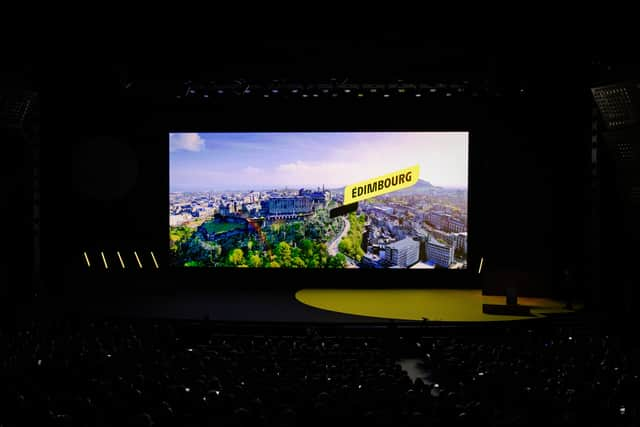
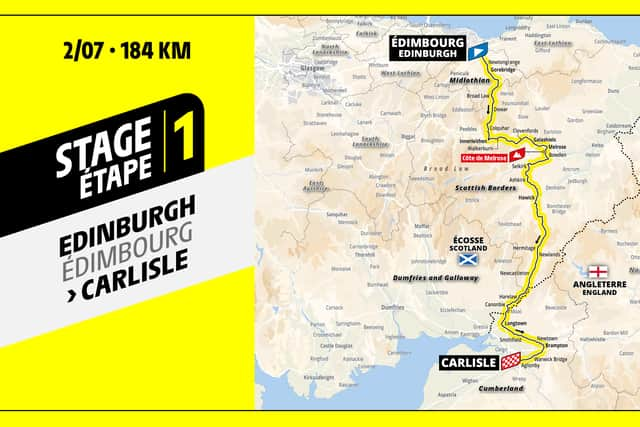
The world’s third biggest sporting event after the World Cup and Olympics is to start in Scotland before touring the UK, with the Palace of Holyroodhouse in Edinburgh hosting the “Grand Départ” on 2 July.
Chris Greenwood, a senior research fellow in travel and tourism at Glasgow Caledonian University’s Moffat Centre, said Edinburgh and the Borders could both see an immediate economic boost from fans travelling to the event - but warned that the cost of living crisis could mean the income generated by local businesses could be lower than at previous host locations, as domestic visitors cut back on spending.
The UK Government has forecast more than £150 million in economic benefits across Great Britain from the combined men's and women's Grand Départs in 2027, while the 2014 Tour de France Grand Départ in England was reported to have generated more than £128 million in economic benefits across its host areas.
Separately, analysis carried out last year by Chinese university researchers found the event is typically worth 20 to 50 million euros to the host city in the short term, among which accommodation, catering and retail account for more than 75 per cent.
After leaving Edinburgh, riders will head through Newtongrange and Gorebridge in Midlothian, then Innerleithen, Galashiels, Melrose, Selkirk, Hawick and Newcastleton in the Borders.
Mr Greenwood pointed to previous large-scale events hosted in Scotland in recent years, including the Commonwealth Games in Glasgow and the UCI Cycling championships, saying the Tour would generate “tens of millions for the economy”.
However, he warned the UK Government figures and the previous benefit from the same event in England should not “be interpreted as a forecast of the economic contribution to Scotland alone”.
He said: “Clearly, hosting the start of the Tour de France will have a big impact, it is up there with events like the Olympics. The Tour de France Grand Départ offers Scotland an opportunity to generate economic activity on a different scale, given the event's international profile and its potential to attract spectators, teams, media, and visitors.”
He said the overall impact of the event, which will also travel through Cumbria and Liverpool, as well as Welshpool in mid Wales and Cardiff, could be close to the 101m euros generated in Denmark in 2024. However, he said a change in the cost of living - sparked by a rise in energy and food prices - could impact the number of domestic visitors.
He said: “The event will probably have greater impact on Scotland as a destination and as a host of major events. Yes, it will draw people in, with people who will come to the event and stay on for a coupe of days, but it won’t have multiple rounds like the Commonwealth Games or the cycling championships. There will be an impact of that, but its legacy will more be making people think of Scotland next year for holidays.
“It will be comparable to Denmark, but if you look at tourism statistics this year, there is strong international visits, but the domestic market has really been influenced by the cost of living. the Tour de France will act as a catalyst to draw in international visitors, which will be a positive, but the unknown will be the domestic market.”

He added: “For Scotland, the opportunity extends beyond expenditure during race week. The event could support overnight stays, encourage visitors to explore destinations along the route, provide business for local suppliers, and raise the international profile of Scotland as a tourism destination. It may also create opportunities to encourage cycling participation and develop longer-term cycling tourism.
He added: “The key measure of success will therefore be not simply how much money is spent during the Grand Départ, but how much additional economic value it creates for Scotland, how widely that value is distributed among local communities and businesses, and whether the event delivers a lasting tourism and community legacy.
“The scale of the eventual benefit will depend on how many additional visitors the event attracts, how long they stay, how much they spend and how much of that expenditure is retained within Scotland. A robust assessment must also account for displacement, economic leakage and the costs of staging the event.”
Cities typically pay around six million euros to event organisers the Amaury Sport Organisation (ASO) for hosting the event - with extra costs such as policing of the event on top of that. The Scottish Government has already planned an investment of up to £9.25m, while the City of Edinburgh Council has earmarked up to £1.7m to be spent on the race from council reserves, with plans to backfill the spend with money from the city’s Visitor Levy.
In a paper entitled Economic Benefit Evaluation of the Host City of the Race: A Study on the Driving Mechanism of the Tour de France on Local Tourism and Consumption, the researchers from Guanghua Academy, Shanghai, Zhengzhou University and Beijing Bayi School, said: “In the long term, the brand value and tourism appeal of the destination will be significantly enhanced through global media exposure (with an annual audience of over 3.5 billion people) and infrastructure upgrades.
It added that large cities benefit more from the presence of international tourists, high-end consumption, and media exposure to enhance their image as “dynamic cities”.
The researchers said: “This study points out that the Tour de France has a dual effect of ‘short-term direct driving and long-term indirect empowerment’ on local tourism and consumption. In the short term, the direct income of a single race segment is 20-50 million euros, with over 75 per cent coming from the accommodation and other service industries. In the long term, the brand value is enhanced through exposure to 3.5 billion people and infrastructure upgrades.”
Comments
Want to join the conversation? Please or to comment on this article.