
Readers' Letters: SNP must take some blame for NHS Grampian problems
Readers react to the NHS Grampian report
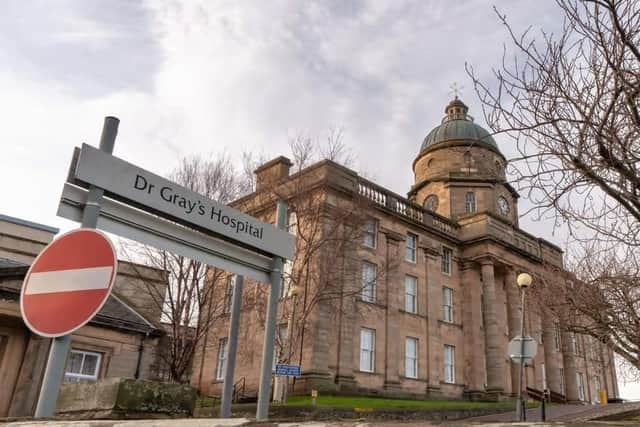
It is noticeable that in the fallout over the shocking report regarding NHS Grampian little mention has been made by the SNP about its own role in all of this (“NHS board given overhaul in wake of damning report”, 13 November).
Is anyone surprised by this? We have three well-paid, SNP health ministers so Scots might just be wondering what they do all day? The Grampian crisis is not alone. There is a nationwide GP crisis and a general hospital crisis, with Glasgow's Queen Elizabeth University Hospital being the most prominent.
It appears the SNP is not on top of any of these pressing health issues. The SNP also has seen A&E four-hour patient waiting times go from near zero when it first came into office 20 years ago to thousands now. And does anyone remember the SNP's promise of a patient Treatment Time Guarantee? The SNP is failing Scotland very badly over the Scottish NHS and this is but one aspect of its brief.

The only “independence” Scotland really needs is from the faltering grip of the SNP.
Gerald Edwards, Glasgow
Creeping threat
It seems clear that with his adept use of smoke and mirrors Hugh Pennington (Letters, 11 November) could have enjoyed a career in politics as an alternative to his distinguished career in academia.
It is not raising a “red herring” to note that “privatisation of the NHS in England negatively impacts on NHS funding in Scotland”. Barnett consequentials ensure that the so-called “block grant”, which only returns a fraction of Scotland’s total tax take to the Scottish government for spending in Scotland (not the “massive subsidy” claimed), is reduced proportionately. Of course the private sector has always provided a range of things, from pharmaceuticals to surgical instruments, but in recent years, especially in England, there is an increasing reliance on private health service providers.
No amount of political deception can hide the fact that the NHS in Scotland, as experienced by most of us today, is also under threat of creeping privatisation in the provision of health services and if we don’t speak out now then private treatment/care will be the only option for the patients of tomorrow.
Stan Grodynski, Longniddry, East Lothian
Crackle poppycock
An interesting take on events from Joyce McMillan (Perspective, November 13). She mentions how Kellogg's announced that Rice Krispies “on this side of the Atlantic will no longer be made from whole rice grains” and cites the company claiming that “changing weather” in Europe is the cause. It would help if she had explained that the company who make Rice Krispies in Europe is a different company from the US Kellogg's and that the US end continues to use rice! “Climate change” is the cause, she says.
Regarding the regular supplies to which consumers “have become accustomed over the last 80 years”, reports from earlier decades show the rice crop regularly suffered from what the Press & Journal in 1938 called the weather “playing pranks”, with wildly varying rainfall, droughts etc. It isn’t some recent development.
At least the latest COP she mentioned didn't chop down virgin rainforest, or build motorways through it like last year’s. There will only be 92,000 delegates there, readers will be pleased to learn, but they will still have their big cars, their “aides” and their hotel aircon, you can bet. The only leader to attend is Andy Burnham, so little importance is attached to it by the people it's supposed to make change their ways.
Andrew HN Gray, Edinburgh
Steamrolling
I have noted the growing clamour of the so-called great and good, including my daily paper, claiming that the Brexit vote was a disaster for the UK.
Many fingers have been pointed as to culprits who led the charge to leave, a move which has left us dangling, poor and unloved while the EU powers ahead making its mark on the world and leading in all aspects of manufacturing and research.
Those who cannot understand the rationale of wanting and actually needing their country to take decisions regarding various important issues facing our society, not least defence, energy, wealth and job creation, rush to abrogate those hard decisions and shelter under the benevolent umbrella of our near neighbours.
The forgoing picture of the UK today is one that the vast majority of our visual and print media seem to be picking up on, particularly following the rise of the former mayor of Manchester and his rush to shed responsibility for getting the UK back on its feet.
Why Prime Minister Andy Burnham has suddenly become recognised as a beacon of light and understanding is not hard to understand, coming as he does from a highly successful stint as Mayor of Manchester, and of course, there is his connection with the Tony Blair and Gordon Brown era in which so much of our present societal fabric was founded.
Parachuted in to save the Labour Party, PM Burnham is hellbent on using a throwaway in their manifesto to drag us back into the claws of the EU.
Billions of our money, open borders, absolutely no influence on decision making – all of this will not stop the madness infecting these people who, there is no doubt in my mind, were set to sabotage the Brexit result from the start and now have the power to move on with their project.
It’s a lot like Trumpism, steamrolling the country down a path we voted to leave without a clue as to how it will help our country or its people.
A Lewis, West Linton, Scottish Borders
Dying EU
I seldom agree with Gerald Edwards, but he's right to criticise Labour's Michael Marra's Euro-zeal (Letters, 12 November); the EU has indeed "changed since we were a member – and not for the better".
This is particularly true of its now blatant militarism, stemming from the 2007 Lisbon Treaty, its seeds planted by the current Polish Foreign Minister and arch-Russophobe Radosław Sikorski.
The EU will crumble a few years hence; the signs are there for all but the wilfully blind. To stave off bankruptcy, France will exit the Euro-zone when Marine Le Pen becomes president next spring. Germany's next government will be AfD-led and also leave, while demanding the democratisation of the Euro-Parliament to end the Commission's dominance there and finally give it a modicum of legislative power (otherwise it'll be “Dexit”).
Meanwhile BlackRock's man in Berlin, the horribly unpopular Friedrich Merz, is threatening to delay approval of the EU's upcoming seven-year budget unless the other member-states kow-tow over continued billions for his pal Volodimir Zelensky. Merz is deliciously hastening the EU's demise.
George Morton, Rosyth, Fife
Burnham hypocrisy
In October’s budget, the UK government announced a major pivot toward defence and military investments while placing tighter spending controls and capital prioritisation across other areas of government and public services. Acorn, Scotland’s only large-scale carbon capture project, has also been left out of the budget, despite former Energy Secretary Ed Miliband promised it £200 million last year.
While Westminster is “prioritising delivery of mature carbon capture, usage and storage (CCUS) and hydrogen projects at the Teesside, Merseyside and North Wales clusters, maintaining grant funding for the Viking cluster”, Scotland remains the only industrial centre where grants have been replaced by dim prospects and vague promises.
Andy Burnham's attitude towards the country raises more and more questions. When it comes to building AI data centres that could cause huge climate damage, Scotland is a great place to host them. But when it becomes necessary to choose whose projects should remain in the government funding programme, Scotland suddenly becomes unimportant to Westminster.
How much longer can one tolerate such blatant hypocrisy?
Duncan Burgess, Inverness
Good value?
If I may repeat an entry to Now & Then from The Scotsman (13 November).
2001. The cost of the Scottish Parliament building at Holyrood soared above £240 million, six times the original estimate. It eventually topped £400 million.
Does anyone consider it money well spent or was it an indication of the future capability of the occupants?
Charles Lowson, Fareham, Hants
Just the ticket?
John Swinney, at the recent SNP conference, announced the roll-out of the £2 bus fare for all of Scotland but the truth is that at the cost of £72 per head in Scotland and given the SNP budget, this is totally unaffordable.
This is John Swinney at his very worst, making headline news announcements to standing ovations at the SNP conference without properly costing the scheme and then having to backpedal his way out of it.
Dennis Forbes Grattan, Bucksburn, Aberdeen
Write to The Scotsman
We welcome your thoughts – NO letters submitted elsewhere, please. Write to [email protected] including name, address and phone number – we won't print full details. Keep letters under 300 words, and in the body of the email – no attachments – and avoid 'Letters to the Editor/Readers’ Letters' or similar in your subject line. If referring to an article, include date, page number and heading. No poems.
Comments
Want to join the conversation? Please or to comment on this article.