
Even as climate change hits food security, SNP and Labour are backsliding on net-zero – Joyce McMillan
Millions of voters across the West are beginning to understand that political power is currently in the hands of those not fit to wield it


Last week, the world’s most famous breakfast cereal company, Kellogg’s, announced that in future, Rice Krispies on this side of the Atlantic will no longer be made from whole rice grains, but from a mix of rice flour, cornflour, and wheat products.
As straws in the wind go, this might seem more comic than tragic. The cereal’s fans report its famous snap, crackle and pop is sadly diminished, while its gluten-free status has gone. Kellogg’s minced no words in its explaining, citing “changing weather” in countries where most of Europe’s rice is grown as causing problems with both quality and price.
It’s fair to say that most Western consumers are not prepared for this kind of disruption to the food they eat, or to the plenty and variety to which they have become accustomed, over the last 80 years. Yet according to Foreign Secretary Ed Miliband, speaking at the COP 31 climate summit in Antalya this week, the world’s failure over the last 25 years to slash its carbon emissions, and seriously tackle the threat of climate change, means that uncertain food supply is just one of the many growing threats to national security now faced by all countries, as a result of the climate crisis.
These also include the huge costs of ever-more frequent flood and fire events, and the politically incendiary impact of climate breakdown on migration, as people flee areas that are no longer habitable. And as Ed Miliband forcefully pointed out, the irony is that the continuing dependence of Western economies on gas and oil also increases short-term uncertainty and insecurity, as prices fluctuate wildly with the growing number of conflicts across a destabilised planet.
READ MORE: Like many young people I lost faith in climate politics. Could going to COP31 change my mind?
The secret twins of social democracy
The Foreign Secretary went to Antalya, in other words, to make what seems to him – and other world leaders – an unanswerable case for rapid, decisive action to end oil and gas burning, and to accelerate the global shift towards cleaner, cheaper and more resilient forms of renewable energy; only those who believe that the entire scientific consensus on climate change is wrong, or a conspiracy, can seriously disagree with much that he has said.
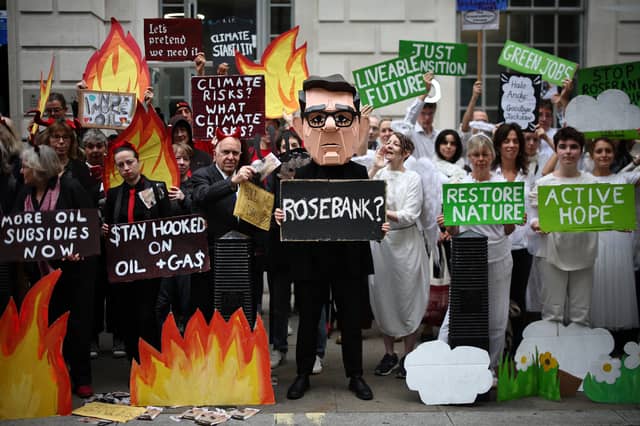
Which makes it all the more difficult to listen to the lamentable quality of the current debate on climate and energy issues in the UK. That debate now largely seems to consist of Conservative and Reform opposition speakers ganging up to mock and discredit the climate and net-zero targets established by both Scottish and UK governments; while the Labour and SNP governments in London and Edinburgh reprise their double act as the secret twins of embattled UK social democracy, both blustering and prevaricating over the future of the Rosebank oil field, and back-pedalling on previous net-zero targets.
The mood, in other words, is a Trumpian one, with the majority apparently agreeing that we should drill, baby, drill for whatever fossil fuels are left in our waters, while consoling ourselves over broken climate commitments with arguments about energy security, pricing and employment so feeble that they beggar belief; indeed numerous fact-checking services have made it clear that these arguments for Rosebank, and for the Jackdaw gas field, are completed unsupported by evidence.
Made in China
The only half-decent argument for exploiting remaining UK fossil fuel resources lies in the potential tax revenue from them, which both Scottish and UK governments say should be used to invest in the transition to a clean-power economy. It is, though, difficult to place any faith in fine words on that subject from a pair of governments that have drastically failed to ensure investment in British supply-chain manufacturing for the emerging renewables industry, which is now almost entirely dependent on hardware and technology manufactured elsewhere, often in China.
So this is where we are; with the loudest voices in politics shouting nonsense about how finding and burning more fossil fuels is still a good idea, while the ‘just transition’ to a renewables-based economy is so poorly handled by our governments that many grassroots communities are now in full rebellion against it, and North Sea workers in Scotland who know that the glory days of oil and gas are over are left campaigning for nothing but reopening one last modestly-sized oil field in the far-away North Atlantic.
It’s a debate that insults coming generations, who will suffer beyond what we can easily imagine for the greed, cowardice, and money-grubbing short-termism of too many of those currently in power; and as Ed Miliband clearly knows, it’s also a debate that insults the millions, mostly in poorer countries, who are already on the front line of climate breakdown, struggling with failing crops, repeated weather crises, and soaring food prices.
Ecocidal doom-loop
We all know, of course, where Ed Miliband stands in the strange world of mainstream UK politics; the man who was mocked as unfit to be Prime Minister because he messily ate a bacon sandwich, and whom the all-powerful ‘bond markets’ effectively forbade as Andy Burnham’s Chancellor, preferring the laddish right-winger John Healey.
To judge by the current levels of unrest now exploding across Europe, though – as well as the massive defeat of Trumpism in the US mid-term elections, and the unexpected re-election of President Lula of Brazil – millions of voters across the West are beginning to understand that the power to shape such decisions and perceptions is currently in the hands of those not fit to wield it.
If that realisation guarantees yet more political instability and upheaval in the short term, it also possibly represents our last best chance of escaping from the ecocidal doom-loop in which we currently seem trapped; and beginning to build new systems for our century, that genuinely serve both the people, and the planet on which we depend.
Comments
Want to join the conversation? Please or to comment on this article.