
NHS Grampian accused of putting children ‘at risk’ after damning report reveals serious failings

NHS chiefs in the North East have been heavily criticised for a lack of governance causing “recurring patterns of harm”.
John Swinney has insisted he has faith in a new-look NHS Grampian board following a swathe of management changes triggered by a damning report into the leadership.
It comes after NHS Grampian has been accused of putting children’s lives “at risk” after serious failings were highlighted in the bombshell inspection report.
Healthcare Improvement Scotland (HIS) criticised bosses at health board and found there had been “recurring patterns of harm” for patients.
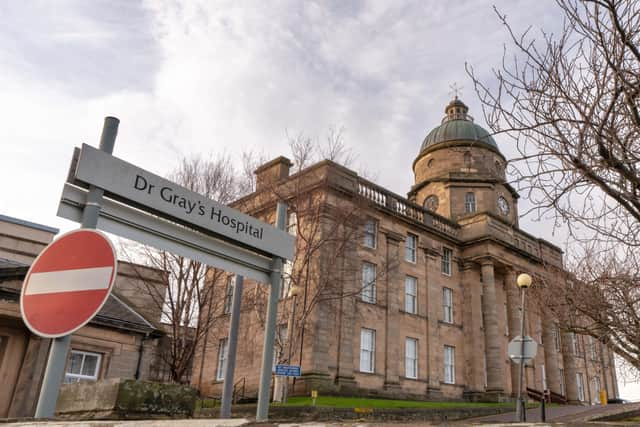
In the report, the regulator said it has lost confidence in NHS Grampian’s leadership at Dr Gray’s Hospital in Elgin after staff continued to operate on children despite being told to stop.
The findings also set out concerns over the safety of patients and the quality of care at the hospital.
HIS highlighted serious weakness in leadership and management of the medical workforce at NHS Grampian including significant concerns over how doctors are being managed.

The report highlights a “recurring pattern in which concerns generate reviews, action plans, additional structures or workarounds but this has not successfully resolved underlying causes of difficulties”.
It adds: “Particularly concerning are major weaknesses in learning from significant adverse events and the failure to escalate patient safety issues.”
The document also pointed to “serious concerns” following the death of a patient during surgery, with the watchdog finding a “major omission” in reporting by “not meaningfully examining the actions, clinical decision-making, operative techniques or judgements of the operating surgeons involved”.
In response to the damning report, Health Secretary Angela Constance told the new-look leadership of NHS Grampian to take “decisive and urgent action”.
Speaking at First Minister’s Questions, Scottish Labour leader, Michael Marra, warned that “children were put at risk”.
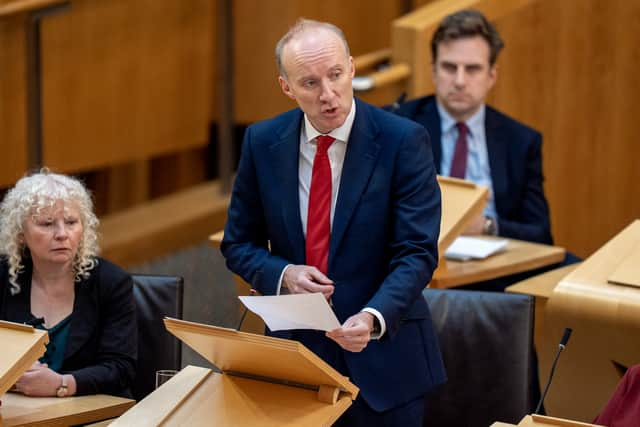
He added: "Parents of sick children will be horrified at today's inspection report for NHS Grampian. All parents will be shocked.
"At Dr Gray's Hospital, operations for sick children continued despite the fact they were known to be unsafe.
“I see absolutely no reason whatsoever that the board of NHS Grampian should remain in place. The First Minister should call for them to go and go now.
“There is a broader culture problem at the top of our health service that is not just contained to one region of Scotland.
“At the top of too many of our health boards there are managers that are not accountable to citizens. They are acting with impunity and are too often concerned with headlines rather than delivering care.”
In response, Mr Swinney acknowledged that the report makes for “appalling reading”.
He added: “It was crystal clear that the requirements to end the surgery in question for children at Dr Gray’s was not followed by NHS Grampian. That is reprehensible.”
“It is unacceptable that arrangements that should have been stopped for proper patient safety reasons were not stopped.”
Mr Swinney told MSPs that “there have already been changes to the leadership of NHS Grampian”, following the publication of the report.

Last month, it was announced that the experienced Professor John Connaghan has been brought in as interim chairman of the NHS Grampian board.
Acute medical director, Paul Bachoo and Dr Hugh Farrow Bishop, executive medical director, have left their roles at NHS Grampian in the wake of the report while Dr June Brown, executive nurse director, left in September.
Last year, it emerged that Mr Bachoo was the highest-earning NHS boss in Scotland with a £252,500 salary — almost £117,000 more than the First Minster.
Mr Swinney told MSPs that “a large proportion of the board has been replaced”.
“There have been changes made today in the senior leadership of NHS Grampian, which are necessary in my view, as a consequence of this report”, he added.
Asked by journalists at Holyrood whether he still had confidence in the NHS Grampian board, Mr Swinney said: “I do because a number of changes have been made in the leadership of NHS Grampian.
“We’ve got a very experienced chair in place, a large proportion of the board has been replaced, the chief executive is the one who initiated the Healthcare Improvement Scotland report and a number of senior changes have been made in leadership positions in NHS Grampian as a result of this report.
“That’s the type of change I expect to see happen to make sure that patient confidence can be delivered.”
Simon Watson, medical director of Healthcare Improvement Scotland, said the report identifies “recurring patterns of harm”.

He added: “It provides a clear diagnosis of significant problems in key aspects of clinical governance. There are findings that will make difficult reading for NHS Grampian’s leadership and will understandably raise concerns among patients, the public and staff.
“We found weaknesses in clinical governance systems, leadership and organisational oversight. These are essential for an organisation to provide assurance to patients, staff and the public about the safety and quality of care they provide.
“We were particularly concerned about problems in the way NHS Grampian investigates its most serious adverse events. These concerns were mostly focussed on the senior leadership of the organisation. The quality of NHS Grampian’s significant adverse event reviews are subject of further formal scrutiny by Healthcare Improvement Scotland. “
Chief executive of NHS Grampian, Laura Skaife-Knight, said: "The review has identified significant shortcomings, including longstanding weaknesses in our board governance and oversight, clinical governance and the way services work together in an integrated and supportive fashion across NHS Grampian.
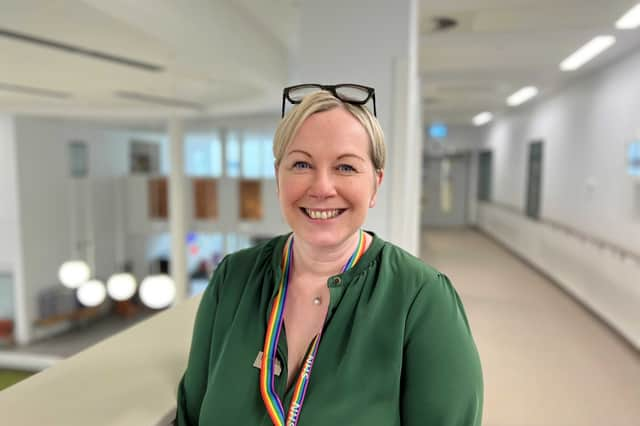
"Most concerning are the unacceptable delays in investigating and implementing learning from incidents involving patient care which can prevent us from making the changes necessary to keep patients safe."
Ms Skaife-Knight, who commissioned the report, confirmed the NHS Grampian board will consider the actions required.
Professor Mark Strachan, president of the Royal College of Physicians of Edinburgh, argued the report “raises very many serious concerns about clinical governance in NHS Grampian”.
He added: “The college has been concerned for some time about the quality of serious adverse event reviews across the NHS in Scotland. In particular, we have been concerned about a lack of external scrutiny of these reviews, the inconsistent training of health professionals who sit on such investigations, a lack of senior level monitoring and evaluation of actions, and a consistent failure to share lessons from such investigations across the NHS.
“There now must be a collective commitment across the NHS in Scotland to foster a culture of openness, accountability, continuous improvement and learning, rather than blame. This requires a shared agreement that learning from adverse events will lead to demonstrable changes in clinical practice, organisational processes and patient safety systems. This learning must not only be shared within the units or hospitals in which the serious incident occurred, but across the entirety of the NHS in Scotland.”
Comments
Want to join the conversation? Please or to comment on this article.