
Exclusive:A light shone on Edinburgh's 'real' Sherlock Holmes

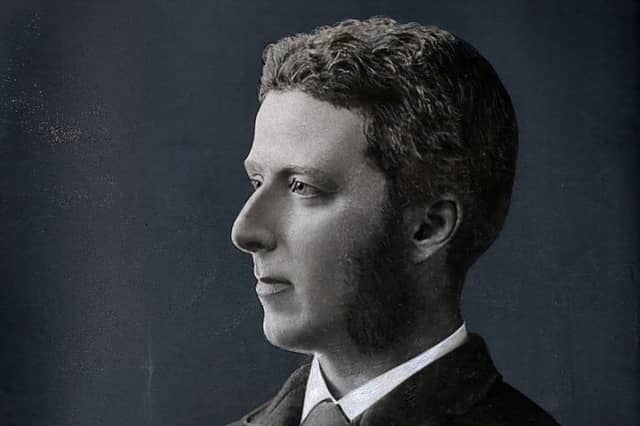

Biography details achievements of the ‘demon of diagnosis’
He was a preternaturally gifted surgeon and lecturer whose keen eye for the “little distinctions” in everyday people inspired one of literature’s most enduring creations.
Now, a new biography of Dr Joseph Bell, the pioneering medical figure upon whom Arthur Conan Doyle based Sherlock Holmes, has shed new light on his extraordinary career, as well as the bittersweet legacy of being bound to the world-famous fictional detective.
Although his achievements are less well known today, Bell is regarded as a pioneer of forensic pathology, with his skills, insights, and methodologies helping to shape the burgeoning field of criminology.
As a physician at the city’s Royal Infirmary, and lecturer at the University of Edinburgh’s medical school in the latter half of the 19th century, he blazed a trail in raising standards and instigating reform, embracing the likes of antiseptic surgery, and ensuring nurses received an education in surgical practice.
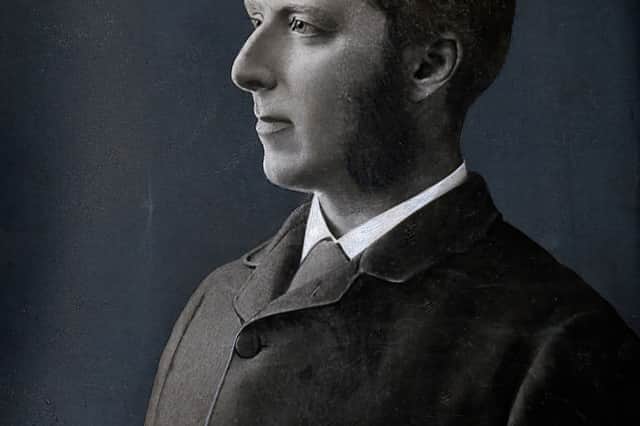
But his greatest talent was arguably the uncanny ability to derive conclusions from minor details that others might have dismissed as trivial, and in doing so, transform the business of diagnosis into a form of theatre.
Lindsey Fitzharris, the author of the new book, ‘Sleuth-Hound: The Case of the Real Sherlock Holmes’, points out that Bell treated every patient as a “text to be studied,” with symptoms divulging secrets, gestures disclosing clues, and minute details helping to decipher medical mysteries.
One on occasion, for example, he correctly identified one new patient as a non-commissioned army officer who had served in Barbados, on account of his air of authority, the fact he continued to wear his hat indoors, and symptoms of elephantiasis, a disease then prevalent in the West Indies.
Among those captivated by Bell’s blurring of the lines between diagnosis and detective work was a young Conan Doyle, who had enrolled in one of his extramural courses, and not long afterwards, became Bell’s outpatient clerk.
The work involved taking down details of the histories and complaints of scores of patients a day. Conan Doyle, Fitzharris writes, would frequently ask his mentor about details of cases, and Bell, using a phrase he favoured, would insist that his methods were quite “elementary.”
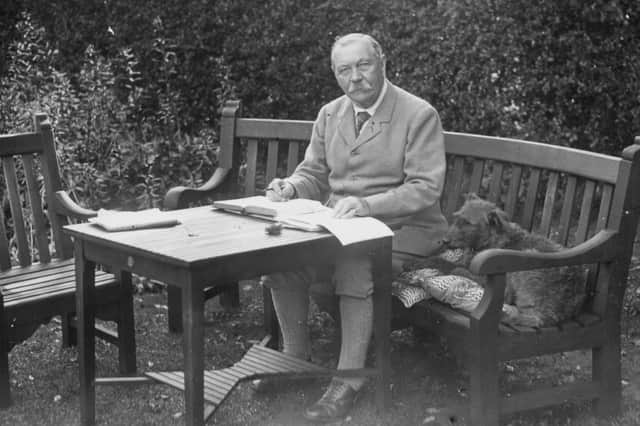
After the young medical student had forged a successful career as a writer, some of Bell’s observations were lifted lock, stock and barrel for Conan Doyle’s most famous series. One incident, where Bell could tell that a patient had walked via links land to arrive at his clinic on account of reddish clay on his boots - a terrain found in just one part of Edinburgh - was reproduced in ‘The Sign of Four’.
Fitzharris, an author and medical historian, said that without the inspiration of the lecturer nicknamed the ‘demon of diagnosis’, it was unlikely that the Sherlock Homes the world has come to know and love would even exist.
“Bell supplied the touchstone characteristic that set Conan Doyle’s creation apart from other fictional detectives of the era,” she explained. “By scrutinising a scratch on a desk, a trace of cigar ash, or the guttering of a tallow candle, Holmes - and Bell - could build a case from what seemed like trivialities.
“Their genius lay not in knowing everything, but in noticing what others overlooked and uncovering its meaning.”
Although Bell’s role in the creation of Holmes was initially a secret, an interview Conan Doyle gave to The Strand, in which he credited a former professor of medicine in Edinburgh for inspiring his sleuth, opened the floodgates.
.jpeg?trim=833,0,833,0&crop=&width=640&quality=65)
When Bell wrote to his former student to ask if it was true, Conan Doyle wrote back, telling him “it is most certainly to you that I owe Sherlock Holmes,” adding: “Though in the stories I have the advantage of being able to place him in all sorts of dramatic positions I do not think that his analytical work is in the least an exaggeration of some effects which I have seen you produce in the outpatient ward.”
Bell, Fitzharris writes, even wrote to Conan Doyle suggesting potential plots for the detective’s mysteries. It took a few decades, but Conan Doyle included one idea involving germ theory in a Sherlock Holmes short story, The Adventure of the Dying Detective.
Yet after the news broke of Bell’s influence, he came to resent the unrelenting publicity and parallels drawn between him and Holmes. According to Fitzharris, he felt that Conan Doyle’s detective had “eclipsed his own identity,” and reduced his lifetime of work in medicine to a “gimmick of fiction.”
Even so, the two men remained friends and indeed, collaborators, and the book points out that the achievements of Bell, who was also the editor of the Edinburgh Medical Journal, warranted reappraisal. His expert testimony, for instance, proved crucial in the successful prosecution of Jessie King, the last woman in Edinburgh to be executed, having been found guilty of young children in a notorious baby-farming scandal.
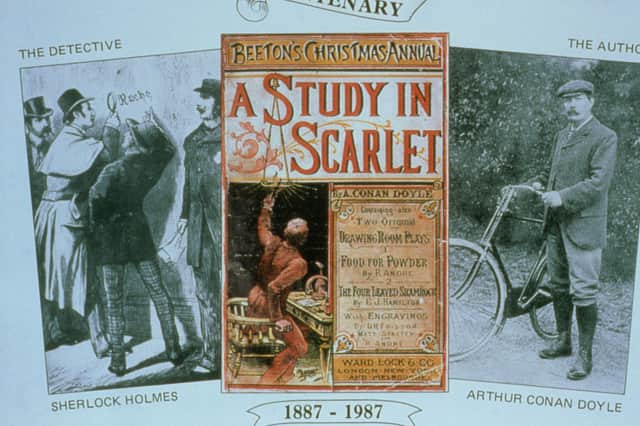
He and a colleague also conducted independent investigations into the Jack the Ripper murders, which Bell regarded as the “greatest forensic puzzle of the age.”
In October 1888, soon after the murders of Elizabeth Stride and Catherine Eddows, this newspaper ran an article reporting the discovery of a black bag that had been handed over to police after being discovered in a well-known hotel in London. The bag, it continued, belonged to a disgraced surgeon who had trained in Scotland, and contained items of a “compromising” character.
The source who provided The Scotsman with the information, according to Fitzharris, was none other than Bell. However, he never made public his suspicions of the suspect’s identity, and it remains unclear if Scotland Yard ever investigated his claims.
‘Sleuth Hound: The Case of the Real Sherlock Holmes’ by Lindsey Fitzharris will be published by Allen Lane on 20 October.
Comments
Want to join the conversation? Please or to comment on this article.