
Hay's Way: Changing tide of stalking on Scotland's Deer Island
Katharine Hay reports from Jura as the traditional deer stalking season faces winds of change
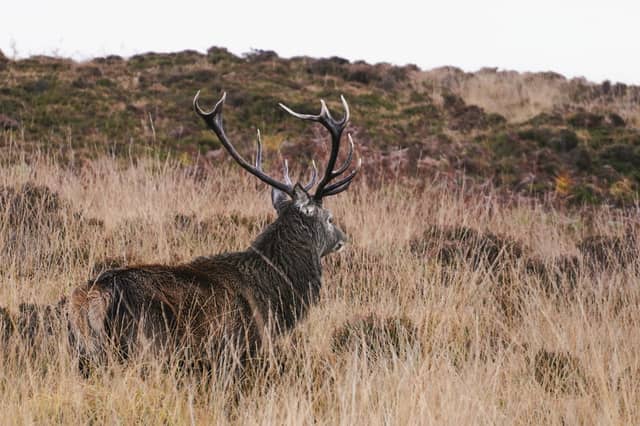


The crack of a rifle shot echoed between the ridges. Ravens and jackdaws took flight. Through my binoculars, I shifted my gaze from the guest to the stag.
The beast, as stalkers call a male deer, stumbled backwards, his hind legs buckling before he fell to the ground. Within seconds, the eagles circling overhead began to draw closer, eyeing the fresh carcass, while the stalker emptied the gralloch — the animal’s entrails — on to the hillside.
The rest of the herd scattered, leaping towards the hills with an agility that made the rough terrain look easy. Few people could follow in their cloven hoofprints. Unless, that is, they were one of Jura’s resident stalkers.
“You just need to follow the deer,” Craig Rozga, head stalker at the 20,000-acre Ruantallain Estate, told me when I asked how he moved through the unforgiving landscape with such ease.
“They know what they are doing.”
It was the sort of advice that comes only from someone deeply rooted in the land, who has spent years learning to read the hills like the back of his hand.
.jpeg?trim=7,0,8,0&crop=&width=640&quality=65)
Mr Rozga is one of the island’s experienced stalkers who, armed with knowledge passed down through generations, help manage Jura’s deer herd. Its red deer are widely regarded as among Scotland’s most genetically distinct, with no sika or roe deer on the island to interbreed with them. Keeping the herd healthy requires constant monitoring and a trained eye to identify the right animals for culling. These may include sick or weakened deer, or stags with poorly developed antlers, known as switches, which can cause serious injuries during the rut.
“We tell the guests if it is a healthy stag, it’s better to come off the hill with nothing,” Mr Rozga said.
Jura, whose name derives from the Old Norse for ‘deer island,’ is regarded by many as the mecca of Scottish stalking. With a stag costing about £1,000 to shoot and hundreds of paying guests returning each year for the rutting season, the pursuit remains a major source of income and employment for the island’s estates.
But stalking is about more than money. Once largely the preserve of the laird, as old gamebooks suggest, the estates began opening up to paying guests in the 1960s. Many have returned ever since, forming lasting relationships with the people who live, breathe and walk the island.
“We see the families bring their kids, then they grow up and have their own families and they start coming too,” Mr Rozga said.
Yet, as the colours on the hills change with the seasons, so too is Jura’s relationship with stalking. For generations, the pursuit of deer has been one of the island’s main attractions. Now, for some estates, it is becoming just one part of a broader offering.
“For some of the businesses on the island that are ahead of the curve, stalking is quite far down the list of things to do here,” Mr Rozga said.
“It’s no longer the headline. Something is definitely changing. I think it’s a good thing. I grew up here; this has really been my life, but there is so much else to see here and to do as well as stalking.”
Scallop diving, picnics on the beaches, beachcombing, exploring caves and spotting wildlife. He said Jura has plenty to offer visitors beyond the pursuit of its most famous inhabitants.
“I think eventually we’re probably going to be rebranded as ‘wildlife guides’,” said Guy Morlock, another lead stalker on the island.
“We will be taking people out to see the eagles and the seals more than the actual stalking.”
But changing visitor expectations and the growth of nature tourism are not the only forces reshaping the stalker’s role. Scottish Government policy to reduce deer numbers is also influencing the island’s future.
NatureScot, the government’s nature agency, wants deer numbers reduced across Scotland to support conservation, including woodland planting and natural regeneration. On Jura, where just over 5,000 red deer outnumber the island’s 200 or so residents by roughly 30 to one, a substantial reduction would alter the character of a place whose identity has been tied to its herd for centuries.
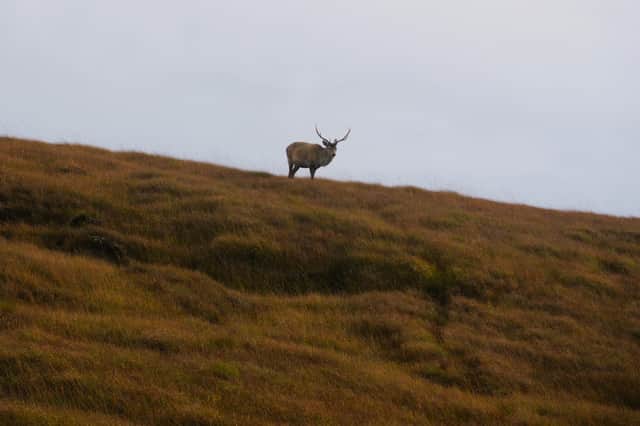
The policy has become a source of tension among deer managers, many of whom question whether a uniform approach can work across Scotland’s very different landscapes.
“It depends what you want the island to look like,” Mr Morlock said.
“Jura was never covered in trees. They need to fine-tune the numbers for different areas for it to make sense.”
Mr Rozga shared those concerns. While accepting that deer must be managed, he questioned what would replace their role in the island’s economy and landscape if numbers were cut to the levels managers are seeking on the mainland — around two to five deer per square kilometre. Jura has a density of about 14.6 deer per square kilometre, according to NatureScot, with a current target of 13.7.
“I would love to hear the alternative on what could be done with the land,” Mr Rozga said. “The deer will always need managed. I can’t think how you could do bang for buck.
“What else would the hill do?”
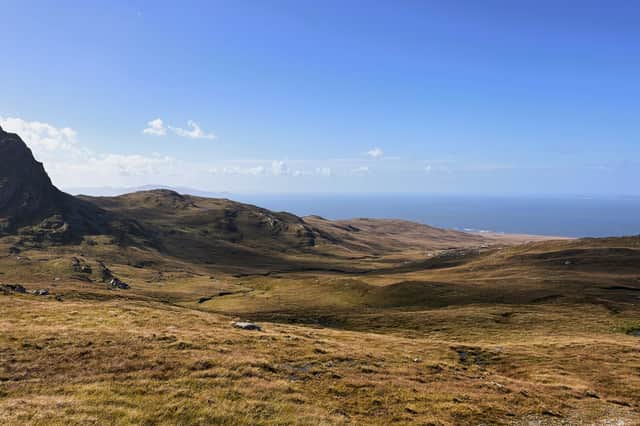
Andrew Fletcher, owner of Ardlussa Estate and a member of the only estate-owning family to live permanently on Jura, believes ministers should focus more on areas where deer are causing greater damage.
“The Scottish Government has made deer management too political,” he said.
“They are targeting us because we’re landowners and it’s a simpler way to get the numbers down. We are just seven estates who work well together with some 6,000 deer, and they want to take, say, 10 per cent off Jura to get a result.
“But the 10 per cent here aren’t the problem when it comes to deer densities in Scotland. The problem is around towns and cities and agricultural land in lowland areas.
“I sympathise with them, it’s not easy to cull where there are lots of people, but they need to work on targeting areas where the deer numbers are exploding rather than here on Deer Island where we have a managed herd and the numbers are reducing anyway.”
Stalkers on the island often spoke about how a “one size fits all” approach across Scotland causes issues on a local level, with some saying a desired one stag to one hind ration in some parts of the country is “unnatural”.
NatureScot said it was working closely with local deer management groups across the country to pursue a more targeted approach.
A spokesman for the agency said: “We can reassure stalkers on Jura that there is certainly not a one size fits all approach to deer densities. Impacts from deer vary widely depending on habitat, location and time of year.
“We recognise that red deer are a vital part of the natural and cultural heritage of Jura — the ‘deer island’ — with a long history of deer management and stalking forming a key part of the local economy. At the same time, Jura is also highly protected, with several Sites of Special Scientific Interest (SSSIs) designated for their oak woodlands. A number of estates on the island are also investing in woodland creation.
“Deer and other herbivores will have an impact on these habitats, but we are working closely with the Isle of Jura Deer Management Group to manage those impacts, with local information driving their deer management plan.”
Each estate is allocated a culling quota every year, typically between 100 and 200 deer. Yet deer managers said the message about what the island is ultimately expected to look like remain unclear.
Some landowners have experimented with tree planting, with a number more willing to reduce deer densities in selected areas to encourage planting and natural regeneration. More than 100 hectares of woodland have been planted in the north of the island, Mr Fletcher said. Much of Jura’s exposed, boggy terrain, however, is less suited to tree growth.
He said securing funding through the Woodland Carbon Code for planting projects had proved difficult over the years because of concerns about deer numbers and overgrazing. He is also awaiting a decision on grants for a 250-acre peatland restoration project on the estate.
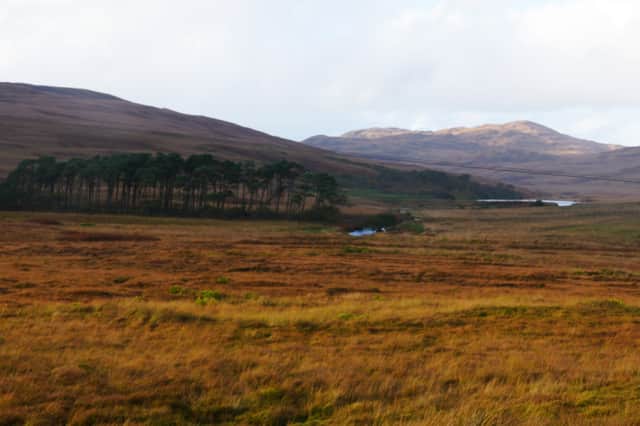
If estates are expected to cull more deer, Mr Fletcher said there must be a greater financial incentive. He said deer managers, at the moment, get about £1.30 a kilo of venison, but with deductions for transport levy and marketing, which can vary, it works out at about 30p per kilo. Those in the deer sector say the price paid for venison has barely changed in 40 years.
“If the government was serious about deer numbers, then they would put more than £1 per kilo, then it would be worthwhile doing,” he said.
“There’s no incentive at the moment. It’s all being hit by the stick rather than the carrot.
“They are very lucky that there’s a market for people to come and shoot deer to help estates with the cull.”
The changing role of the stalker is also being driven by the visitors themselves. The loyalty of returning guests remains, but the way they spend their time on Jura is evolving, islanders said.
“People are coming more now for an experience rather than just the stalking,” Mr Fletcher said.
For stalkers, that means taking on a broader role as guides to the island’s wildlife and landscape — a change some traditionalists may find difficult, but one Mr Fletcher believes is inevitable.
“It means that the job of the stalker is also about being a wildlife guide, which I know some aren’t so keen about, but I don’t think it’s a bad thing. You are already guiding people to the deer.
“Originally you went one on one with the stalker, then it was two to one. Now we have groups as large as four and sometimes ten. Traditional stalkers have generally been against having larger parties, but if they want to continue being stalkers, the bigger parties are just going to be there because that’s what people want. They are still coming for the stalking as well.”
The Fletchers are adding accommodation pods to cater for larger groups.
“We are also seeing an increase in climate tourists generally, people who are getting too hot and need somewhere else to go. And Scotland is that place.
“There is a shift in what people are looking for when they come here.”
Some estates have embraced a different vision of island tourism. In the last decade, Ardfin Estate opened a high-end golf course, albeit extremely exclusive, according to islanders, offering visitors a reason to come to Jura that has little to do with stalking.
At the 9,000-acre Inver Estate in the south of the island , the team is developing a broader wildlife experience. Graham Hayes, the estate manager, and his wife, Ailsa, drew inspiration from his native South Africa to create the opportunity for guests to spot Jura’s own version of the “big five”.
Faith Graham, 22, who grew up visiting the island and now lives on Jura, is training as a stalker while working towards her firearms certificate. Having also spent time working with wildlife in South Africa, she is enthusiastic about combining stalking with guiding.
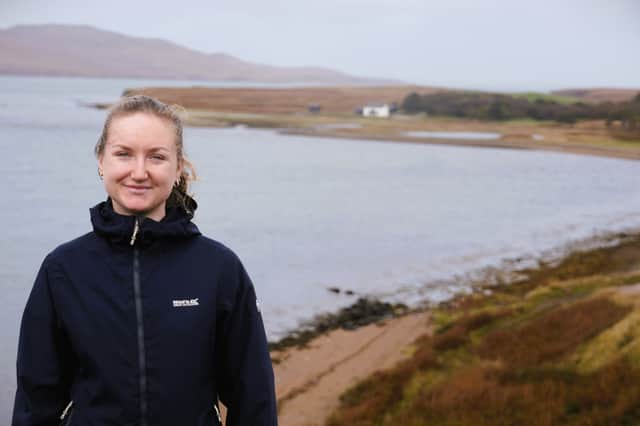
“I am excited for the guiding part because I guided in South Africa,” she said. “I am looking forward to using what I learnt, getting my qualification and becoming extremely knowledgeable about a place that I am so passionate about.”
She said Jura’s big five to spot include deer, eagles, both white-tailed and golden eagles, otters, adders and dolphins.
For Ms Graham, the job is also about opening Jura up to a wider variety of people who can enjoy the island she calls home.
“Jura is really about family, to me,” she said.
“It’s about seeing familiar faces. But people who come, even if they don’t have family connections here hopefully Inver can bring a connection for them and not just to stalk but the adventure side of things. Exploring the gullies, the waterfalls, the raised beaches and everything in between. Jura is extremely special to me and I like the thought of it being special to lots of others as well.”
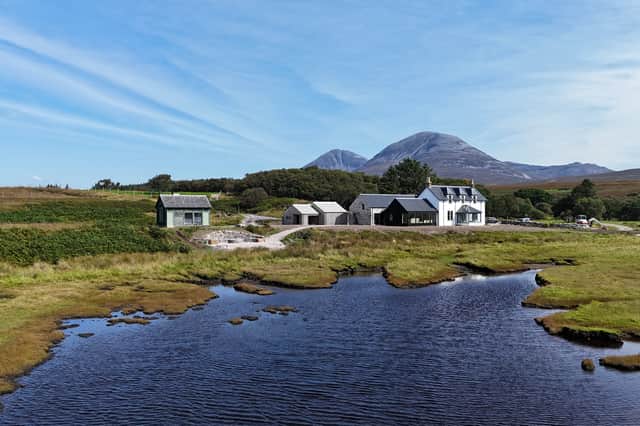
At £15,000 a week, Inver Lodge on the estate is a world away from the traditional stalking lodge. With a sauna, a games room for children and an exclusive pub in a former deer larder, it is design is to appeal to a wider audience to those who want to come to the island to stalk.
John Lithgow, the estate’s landowner and chairman of the local deer management group, believes there is room for both approaches. The challenge is to attract visitors who want to experience Jura’s wildlife without losing stalking that remains central to the island and important for its herd.
“I don’t want people to think they are coming to tartan rugs and taxidermy,” he said. “You can find any number of stalking lodges with that and it has its place, but we just wanted to do something a bit different. Stalking will play a part, but it’s not the only thing going on here.
“People like to come with a mission and I think that’s where the big five comes in.”
Yet, despite political pressure and changing visitor tastes, the stalker’s role remains deeply rooted in Jura’s identity. Managing the herd is not simply about meeting a culling target or providing an experience for paying guests. It is about understanding the animals, protecting their health and maintaining a balance in a landscape where natural predators are absent.
That relationship has been captured in Jura Deer Island, a film by the Edinburgh-based photographer Euan Myles, featuring Mr Rozga and narrated by Peter Campbell, the late head stalker at Ardlussa. The documentary shows the knowledge and care behind the work, and how responsible stalking can contribute to sustainable deer management.
“It’s even shared by NatureScot to educate people on how important stalking is,” Mr Lithgow said.
Like Jura’s Paps, standing defiant against the relentless Atlantic elements, the role of the stalker, a role immersed in the landscape as much as the red deer themselves, continues to withstand winds of change.
Comments
Want to join the conversation? Please or to comment on this article.