
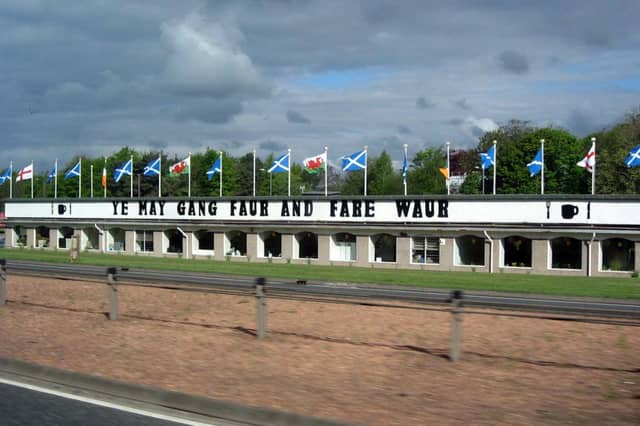

According to The National, Scots is “one of three native languages spoken in Scotland today” along with English and Scottish Gaelic. However, despite the ongoing debate as to whether or not Scots is a real language or just a dialect, it can be considered a settled matter as it has already been recognised by the UK government and Council of Europe.
Possibly, the issue arises as people conflate ‘Scottish English’ which includes well-loved Scottish words and unique Scottish sayings with Scots itself since these two see an overlap but are not quite the same thing.
If you’ve ever read the works of legendary Scottish poet Robert Burns then you’ll know well that Scots is indeed a language worlds away from formal English, and even though Burns Night has passed in 2023 it’s fun to practice languages regardless of special occasions.
Here are sixteen examples of the Scots language taken from street signs, newspapers, books and a variety of dialects all over Scotland (including Doric), how many can you translate?

13. Wi Scotland's biggest skite o bairns' beuks an a wheen o scots screivers haudin furth aboot aathing fae coorse vratches tae aulfarrant days and cuikin tae picters
This is for those of you that feel confident in your current level of Scots. It comes from a sign used at the Waterstone bookshop in Aberdeen and it translates to: ‘With Scotland’s biggest selection of children’s books and a good number of Scottish writers discoursing on everything from wicked wretches to days of old – and (from) cooking to pictures.’ Photo: Bookshop in Aberdeen via Waterstones
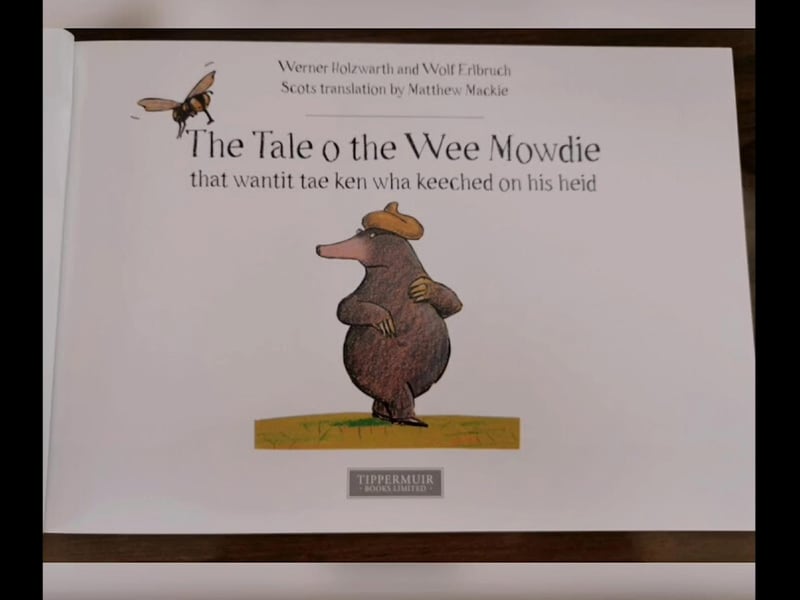
14. The Tale o the Wee Mowdie that wantit tae ken wha keeched on his heid
In the formal English world this beloved children’s book is known as ‘The Story of the Little Mole Who Went In Search of Whodunit’ by Werner Holzwarth and Wolf Erlbruch. However, the meaning is slightly different in Scots, it says: “The Tale of the Little Mole who wanted to know who defecated on his head.” Photo: YouTube Screenshot via Lee-Anne Strachan

15. “The best laid schemes o’ mice an’ men gang aft agley.”
This excerpt comes from 'To a Mouse' which is a poem written by the famous Scottish bard Robert Burns. The line reminds us that no matter how much we make plans things can always go wrong, it translates to: 'the best-laid plans of mice and men often go astray'. Photo: After Nasmyth, Engraved by G.Cook. 1881. via Wikimedia Commons