
Major repairs to historic Kelvin Aqueduct which sprung a leak will keep Forth & Clyde Canal closed for a year

Cause of problem confirmed
One of Scotland's major canals will stay closed for more than a year because of the scale of repairs needed to fix a significant leak in an aqueduct.
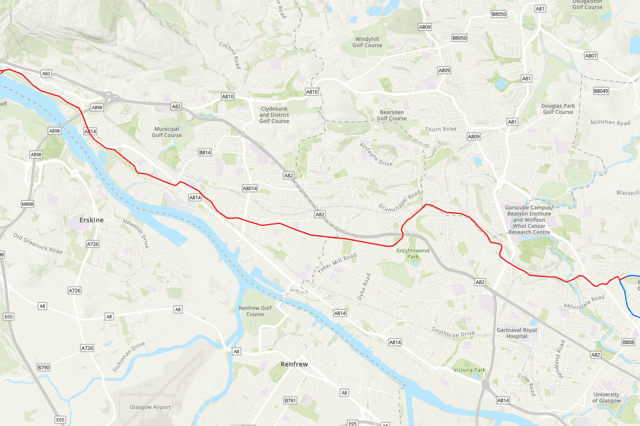
A ten-mile section of the Forth & Clyde Canal between Glasgow and Bowling, where it meets the Clyde, is to remain closed to boats until March - six months later than expected.
This is because water depths cannot be guaranteed.

Scottish Canals, which runs the 236-year-old waterway, also revealed that the roots of trees rather than water lilies, which were originally suspected, had caused the leak.
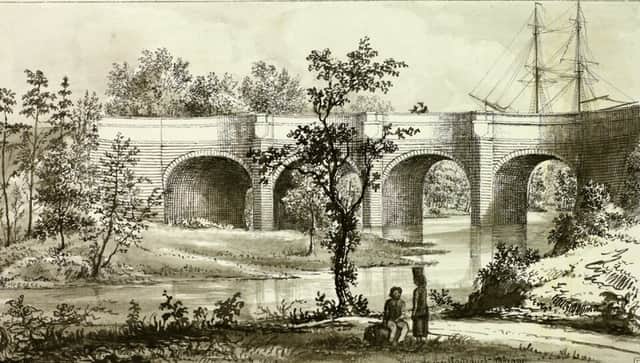
The amount of water cascading from the aqueduct - once Britain’s biggest - to the River Kelvin below had increased from a shower to “emptying a bath”.
The work, which has cost more than £1 million so far, has kept the canal closed from the Maryhill locks, just east of aqueduct, since February but were due to be finished next month.
Denise Richmond, senior project manager for Scottish Canals, said: “The extent of repairs meant we made the decision to keep the canal closed to navigation until the start of the new season in March.
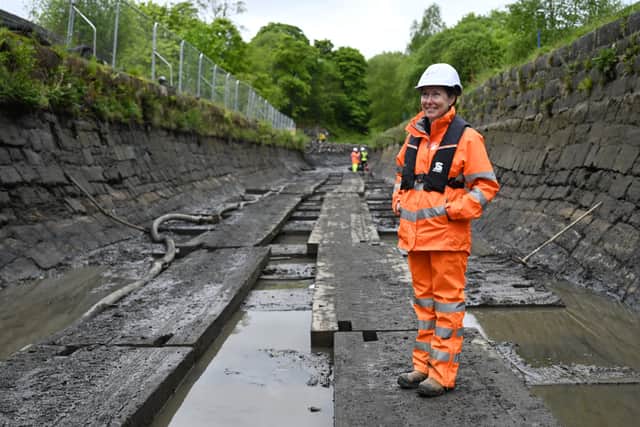
“There were fairly substantial rowan, birch and sycamore trees established on the outside of the aqueduct.
“Their root systems are strong enough to penetrate the joints in the masonry and clay liner to reach the water in the trough.
“Surprisingly, the ivy on the exterior and the lilies in the trough did not cause significant damage. The lilies already have a direct source of water so don't need to search.

“We knew the trees contributed but it was only once we dewatered and removed silt that we could see the extent.”
A spokesperson for Scottish Canals added: “The aqueduct began to leak from under one of its masonry arches at the end of 2024. Early inspections, while the aqueduct was still filled with water, could not determine the cause of the leakage.
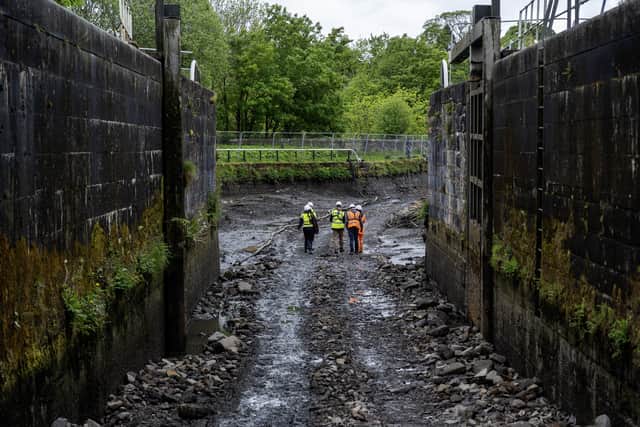
“To conduct detailed surveys and inspections, we needed to access the floor of the aqueduct trough.
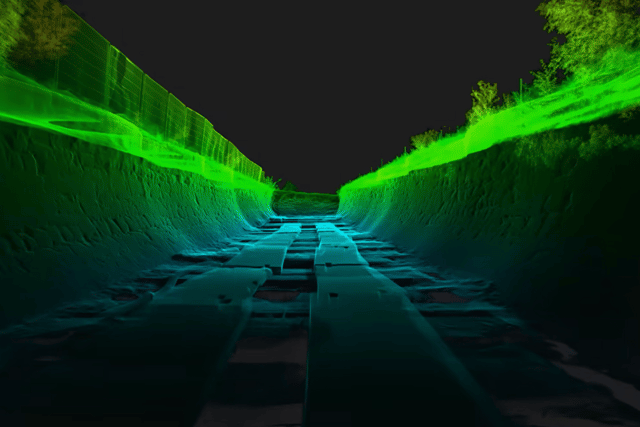
“In the absence of 18th century construction plans, we had to use techniques such as 3D laser scanning to understand the interior structure.
“In February, we dewatered the aqueduct trough and began inspections to inform a programme of emergency repairs.
“With the inspections completed this summer, we were able to design a final repair plan and agree works with Historic Environment Scotland.
“Works will include injection of grout into the walls, repointing, masonry repairs and more puddle clay to the lining of the trough, followed by several weeks of rewatering and monitoring in the early months of next year.
“The cost of all works to date is around £1 million. That includes the dewatering, investigations, initial repairs to stabilise the situation, design and scoping, maintaining the temporary dam and forward [water] feed to Bowling.”
However, the total cost “remains commercially sensitive” for now.
Scottish Canals said the closure had reduced boating income but it was essential for public safety, and to keep the canal operating in the long term.
It said dredging and vegetation clearance would be required so boating could resume.
The closure comes eight years after traffic was halted because of safety concerns preventing three bridges over the canal from opening to let boats through.
Neil Kitchener of the Inland Waterways Association, which monitors canal closures, said: “We are deeply disappointed it will remain shut until spring at the earliest.
"The original plan was it would be closed for a few months to investigate the problem before re-opening.
“Shutting during the winter doesn’t make a big difference but once the inspection happened the decision was taken to continue with the closure to carry out remedial works.
“While there is a commercial case for this, there are a number of boats that can’t get through the aqueduct, and they are stuck where they are. Even a brief opening could have prevented this.”
Comments
Want to join the conversation? Please or to comment on this article.