
Threat posed by Russia 'a double-edged sword for Scotland'

Dr Marc DeVore said Scotland is more exposed, but could benefit from extra defence spending
The threat posed by Russia is a “double-edged sword” for Scotland, according to an expert in defence and international relations.
Dr Marc DeVore of the University of St Andrews said Scotland is “more exposed to sabotage or operations” due to its geographical location.
However, he said an increase in defence spending could see more resources flowing north, boosting areas such as Clyde shipbuilding.
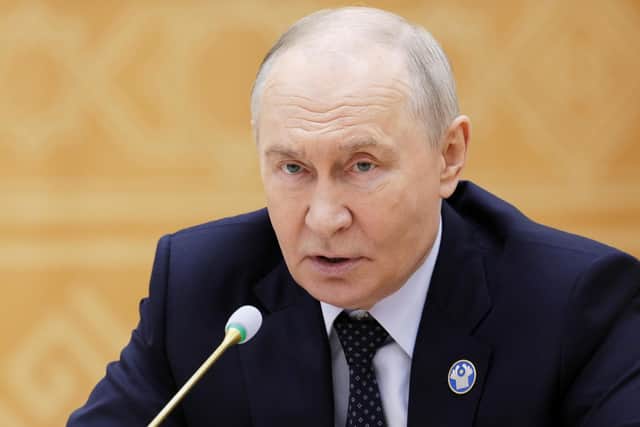

It comes after Sir Ken McCallum, the head of MI5, said it was devoting more resources to combating threats from hostile states than it did during the Cold War.
Dr DeVore said the Russian threat “has been growing steadily”.
"That threat is a hybrid threat,” he said. “That threat is also a conventional military one coming off of the High North."
He said the High North is usually defined as the area in and around the Arctic, including the Greenland-Iceland-UK (GIUK) Gap and Svalbard.
Dr DeVore told the BBC Russia has concentrated its ballistic missile submarines and cruise missile submarines at its bases in the High North.
Meanwhile, it can also launch bids to spy on and potentially sabotage undersea cables from the area.
He said the UK is "relatively unprepared" to directly counter hybrid warfare from Russia, while "we don't necessarily have the resilience needed to recover from it".
"Something like 99 per cent of the world's data travels on undersea cables, and for an island like the UK we are even more vulnerable to sabotage against our undersea cables than most other countries are,” he said.
He added: "If they [Russia] did cut those cables, it would cause substantial economic damage to the UK, and I don't necessarily think that we have a good option to retaliate militarily conventionally, because if we did that then we would largely be seen to be the side that was escalating, which would in turn invite further retaliation by their side."
Dr DeVore said he was “not confident at all that we are making the political choices” that will ensure enough funding goes to defence.
"There's a tremendous gap between what we've said we need to do strategically, and where we are currently in our budgetary cycle and how much we are willing to spend,” he said.
He added: "In some ways, the Russian threat is a double-edged sword for Scotland. On the one hand, being the part of the UK that is closest to the Russian fleet in the High North, that is the closest to GUGI [a secretive part of the Russian navy], we are more exposed to sabotage or operations that the Russians might attempt to mount. So that's the downside.
"The upside is that if the UK prepares adequately to meet the Russian threat, then that would actually result in more resources going to Scotland, whether that is shipbuilding on the Clyde, whether that is investment in infrastructure, port facilities up in Orkney or the northern Scottish coast, or general money spent on civilian resilience that would be needed to counter the types of grey-zone operations the Russians could mount against us.
"Scotland definitely would benefit if we come up with the additional money needed to prepare."
Comments
Want to join the conversation? Please or to comment on this article.