
Scotland's environment quangos warn merger will require 'upfront costs' as bodies 'preparing for transition'

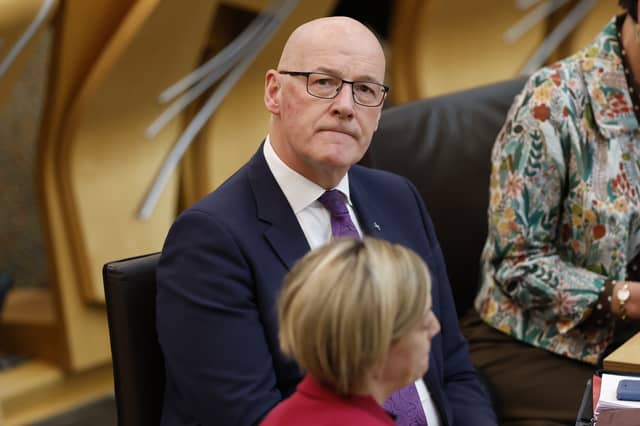

John Swinney has been warned to may need to provide cash ‘upfront’ to merge Scotland’s environmental bodies - despite ethe strategy intended to make savings.
Scotland's environment quangos are "preparing for transition" - but have warned John Swinney’s government it will need to provide funding to merge organisations into a single body as part of his public sector reforms.
On Tuesday, the First Minister announced that environmental bodies will be merged into one new organisation as part of widespread plans to make savings as part of the reforms.
Trade unions have reacted with anger, issuing a warning that jobs will likely need to be cut as part of the plans.
But the chief executive of the Scottish Environmental Protection Agency (Sepa), one of the bodies set to be merged, has told MSPs on Holyrood’s climate action committee that the proposals “landed with staff better than I had anticipated”.
READ MORE: Call for Swinney to embrace 'Manchester model for Scotland' without radical council overhaul
Under the plans, Sepa, NatureScot and Zero Waste Scotland will be axed - with responsibilities moving to a single organisation.
Nick Halfhide, chief executive officer of NatureScot, told the committee that his organisation was "preparing for transition" but warned it was “very early days”.
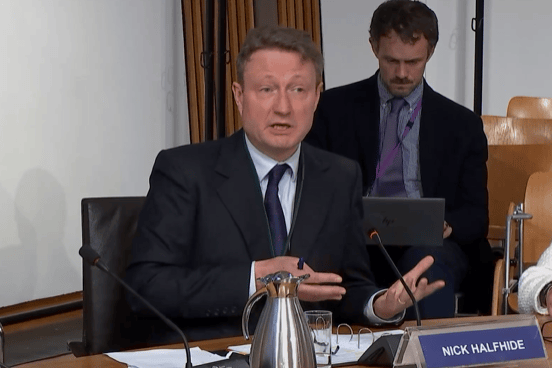
He said: “We had a little prior warning so that we could get ourselves organised. We’ve still got a lot of work to do around the planning.
“I think the timeline is aspirational but it was important that we could tell our staff what that aspiration was from the government of 2029.”
Mr Halfhide stressed that NatureScot has a no compulsory redundancies policy as part of the current pay deal at the organisation.
He added: “We will take a very strong lead from the Scottish government who have made very clear statements about that policy of no compulsory redundancies continuing.”
Mr Halfhide also suggested that resources would be needed from the SNP government to fund any merger into one environmental body for Scotland despite the driving factor behind the overhaul being to save money.
He said: “We need to think really hard about how we are going to resource that change internally and how we will be working with the Scottish government who I imagine will also be looking at how they can make this transition and how they will resource that.
“To state the obvious, we want this to be a huge success. And we all know that requires resourcing upfront to make sure we not only get the mechanics of this right, but as importantly, we work with our people so that they feel part of a transition that’s not being done to them and they can see a future and can see hope.”
Nicole Paterson, Sepa chief executive, told the committee that a single environmental body could make protections “more impactful” and could “strengthen environmental delivery”.
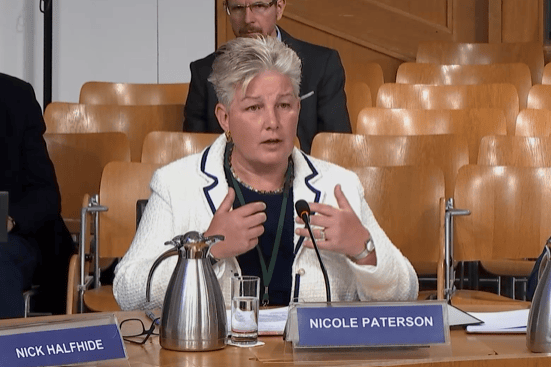
Asked about the potential impact on staff, she added: “The reality is, it’s a time of reflection for all staff when they think about their own career journeys, what they’ve experienced, where they’ve been and whether this is the next step they wish to take.
“My very early indications, but I will caveat it by saying I have not spoken to all 1,250 staff in Sepa, but the early indications are a sense of the coherence and the continued vision towards improving Scotland’s environment is a compelling vision. But it will, of course, for each and every member of staff to make their own decision.
“We want to move through this, we want to involve staff and we want to get the best outcomes for everyone.”
She added that the news over the merger had “landed better with staff than I had anticipated”.
Ciaran McGuigan, chief executive officer of Zero Waste Scotland, told MSPs that the organisation would "strongly support" the proposed reforms but highlighted "uncertainty about the exact shape of the future and what it means for individuals".
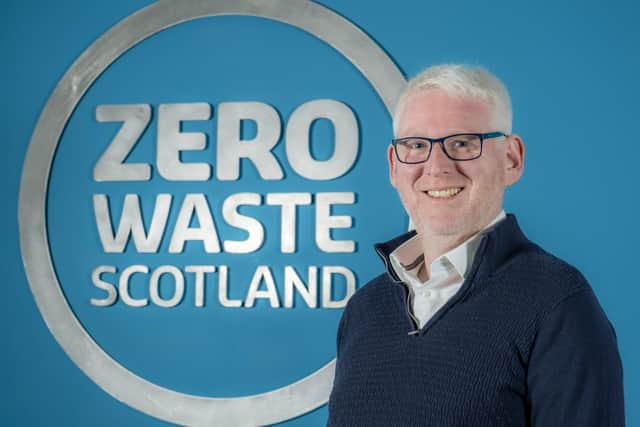
He added that “there are challenges in implementing change of this scale”, stressing that “execution challenges will be real”.
The warnings come after Mr Swinney said he “would imagine” major reforms to Scotland’s public services will result in fewer high-paid civil servants as he repeated his insistence over no compulsory redundancies.
The SNP leader plans to reduce the number of territorial health boards in Scotland from 14 to just two and is looking to create a new structure for local government, arguing there should be “fewer” councils than the current 32 authorities.
Mr Swinney repeated his “commitment there will not be compulsory redundancies”.
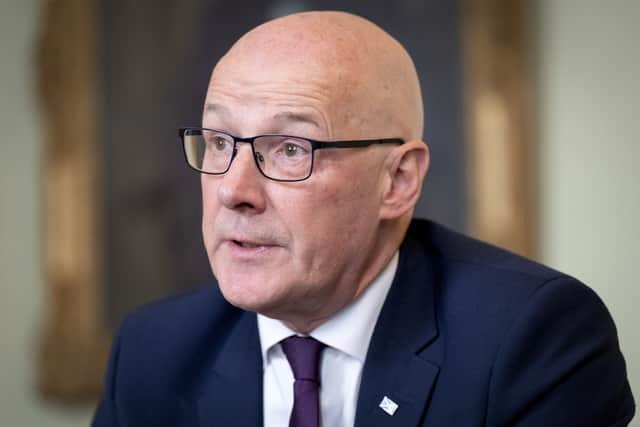
But with the Scottish Government facing a budget black hole of almost £5 billion by the end of the decade, the First Minister was also clear that “there will have to a reduction in public sector employment”.
Pressed on whether that would mean fewer high-paid civil servants, he said: “I would imagine there would be.”
He said there is a “variety of ways” the public sector workforce could be reduced without compulsory cuts, but stressed this is “an important part of taking forward the reforms that we need to undertake”.
Mr Swinney said: “To ensure our public services better meet the needs of the public, and ensure they are sustainable, requires change. That is going to reduce the size of the public sector workforce.
“But the assurance I give is there will be no compulsory redundancies.”
His comments came as Stephen Boyd, director of the Institute for Public Policy Research (IPPR) Scotland think tank, warned expectations of what could be achieved by merging public bodies can be “wildly optimistic”.
Speaking to MSPs on Holyrood’s Public Service Reform Committee, Mr Boyd said: “Public service reform is likely to be the defining issue of this Parliament.
“Expectations of what can be achieved through, for instance, consolidation of public bodies can be wildly optimistic.”
Comments
Want to join the conversation? Please or to comment on this article.