
Bold SNP manifesto tries to hand John Swinney his own identity but delivery fears loom
John Swinney’s election manifesto is attempting to give him his own identity as a leader - rather than an extension of Nicola Sturgeon’s time in office.
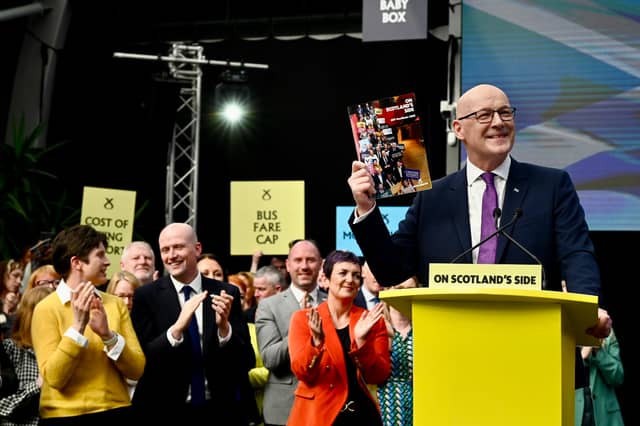


John Swinney’s blueprint for the next five years, if he is re-elected first minister, certainly doesn’t lack imagination - and piles the pressure back on Labour.
The SNP are expecting to return to government. One activist told me the mood was “confident but not complacent”, although some big names like Angus Robertson and Maree Todd may face a battle to keep hold of their seats.
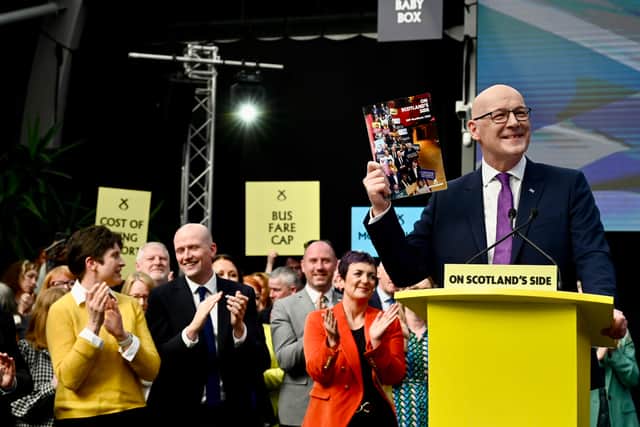
But Mr Swinney’s manifesto, launched in the east end of Glasgow in front of a packed room, produced two eyebrow-raising policies that will appeal to people struggling with the seemingly never-ending cost-of-living crisis.
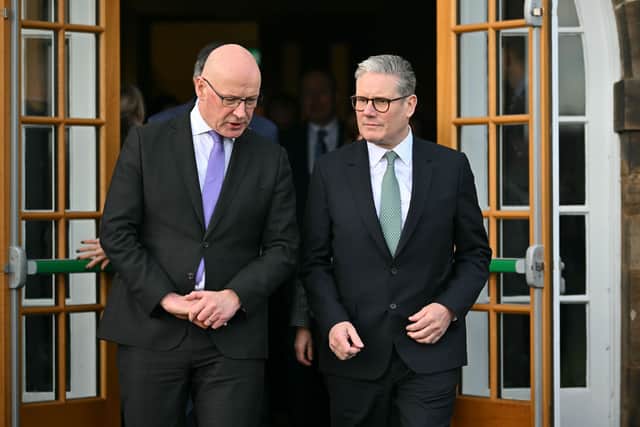
In a challenge to Keir Starmer’s UK government, Mr Swinney has dared him not to block ambitious and contentious plans to cap the price of essential items at supermarkets.
The Labour government could choose to block the plans, being made on the argument of protecting public health and nutrition, but those close to Mr Swinney believe that the optics of Sir Keir choosing to deprive the poorest Scots of cheaper food would be disastrous.
There are obvious questions about this bold and daring policy tabled by Mr Swinney, other than another potential standoff between Scotland’s two governments. The plans are restricted to larger supermarkets that can shoulder the costs, according to Mr Swinney. Businesses have a much different view on this. There are the usual questions about cross-border price differences - although scaremongering on this around the minimum unit pricing for alcohol never amounted to anything in reality.
Alongside this, Mr Swinney has vowed to cap bus fares “across Scotland” at £2 - building on the SNP’s free bus travel already in place for under 22s and over 60s, but short of the Scottish Greens’ ask for free universal bus travel. It would cost an estimated £210m a year, but could cost more, depending on demand.
Those suffering in the cost of living crisis will be fully on board with this plan and it will help the SNP’s stuttering plans for more people to leave their car at home and use public transport. But it will require legislation and could pose potential issues with bus providers, the viability of ScotRail and whether other modes of transport such as Edinburgh’s tram and Glasgow’s subway system can feed into the vision.
Income tax has been a particular battle ground between the SNP and opponents since powers were devolved almost a decade ago.
The SNP manifesto vows that “we will not increase the number of bands or their rates over the lifetime of the next parliament”, with an ambition “to make our system simpler by the end of the parliament”. It is understood that any reforms could include merging the three lower bands into one tier for lower earners.
As for Mr Swinney’s pledge not to increase income tax, critics will warn that we’ve heard it all before - particularly a vow in the 2021 manifesto that was not kept. Adding more expensive manifesto policies to the mix will be little to alleviate those fears.
Mr Swinney issued a caveat that “we have to be mindful of the turbulent conditions of which we are operating in”, as well as “the impacts on inflation”.
With his political opponents in Labour, the Tories and Reform pledging a bonfire of quangos, Mr Swinney is also getting in on the act - with a vow to “substantially reduce the number of public bodies”, with the SNP leader admitting this will lead to a “reduction in the number of public servants”.
There are also commitments to speed up planning applications, ban mobile phones from classrooms and a series of measures designed to continue improvements in the NHS - all of which will attempt to shut down Labour’s big pitches to the public. Not all, but a substantial amount of the SNP’s proposals have meat on the bone as to how they would work - framing the SNP as the only party serious about forming the next government.
The setting for Mr Swinney’s manifesto launch has been well-trodden by political parties during the campaign - with the Barras Art and Design (BAaD) venue already used by both Labour and the Greens.
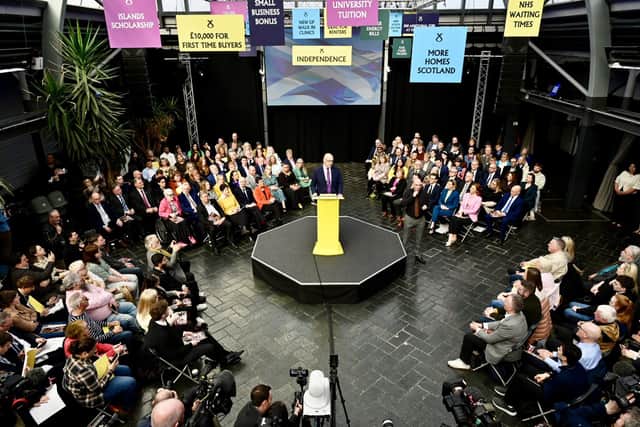
But SNP activists were queuing around the block to get in to catch a glimpse of their party’s vision for the next five years. The manifesto documents did not arrive until just before things got underway, with a sole copy on the podium confiscated by SNP staffers after being eyed up by journalists.
Mr Swinney’s leadership of the SNP got off to a rocky start as he had the unenvious job of ushering the party through a torrid UK general election campaign. Since then, however, his improved fortunes have largely been defined by his opponents - the unpopularity of the UK Labour government has taken a lot of the public frustration away from 19 years of the SNP in government.
This manifesto, although many of the headline-grabbing ideas appear fraught with complexity and potential barriers, feels like Mr Swinney, after decades of playing a supporting role in the SNP’s story - is giving himself his own identity, instead of settling to be regarded as a continuity first minister.
Like Labour’s vision, the SNP manifesto will not win May’s election. But at face value, it will look to many voters that the SNP, despite having been in power for 19 years, are still the ones coming up with the bold ideas - something Labour has failed to do, so far, in its vision for power.
But, as has been a key problem for the SNP over the last two decades, delivering on big pledges has not materialised. Analysis by Scottish Labour has found that around two thirds of the commitments made in the 2021 SNP manifesto have not been followed through.
If the SNP is returned to power, as all polls forecast, the key challenge for the SNP will be to put a legacy of failed delivery behind them. With Holyrood’s finances poised to get even tighter in the coming years, that will be far easier said than done.
Comments
Want to join the conversation? Please or to comment on this article.