
Holyrood election 2026: John Swinney urges Westminster not to block SNP's 'public health' food price cap plans

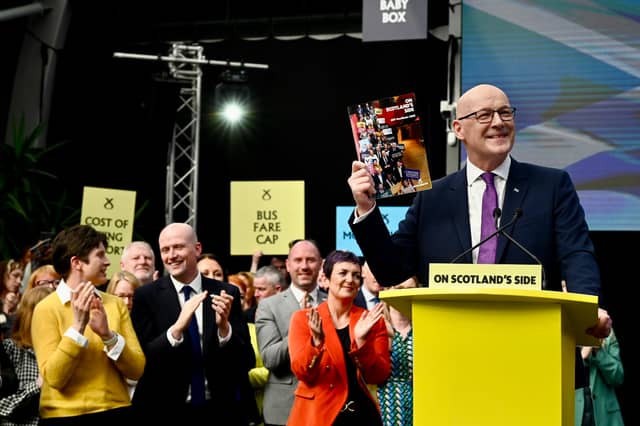

John Swinney has urged the UK government not to block his plans to cap essential food prices.
John Swinney has vowed to cap the price of essential supermarket foods to tackle the cost of living crisis and improve public health - but has put the SNP on course for another standoff with the UK Labour government.
Mr Swinney made the policy pledge in Glasgow while unveiling the SNP’s manifesto ahead of the Holyrood election.
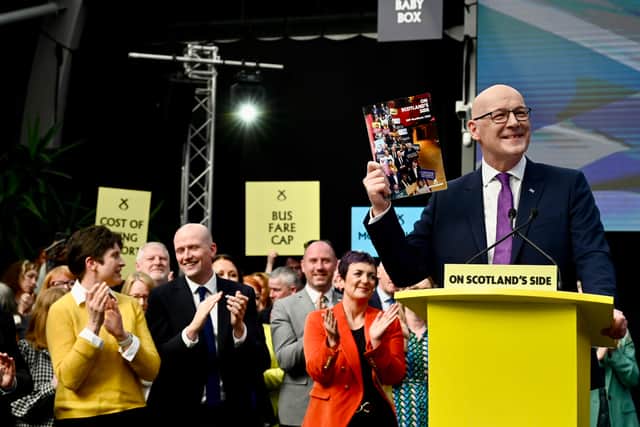
The SNP leader also delivered a commitment to cap bus fares at £2 and set up a £200 "culture pass” for people who turn 18. He also gave a commitment to freeze income tax in the next parliament.
Speaking in Glasgow, Mr Swinney argued that “the cost of living is hammering people”, warning that “inflation has come down, but prices have not”.
He said: “People are, quite simply, struggling to afford food. In a rich country like Scotland that is a moral outrage.
“For some, the cost of food is so high, it is hitting their health and wellbeing.”
Mr Swinney admitted that “with the current powers of our Parliament, I cannot normally set prices at the till”, but has argued that “things have got so tough, it is now impacting upon our nation’s nutrition”.
The SNP leader stressed that the situation “is a public health issue”.
“I have public health powers”, he added.
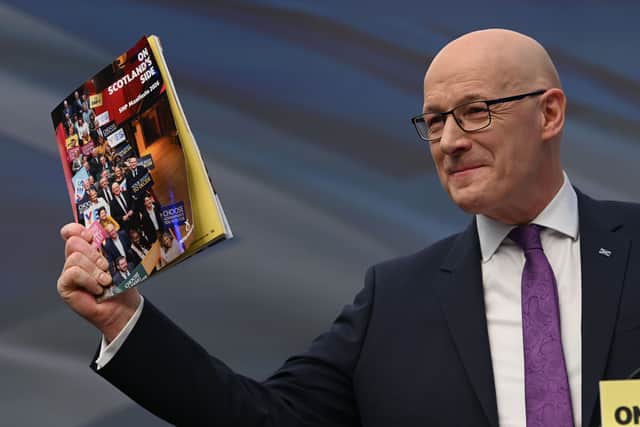
Mr Swinney said: “And so I can announce today that if re-elected, your SNP government will use our public health powers to set a maximum price for essential food items.”
The first minister mentioned “bread, milk, cheese, eggs, rice, chicken” for potentially being included in the basket of items that would be subject to the cap.
The cap would not cover the lowest quality, already-cheapest items, with a focus on nutrition. It would also only cover supermarkets and not be extended to small retailers, with Mr Swinney arguing the large supermarkets could “shoulder” additional costs.
He said the policy would “place an obligation on the larger supermarkets…to have an essential basket of items individuals could reliably afford”.
But the policy could be blocked by the UK government, and would require an exemption under the controversial internal market act. Mr Swinney believes his public health argument would mean Labour will not stand in his way and gives his plans “legitimacy”.
Mr Swinney added: “I’m making it clear in the manifesto that the UK government has a dimension here that I want to make sure they do not use to undermine the exercise of our properly-constituted public health powers.
A senior SNP source said: “I assume a Labour government of all colours would not be in the business of keeping food for our poorest people more expensive.”
But businesses have criticised the SNP’s plans.
Ewan MacDonald-Russell, deputy head of the Scottish Retail Consortium, said: “Elevated food prices are a direct result of soaring supply chain and commodity costs and frankly relentless rises in statutory costs imposed by governments. Yet despite this, the fiercely competitive grocery market in Scotland has helped to keep food prices among the most affordable of all the large European economies.
“Supermarkets have always run on very slim margins, especially when compared with other parts of the food supply chain, but profits have fallen significantly in recent times. Even so, retailers continue to invest heavily to keep prices down, expand their affordable food ranges, lock in the price of many essentials, and raise pay for staff.
"Many of the costs keeping shop prices high are now arising from the muddle of new regulations and taxes coming from government policies. Rather than recreating 1970s-style price controls and potty gimmicks, public policy should get serious and focus on cutting retailers’ costs so that resources can be directed to keeping prices as low as possible for customers.”
Scottish Conservative leader, Russell Findlay, said that if Mr Swinney “was serious about tackling the cost-of-living crisis then he wouldn’t have made Scots poorer by hitting them with the highest tax bills in the UK
Comments
Want to join the conversation? Please or to comment on this article.