
Scotsman Obituaries: Lord Cowie, Scotland’s oldest rugby internationalist and Faculty of Advocates member
Respected Scottish judge, legal reformer and Scotland’s oldest rugby internationalist
The Honourable Lord Cowie enjoyed a long, full and multi-faceted life featuring a notable range of accomplishments and interests.
A senior judge in Scotland, Appeal Court judge in Botswana, Scottish rugby internationalist, naval officer on a minesweeper, skilled yachtsman and angler, excellent singer with a lifelong love of opera and chamber music and a kind, encouraging, supportive and much-loved family man.
He also enjoyed the unusual dual distinction of being the oldest surviving member of the Faculty of Advocates and Scotland’s oldest surviving rugby internationalist.
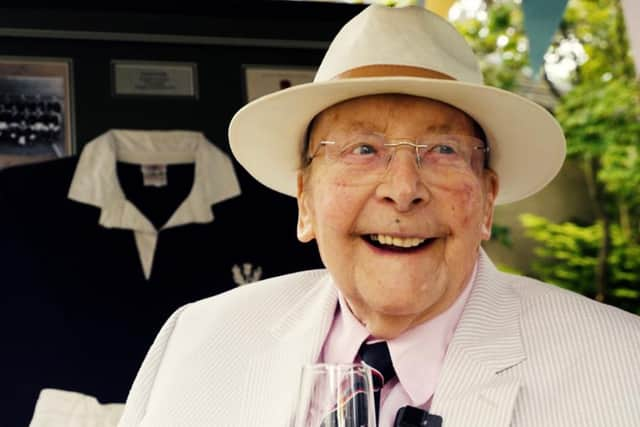

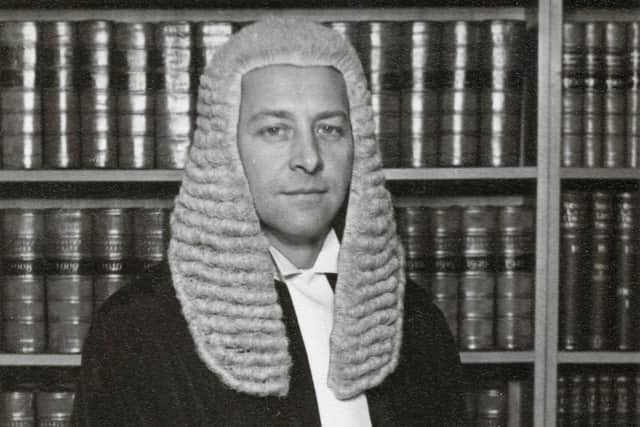
Admitted Advocate in 1952, he took silk in 1967 and was appointed Senator of the College of Justice in 1977 as a Judge in the Court of Session and High Court of Justiciary until retirement in 1994. The following year he was appointed Judge of Appeal in Botswana Supreme Court until 1998, after which he resumed as a part-time Judge here for several years.
Lorn Cowie, as he was known outwith the courtroom, was capped for Scotland in 1953 as a wing forward against England at Twickenham during a difficult period for the national side. Despite continuing to play thereafter at a high-level, including District rugby, he was unfortunate not to be capped again.
William Lorn Kerr Cowie was born in Glasgow to Charles Cowie MBE, and Nora, nee Kerr, a younger brother to Charles. His father was engaged in the operation of the well-established family firm Cowie Brothers, which traded in import and export business largely with Burma, where Lorn spent his early years and learned the language.
Aged five he returned to Scotland to attend Cambusdoon Prep School, Ayr, and into the care of his aunt Isabel in Glasgow.
Prior to the outbreak of war his parents returned to live in Helensburgh, with Lorn’s education continuing as a boarder at Fettes College between 1940 and 1944. There the abilities that served him well in later life became evident – he was Head of School, captain of cricket, member of the rugby 1st XV and hockey XI, and CSM of the cadet force where “his smart appearance and powers of leadership” were noted. Later he was appointed a school Governor.
He went on to Clare College, Cambridge University, to study English Literature, also representing the College at rugby and rowing, and graduating with an MA in 1949. His course was delayed through National Service, which he undertook as a Lieutenant in the RNVR on a minesweeper in the Baltic and along the Norwegian coast.
After completing a law degree at Glasgow University Lorn completed a Bar apprenticeship with city solicitors McLay, Murray and Spence prior to beginning his “devilling” [training] with Norman Sloan KC and admission to the Faculty of Advocates in November 1952.
Meantime his rugby career continued apace. He played for a post-war combined Kelvinside/West of Scotland team before captaining West in their first season back as an independent club in 1951-52. A fast attacking flanker, his form led to selection for Glasgow in inter city games against Edinburgh and national trials.
When his legal career took him to Edinburgh he joined Edinburgh Wanderers, with subsequent selection for Edinburgh in the inter city raising some eyebrows after representing Glasgow. He had an outstanding match, with one report stating, “Cowie apart from his two tries gave magnificent support to his backs in the open and did his [international] prospects a lot of good”.
Selection for Scotland duly followed, after which he again represented Edinburgh, the Co Optimists and other select sides before retiring from playing, becoming President of Edinburgh Wanderers from 1958-1962.
Alongside rugby, his legal career developed with his appointment in 1960 as an Advocate Depute, prosecutor in the High Court, and as Standing Junior Counsel to the Registrar for Restrictive Trading Agreements before becoming a QC in 1967 while continuing to prosecute. Other varied work included conducting a Public Inquiry into proposed Edinburgh Ward boundaries changes and representing Shetland County Council before a Select Committee on legislation to control oil development in the islands.
In 1977 he was appointed a judge and for 17 years he presided over a wide range of demanding civil and criminal proceedings. In 1980 he chaired the committee which produced a Report on simplifying Divorce Procedure, introducing the concept of “non fault divorce”. An astute, highly regarded judge known for his fairness and compassion, he was particularly adept at dealing with juries, issuing succinct legal directions in clear and easily understandable form.
Outwith the courtroom, he was a key member of The Harpic Players, led by Sheriff Cameron Miller, in effect the Bar Comic Opera Group, where his fine singing voice was well utilised in cordial company. Between 1995 and 1998 he sat as Judge of Appeal in Botswana Supreme Court, a part-time appointment he thoroughly enjoyed.
Leisure pursuits included angling, particularly for salmon, and watching cricket at the Carlton Club in Edinburgh. He had a lifelong love of opera and chamber music, chairing the Edinburgh Amateur musical competition for years.
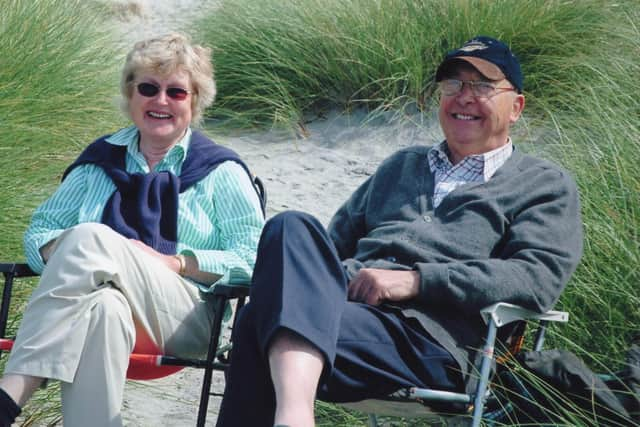
In August 1958 in Bishop’s Lydeard, Somerset, he wed Camilla Hoyle, and they enjoyed a long and happy marriage – more than 65 years. They met at a dance while on holiday in Grantown-on-Spey during the annual summer tennis tournament. Much to his relief it was a foxtrot, as it was “the only one he knew!” The couple had four children, Isabel, Caroline, John and William, and 11 grandchildren.
Caroline said: “He was the kindest, most encouraging, ego-free person who loved being part of a team, a very nice Dad.”
Lord Cowie is survived by his children and ten grandchildren.
Obituaries
If you would like to submit an obituary (800-1000 words preferred, with non-copyright image), contact [email protected]
Comments
Want to join the conversation? Please or to comment on this article.