
Scotsman Obituaries: Adam McNaughtan, songwriter who set working-class Glasgow life to music
Adam McNaughtan, songwriter, teacher and archivist. Born: 1939 in Glasgow. Died: 2 December 2025 in Glasgow, aged 86
For generations of Glaswegian schoolchildren, “The Jeely Piece Song” (aka Skyscraper Wean) is a joyous musical rite of passage, a catchy, accessible ditty on the vagaries of city living and one’s ability to access the daily packed lunch, or play piece.
For many, it was one of the first songs they learned to sing, arguably oblivious to the smart social commentary across its verses. Popularised by the likes of Matt McGinn, the Alexander Brothers and Alastair McDonald, it was written in the 1960s by Glasgow schoolteacher and songwriter Adam McNaughtan, who has died aged 86.
McNaughtan’s best-known song is subtitled The Height Starvation Song for its witty depiction of the post-war transition from low-rise living in the city’s celebrated tenements to high-rise living in tower blocks. Its self-styled “skyscraper wean” struggles to adjust to the change and, in particular, to intercept the titular jam sandwich thrown by Mum from the family’s new home on the 19th floor of Castlemilk’s Mitchellhill flats before it is entangled by various obstacles. Result: one hungry kid “wastin’ away” and poised to march for civil rights “like nae mair hooses ower piece-flingin’ height”.
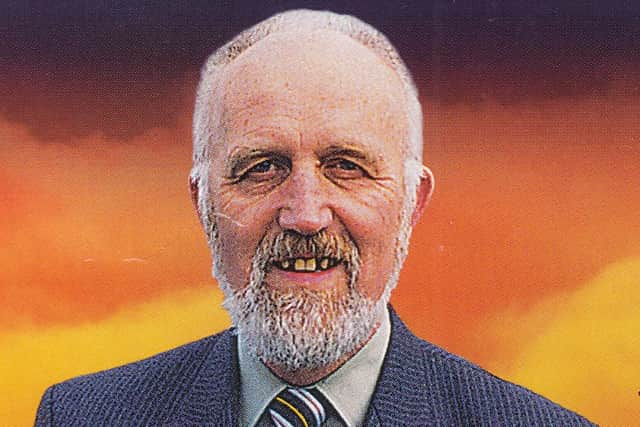

Like McGinn and other key players in the Scottish folk revival, McNaughtan had lived a life before embarking on a writing and recording career. Inspired by the back court singers who performed informal concerts in the communal courtyards of tenements around the city, he considered himself an “indoor street singer”, writing in the Glasgow vernacular about the city of his birth with affection and some satirical bite. "Cholesterol”, a lusty celebration of artery-hardening foodstuffs, was inspired by a council healthy eating campaign (“cholesterol cholesterol, my chance o’ survivin’ is small”) while “We Will Not Have a Motorway” stridently opposed a threat to Glasgow Green.
On his albums The Glasgow I Used to Know (1975), Words, Words, Words (1983) and Last Stand in Mount Florida (1996), he covered the comic, commercial likes of “Fitba’ Crazy” but was just as comfortable performing “Blood on the Grass”, an original song protesting the use of Santiago stadium for a Scotland World Cup warm-up match, given the stadium’s bloody history during Chile’s 1973 military coup.
Another enduring tune, “The Glasgow I Used To Know”, was unabashed in its nostalgic yearning for bygone street life and community. Its lyrics were recited by Prince Charles at the opening of the Glasgow Garden Festival in 1988 – ironically, a watershed event in the city’s cultural evolution. After the festival’s resounding success, there was no going back to its sepia recollections.
McNaughtan left teaching to become a bookseller and song collector, but not before penning another gem to inspire his class with their Shakespeare studies. “Oor Hamlet” was a colloquial precis of the main plot points of the classic tragedy, revelling in such pithy rhyming couplets as “Hamlet, Hamlet, actin’ barmy, Hamlet, Hamlet, loves his mammy!” English folk singer Martin Carthy happily took up its rallying cry in his Anglicised version.
McNaughtan also sang with the band Stramash, alongside Anne Neilson, Kevin Mitchell, Bob Blair, John Eaglesham and Finlay Allison. But for his own material he favoured a cappella performance, saying “my detractors claim that I only break the monotony by pitching every third song too high”.
In his later years, McNaughtan returned to the stage, performing as part of the ensemble for The Carrying Stream, the opening concert of the 2016 Celtic Connections, which marked 50 years of the Traditional Music and Song Association. McNaughton’s own legacy was celebrated at a sold-out Celtic Connections show in 2025, curated by singer Siobhan Miller, who was among the first to pay tribute when news of his death was announced. “Observation was one of his great skills,” she said. “He really saw the people and the communities around him.”
Born Adam Tulloch McNaughtan in 1939, he was brought up in Camlachie, beside Dennistoun, and attended Dennistoun School, Haghill School and Whitehill Secondary, where he remembered his Latin teacher Bob Small instilling the principle that “the cloth cap and the learned sock could be worn together without incongruity”. The East End was his stomping ground until he gravitated across town to study English Language and Literature at Glasgow University, where he was a founding member of the Glasgow University Folk Club. He trained at Jordanhill College of Education in “a profession which has been on the defensive since Plato’s day”.
Nevertheless, he spent the next two decades as an English teacher, firstly at Rutherglen Academy where he followed folk maven-turned-MP Norman Buchan to found a Ballads Club, welcoming guests of the calibre of Tom Paxton and Matt McGinn. Next, he taught in Norway and Denmark, igniting a lifelong fascination with Scandinavia. Returning to Glasgow, he taught at Cathkin High, where “Oor Hamlet” was conceived as a way of helping his class relate to the Prince of Denmark.
He took a year out ostensibly to research and collect children’s playground games, but diverted into researching broadside ballads at Mitchell Library and became an avid collector and preserver of traditional song, from temperance tunes to street songs. From here, he made the natural move into bookselling, opening Adam Books at 47 Parnie Street in the Merchant City, where used books, playbills and theatre programmes could be purchased. In 2009, he became Artist in Residence at the School of Scottish Studies.
In later years, he lived with his brother David in King’s Park and is survived by his sister Mary. As per his request there will be no funeral. Instead, there will be a no doubt raucous celebration of his life at a later date.
Obituaries
If you would like to submit an obituary (800-1000 words preferred, with jpeg image), contact [email protected]