
Readers' Letters: Is there no one in the SNP who can revive NHS?
The state of the Scottish NHS continues to worry readers
Has the SNP had its day? (“Almost 600 deaths linked to ‘lethal’ A&E waits this year”, Scotsman, 7 November). This is not the first year this has happened but who is going to make it the last one? Most Scots now expect a long wait at A&E.
This is shocking and yet still the flimsy excuses come. The cause is, indeed, bed blocking but it is also the lack of timely GP appointments and the meltdown of many ancillary services. The whole system is creaking and, sadly, this results in unnecessary deaths.
The SNP has a Health Secretary, Angela Constance, and to make her job easier she has two junior ministers, Alison Thewliss and Maree Todd, to help. Three SNP ministers yet things are not only getting much worse, but people are dying as a result. Surely this level of failure cannot just be brushed under Mr Swinney's bulging Bute House carpet? Where are the resignations and just who is left in the SNP who has not already had a turn at managing Scotland's fast-ailing health service?
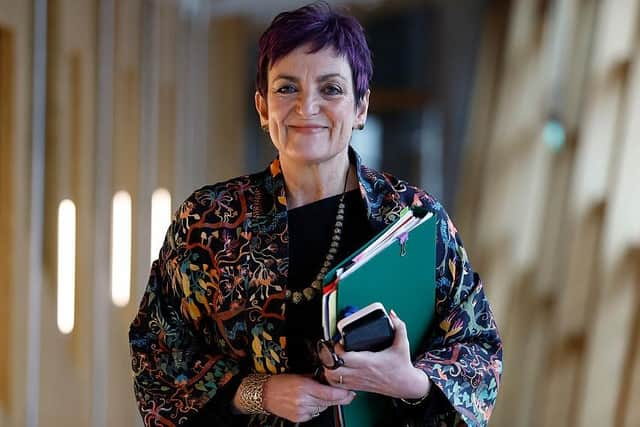

That is the kernel of the problem. There appears to be no one in the SNP able to even get close to fixing our very broken health service.
Is this really the action we ought to expect from a competent government?
Gerald Edwards, Glasgow
Move funds
Regarding The Scotsman’s story of 7 November, “Almost 600 deaths linked to 'lethal' A&E waits this year”, I trust the Scottish government is lobbying Prime Minister Andy Burnham to channel in our direction at least a fraction of the UK's annual £3 billion in military aid pledged to Volodymyr Zelensky.
After all, charity begins at home?
George Morton, Rosyth, Fife
Fairness needed
I couldn't agree more with Dhruva Kumar, whose letter on Indefinite Leave to Remain yesterday was concise, accurate and spot on in identifying the stupid political short-termism of shifting timelines for default settlement from five to ten years.
The last paragraph – “We need an immigration strategy rooted in economic reality, compassion and fairness, one that respects international talent and supports the public services relying on them” – should be a headline in every newspaper, matching economic reality, compassion and fairness in immigration strategy.
Brian Bannatyne-Scott, Edinburgh
Gravy train
So MSPs sitting on the Scottish Parliament Corporate Body have approved a 20 per cent pay rise for Holyrood’s committee conveners (Scotsman, 6 November)? Lucky old them!
Meanwhile in the real world, the real workers, the nurses, teachers, bin men, postmen, et al struggle to get little more than five per cent, if that.
I think that tells us everything we need to know about this shameful SNP government.
Lindsay Laird, East Calder, West Lothian
Union blues
As England marches to the right it becomes increasingly difficult for Scotland to hold on to the values of a caring society and fundamental humanitarianism while building our common prosperity and well-being. The neoliberalism that spawned Margaret Thatcher, delivered Brexit and corruptly produced VIP Lanes for PPE procurement has even been embraced by the UK Labour Party, which is now branding OAPs holding up placards as “terrorists” while those who callously robbed us, when others suffered and died, have been allowed to escape without arrest, never mind incarceration.
Labour didn’t just follow the Tories in adopting hugely expensive PFI schemes, they accelerated the building of PFI schools and hospitals, for which we are all still paying a heavy price today. Labour also opened the door to privatisation of the NHS in England, something which negatively impacts on NHS funding in Scotland. In spite of the pre-election promises Labour have not recompensed the WASPI women, and the draconian imposition of tighter rules on those seeking indefinite leave to remain in the UK, essentially treating human beings as cash machines, will disproportionately disadvantage women (not only generally through being paid less but through having to stop earning, at least temporarily, due to childbirth and/or other family commitments) and also those unfortunately struck down by long-term illness or debilitating injury.
Paraphrasing the words of The Animals, “we gotta get out of this ‘Union’… there’s a better life for me and you!”
Stan Grodynski, Longniddry, East Lothian
Intense debate
The BBC seems strangely preoccupied by all this heretical talk of re-examining UK-EU relations, as though it was the keeper of some hallowed flame.
The inquisitorial approach of its journalists to proponents of a new discussion, ten years on, sits oddly with the Corporation’s imperfect scrutiny of the original Brexit debate. Then the broadcaster was partial, or perhaps to the charitably minded, merely lackadaisical.
Yet this welcome new initiative merely to start talking Europe once more provokes presenter Laura Kuenssberg to rise clucking into the airwaves like a stressed mother hen. Why does the BBC consider the clearly unsatisfactory status quo so sacrosanct?
And, on the subject of who’s chosen to discuss the issue, is anyone recording the unseemly amount of airtime given the leader of Reform, and to his flimsy, shameless populism?
Anthony O’Donnell, Edinburgh
Fat chances
I read recently that there are attempts to class obesity as a disease. So far the NHS has avoided doing so, unlike the World Health Organisation. I agree with the NHS. It is not a function of poverty, as many apologists claim, otherwise all the people in poor countries like the Central African Republic would be fat, but in fact only 13 per cent of women and 5 per cent of men are fat there. It's almost 60 per cent in the UK.
A lot of it is down to education on diet and how to cook properly, personal responsibility and self-discipline. And in my opinion a huge factor in the rise of obesity is the rise in advertising and marketing of food on TV, social media and retail outlets where you can't avoid running the gauntlet of shelves selling convenience foods, sweeties and snacks, many or all of which contain sweeteners and taste enhancers which encourage people to eat more.
But instead of educating youngsters and adults, regulating food advertising and banning artificial flavour enhancers, the NHS spends almost £600 million per year on weight reduction treatments like Mounjaro, up to £3,000 per patient.
Allan Sutherland, Stonehaven, Aberdeenshire
Seeds of doubt
I was surprised to read in The Scotsman’s Scran Magazine (30 November) that Scotland “does play a role in the British and European potato industry, supplying the finest potato seedlings for commercial growers all over Europe”.
My understanding is Scotland grows seed potatoes (specially grown tubers, not seedlings – which are young plants propagated from seeds), and supplies them to growers, but not to the EU. Brexit means this valuable trade is currently banned, though there are negotiations ongoing that may hopefully restore our ability to sell to Europe.
P Richardson, Penicuik, Midlothian
Damp squib
Over a week ago I pegged a towel on the washing line and left it there as an experiment.
It remains wet. It hasn’t moved. It hasn’t dried.
It has shown a remarkable resistance to becoming an active participant in Scotland's energy transition or leading the world anywhere. We are repeatedly reassured by the wind industry and its supporters that the wind is always blowing somewhere. I believe that this is indeed true.
At this very moment there could be a gale sweeping across Patagonia, Outer Mongolia or the Gobi Desert. Unfortunately, none of these locations appears to be connected to my washing line. My towel experiment suggests that energy security based principally on whether the weather is co-operative may have certain limitations.
It is difficult not to see this damp specimen as a fitting symbol of a limp and forlorn weather-dependent energy policy. Not secure, not cheap and often not there.
At the time of writing, we are in the grip of a dunkelflaute and have been for some time. Wind power is contributing just over 1.5 per cent of demand. Turbines on our hills stand still and solar has gone awol.
Gas is doing the heavy lifting, while nuclear generation (including imports) continues to keep the lights on and industry running.
If our neighbours suffer a similar weather pattern, as they often do, how much of their precious electricity would they want to send our way, especially if they too have over-deployed on wind power?
Luckily it is relatively mild, but imagine a freezing winter high hovering over us all for days. How much electricity will actually be available? How much will it cost to keep warm? If there was such a thing as heavy cloud power we’d be sorted!
Scotland needs an energy policy that is secure, affordable and available when required.
My towel suggests we have some way to go.
Lyndsey Ward, Communities B4 Power Companies, Beauly
Write to The Scotsman
We welcome your thoughts – NO letters submitted elsewhere, please. Write to [email protected] including name, address and phone number – we won't print full details. Keep letters under 300 words, and in the body of the email – no attachments – and avoid 'Letters to the Editor/Readers’ Letters' or similar in your subject line. If referring to an article, include date, page number and heading. No poems.
Comments
Want to join the conversation? Please or to comment on this article.