
Data centres: 'When it comes to water use, let's stick to the facts'
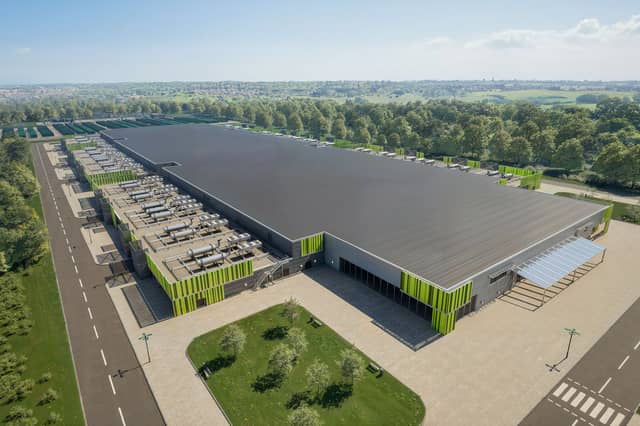

In Scotland, libraries use more water nationally than data centres do at present
Water is a topic on everyone’s lips right now.
With perhaps Britain’s hottest summer ever, water is a very current issue – from farmers concerned re their crops, to homeowners worried about hosepipe bans.
Add to this a number of recent proposals to build large scale data centres in Scotland, and the debate becomes hotter still – with alarming claims around the amount of water they may consume.
Data centres have been a feature of modern life for decades – Edinburgh has long been home to a few, for example in the Gyle – where they quietly power much of everyday life – our online banking and card payments, the NHS records our GPs rely on, the shopping we do online and the video calls we take from the kitchen table. Put simply, they are large buildings with computers inside, which rarely draw a second glance.
But the new generation of data centres will be much bigger – driven by ever-rising consumer demand, the need for large scale computer (for climate modelling and medical research, for example) and, yes, the demands of AI.
Apatura, the company I represent, is proposing five large green data centres across Scotland’s central belt – developments which, if approved, would bring billions of pounds of inward investment and thousands of long-term skilled jobs in their wake.

Scotland is really well placed to take advantage of this new industrial revolution, with an abundance of low carbon electricity, industrially designated land, a relatively cool climate, and a skilled workforce.
One of the principal concerns about these proposed developments is water use – with some claims that these new centres will use billions of litres of water per year.
The source of these figures is unclear, but they are likely based on historic USA figures where evaporative cooling has been used, in a very hot climate, not comparable to Scotland.
The contrast with what is actually being proposed in Scotland could not be more stark.
Closed loop
Inside a modern data centre, powerful computers process and store vast amounts of information. And to keep them running safely and efficiently, modern data centres use advanced closed-loop water cooling systems to maintain an even temperature within the server racks.
These closed loop systems are not major users of water and operate in a similar way to the water-cooling system in a petrol or diesel car.
Each system requires an initial ‘first fill’ to charge up the system and then only occasional top ups thereafter.
We calculate a 300MW data centre in Scotland would require a first fill of around 11,000m³ (11 million litres). With less water use annually thereafter. Nowhere near the billions claimed.
This figure is based on calculations provided by our consultant engineers and included in our planning submissions.
To put this in context, each person in Scotland uses an average of 150 litres of water a day, or 54,600 litres per annum, based on figures provided by Scottish Water.
Therefore, the first fill of a 300 MW data centre would use as much water as the annual consumption of 96 average homes, based on 2.11 people per home average.
To quote Scottish Water: “…in Scotland, libraries use more water nationally than data centres do.”
As a comparison, a 150-acre site in eastern Scotland, which is appropriate for a 300MW data centre, would accommodate around 1,800 homes at low to medium density.
So, a 300 MW data centre built on a 150-acre site in east central Scotland would have around five percent of the annual water impact as medium density housing built on the same land.
Rigorous planning system
Scotland has an extremely rigorous planning system which will examine the credentials of any data centre proposal in great detail, and data centre operators should include detailed analysis of the water use in their proposal at the time of application.
Data centres are identified in Scotland’s Fourth National Planning Framework (NPF4) as a National Development that are a “fundamentally important utility” to support Scotland’s economic and social needs.
Local planning authorities must still assess any proposal against relevant policies, including those on climate change, energy, and environmental impact, with expert input from a range of statutory consultees, who advise on water supply, drainage, flood risk, pollution and environmental impacts, for example; as well as considering representations from local communities and stakeholders.
If this all sounds a bit dry, well it is.
But it underscores the incredible rigour that Scotland places on examining development proposals before approval.
We fully support this process and are proud to be a co-signatory to the industry charter ‘Delivering green data centres in Scotland’ which sets out the tough standards against which we believe all new developments should be measured.
This has been developed as we await national guidance on the definition of a green data centre and includes a recommendation that all new data centres are district heat ready, enabling the potential to repurpose data centre heat as affordable low-carbon heat.
The report has been supported by several bodies including Prosper, Heat Network Scotland and the Renewable Energy Association.
Data centres are a fact of modern life, and Scotland has a unique opportunity to become a global leader in their development.
By all means let’s examine each proposal with all of the rigour it demands.
And when it comes to water use – please let’s stick to the facts.
Michael Hunter, Data Centre Partnerships Director at Apatura
Comments
Want to join the conversation? Please or to comment on this article.