
How the world is failing to tackle plastic pollution that's literally strangling the life out of our seas
After the failure of the United Nations Global Plastics Treaty talks, Christine Jardine explains why it’s a big problem


Plastic. It’s everywhere. So much so that it often passes us by. A few years ago, I tried to go without plastic for a month. I was doing well until I bought sandwiches presented, by the supermarket, in a paper bag. Or so I thought. Inside, the sandwiches were nestled in single-use plastic.
That defeat is, for me, a metaphor for the challenge we face in trying to tackle what has become one of the biggest obstacles to a healthier climate and planet. And why I believed it was vital that our UK Government took the lead in the UN Global Plastics Treaty talks which took place in Geneva until Friday.
Unfortunately, that didn’t happen. The talks ended having made no progress, no statement, and no real promise of improvement in the state of our oceans and the threat to wildlife. Instead, it seems the attraction of oil production wealth won out.
Oil wealth wins the day
Representatives from more than 170 countries had been aiming to finalise a legally binding treaty to address plastic pollution. The negotiations followed five previous rounds of talks that also failed to produce any agreement.
Although more than 100 countries support cuts to global plastic production, it was that wealth from oil which encouraged some nations to hold out against any production caps and blocked progress.
Ironically, I can see some justification for limited production. We do need some oil to see us through the just transition to a greener economy, and to have the capability to manufacture things like pharmaceuticals.
In terms of plastic itself, it is still essential in some areas which we wouldn’t want to see undermined, such as medical devices. There must be limits.
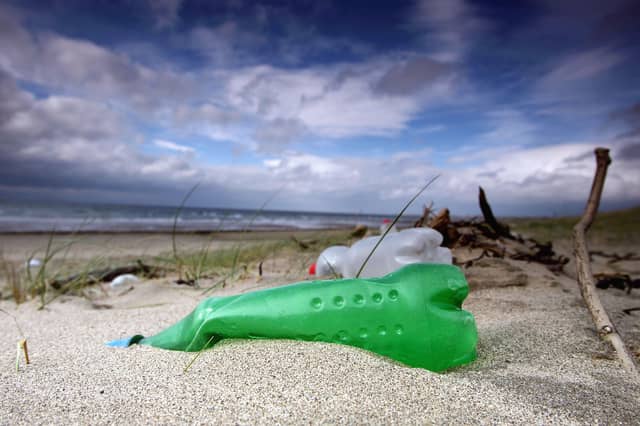
All around us, despite the fact that so many everyday plastic items are now recyclable, they are still turning up on our beaches, in the stomachs of dead marine animals or around the necks of young seals, literally strangling the life out of our seas.
Like so many people, for me it was Sir David Attenborough’s documentary series, The Blue Planet, which drove home the reality of the danger to our environment.
Perhaps it is our island existence which make us more aware as a community of the value of protecting our marine environment, but if we are to succeed, we needed to make the case more effectively in Geneva.
So much hope
In a recent Commons debate, my colleague Alistair Carmichael reminded us that “plastics as an industry emits more carbon than the entire global aviation and shipping industries”. Just one crucial reason why so many of us had invested so much hope in the Geneva talks to come up with an agreement.
Greenpeace and the Environmental Investigation Agency had defined one of the things they wanted to see as “a global target to reduce production of primary plastic polymers and related elements, such as reporting and national measures”.
They had also called for phasing out of harmful chemicals in plastic, improvements in the design of plastic products to protect human health and financial support for least developed economies.
That the Geneva conference should have failed so abjectly to fulfil any of those goals should be yet another wakeup call. We have to hope we get another chance.
Christine Jardine is Liberal Democrat MP for Edinburgh West
Comments
Want to join the conversation? Please or to comment on this article.