
How the European Court of Human Rights is defending free speech in Scotland – John McLellan
A leading law professor has questioned whether Scotland’s Ethical Standards Commission fully understands the protections for freedom of speech provided by the European Convention on Human Rights


Amidst the often fractious arguments about the future of the BBC, one of the undoubted benefits of having large, well-resourced media organisations is that, when the chips are down about freedom of expression and the Press, they can meet the expense involved in mounting a defence.
Only a handful of publishers can afford to make a principled stand, as Prince Harry and his chums found to their cost on taking their spurious claims of illegal phone hacking against the Daily Mail to court and finding themselves on the wrong end of a £34 million bill when they lost in spectacular fashion earlier this year.
Whether by good luck or judgment, ex-First Minister Humza Yousaf almost certainly avoided a similar fate in 2023 by deciding not to sue Elon Musk for labelling him a racist, which Mr Yousaf is definitely not.
The speech about lack of minority representation in the judiciary, on which Musk was commenting, was arguably capable of being interpreted as such, so the outcome was by no means certain. And few, if any, have deeper pockets than the multi-billionaire X/Twitter owner. Much better that Mr Yousaf is now putting his efforts into teaching Edinburgh University students about the benefits of constructive disagreement.
A landmark victory
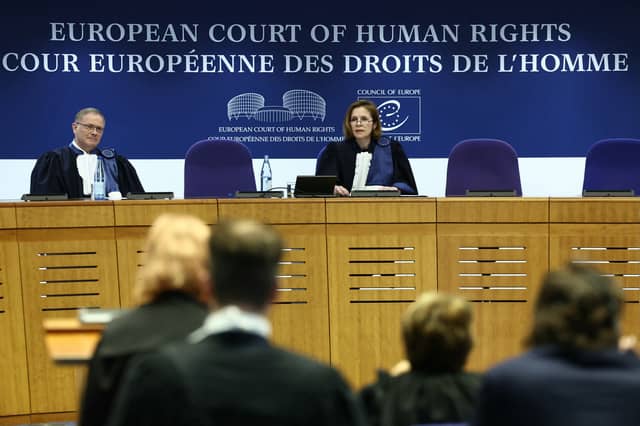
Back at Pacific Quay, this week BBC Scotland was celebrating a landmark victory in the European Court of Human Rights (ECHR) in Strasbourg, technically against the UK government but in reality against the Scottish judiciary, after a 2018 decision by an Aberdeen sheriff to exclude a reporter Steven Duff from a case involving Aberdeenshire care home operators accused of mistreating residents.
The public interest in reporting the proceedings should have been obvious but the sheriff allowed a defence application to hear the case in private.
The BBC was able to avoid a vast legal bill because it could go straight to Strasbourg, having successfully argued there were no remedies available in the UK court system. But it still took eight years to reach a decision. The last time BBC Scotland won a case at the ECHR, when a court order prevented the reporting of a collapsed drug trafficking trial in 2004, it took six years.
As in that 2010 ruling, the ECHR agreed there had been a breach of the BBC’s right to freedom of expression under Article 10 of the Convention. On both occasions, the lack of a means to resolve the situation was also deemed to be a breach of Article 13, designed to protect the right to a fair remedy.
The Scottish judiciary has gone to great lengths in recent years to open up the court system so justice can be properly seen to be done – the video footage from the trial of ex-SNP chief executive Peter Murrell is a good example – but even if their Lordships saw it coming, the decision will have caused not a little embarrassment in the corridors of Old Parliament House.
ECHR’s principles remain important
The ECHR is by no means a perfect organisation and the decision to find against the Swiss government for breaching human rights by not taking enough action on climate change was a damaging instance of over-reach into national politics, and made a compelling case for those who support leaving the Convention.
But the principles enshrined in its articles are as strong and relevant now as they were when drafted after the Second World War, with Conservative MP and Nuremberg prosecutor Sir David Maxwell Fyfe leading the drafting committee. If its principles didn’t exist, they would need to be devised, whether to be upheld by Strasbourg or another body, like the UK Supreme Court.
The right to freedom of expression is constantly under threat and no doubt there will be a howling clamour for action against the Daily Telegraph for its cartoon lampooning Greens leader Zack Polanksi and deputy leader Mothin Ali, which the party said was “antisemitic and racist”.
READ MORE: How Nicola Sturgeon's attacks on free speech created a lasting culture of censorship in Scotland
Like vampires, organisations of all kinds have a natural aversion to the sunlight Article 10 lets in, so it was appropriate that as the ECHR was handing down its ruling, Glasgow University’s respected professor of public law, Adam Tomkins, questioned whether Scotland’s Ethical Standards Commission fully understood the protections Article 10 offered to elected politicians, given the soaring number of complaints it was handling.
“I do not know if this is because the Standards Commission does not understand the law or if the Standards Commission understands it perfectly well but for some reason declines to apply it,” Mr Tomkins told the Herald newspaper.
A duty to uphold councils’ reputations
The answer almost certainly lies in a growing awareness amongst political opponents − and that includes indignant civil servants and officials − of the opportunity the strengthened Ethical Standards system offers to close down criticism, even if only temporarily. Article 10 is only referred to in the Code of Conduct advice notes but is not enshrined in its terms.
The new requirement to uphold the reputation of a local authority was a clear constraint on Article 10 rights from the minute it was written, and the Standards Commission completely misses the point in claiming that elected representatives can do their jobs without breaching the Code of Conduct.
The Commission does not actively seek out possible transgressions, but the Code is an open goal for vexatious complainants. If you are on the end of one, as I firmly believe I was in my time as a City of Edinburgh councillor, it’s a chastening experience.
Belatedly, Edinburgh Council has passed a motion of no confidence in the Ethical Standards Commission, latching onto the controversial case against Glasgow Councillor Fiona Higgins who felt the heat over a social media comment about a senior officer. Fortunately, wealthy businessman Paul McManus is backing her defence, but once again the protection of our basic freedoms comes down to cash.
Comments
Want to join the conversation? Please or to comment on this article.