
Why we should all heed Charlie Kirk's words about violence and free speech
Words are not violence – violence is violence – and the belief that they are is dangerous
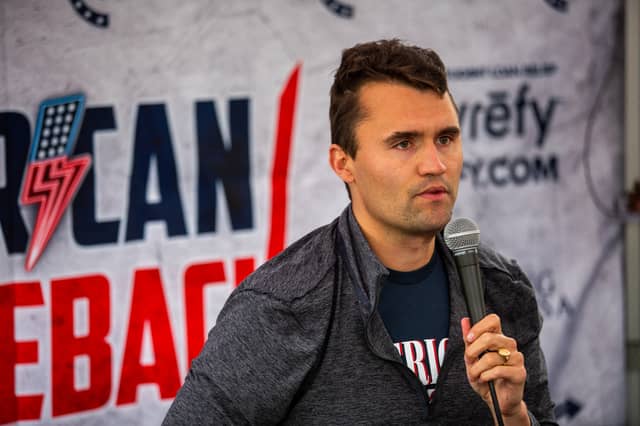


“You can tell a lot about a person by how they react when someone dies.” So wrote the Christian conservative activist and free speech campaigner Charlie Kirk on Twitter in November 2016.
It is tempting to speculate what Kirk would have made of the reaction to his own violent death at the hands of a gunman at a public debate on a university campus in Utah earlier this month.
Many have not acquitted themselves well. A common response was to preface reflections on his assassination with a disassociation from his views. “Of course I didn’t agree with him on x, y, and z, but nobody deserves to die in that way.” In the immediate aftermath of such a heinous crime, why feel the need to frame and qualify condemnation in this way?
Celebrating a murder
Others went further by suggesting Kirk’s advocacy for Americans’ right to bear arms meant he perhaps should have had less reason than others to complain about being shot dead. “Of course no one deserves to die in this way, but he was a passionate defender of the Second Amendment, so, you know…”
The president-elect of Oxford Union, George Abaraonye, was criticised after he reportedly posted comments on WhatsApp and Instagram that appeared to celebrate Kirk’s death. Abaraonye had debated face to face with him at Oxford University just four months earlier.
In the dank fever swamps of social media, things took a darker turn. On sites such as Bluesky and Reddit, users rejoiced at the news of Kirk’s murder and suggested which prominent figures whose views they found objectionable should be next on the hit list. On TikTok, macabre videos surfaced of people singing and dancing in celebration.
Clearly, Kirk’s detractors were legion, but so were his fans, who included President Donald Trump and Vice President JD Vance.
Tipped as a future president
Trump credited him and his organisation Turning Point USA with helping persuade millions of young people to vote Republican in 2024, and was one of many to tip Kirk as a future Commander in Chief. Vance and Kirk were close friends and the campaigner was considered by the vice president to have been pivotal in Trump’s decision to choose him as a running mate.
Five days after his murder, Vance guest-hosted Kirk’s podcast amid growing anger over the response from some on the political left to the assassination. Numerous workers had been fired, suspended or censured over comments they had made, including teachers, firefighters and journalists. A shop worker in Michigan was reportedly sacked for refusing to print a poster of Kirk for a vigil.
For many on the right, Vance veered uncomfortably close towards the “cancel culture” they so decry on the left when he told Kirk’s podcast audience: “When you see someone celebrating Charlie’s murder, call them out. And hell, call their employer.”
Surely a healthier approach is to allow society to autocorrect through a kind of non-mandatory social sanctioning. For example, it does not reflect well on you if your reaction to seeing a 31-year-old man shot dead as he promotes open debate on a university campus, leaving a young widow and two small children, is to film yourself performing a jig in celebration and then post the video online for all to see.
You should not be surprised if prospective employers choose to recruit someone else, who does not behave in this way, instead of you. Similarly, you should not be surprised if friends decide they no longer want to associate with you.
Words are not violence
Attorney General Pam Bondi went even further in raising the hackles of conservative liberals by pledging the Trump administration would “absolutely target” those who use “hate speech” in the wake of the assassination.
Kirk himself had often made the point that there is no exception for “hate speech” in the First Amendment to the US Constitution protecting freedom of speech. Following an outcry from fellow Republicans, Bondi later effectively retracted her comments by saying her office would not prosecute or investigate anyone for alleged hate speech, only for speech that incites violence, which is, quite rightly, already illegal.
Words are not violence and we should challenge any suggestion that they are. Violence is violence. But if for some reason we have come to believe that words are violence, and we refuse to concede we have lost the argument, there are two possible courses of action. The first is to shut down debate through some form of censorship. The second is to fight ‘violence’ with violence.
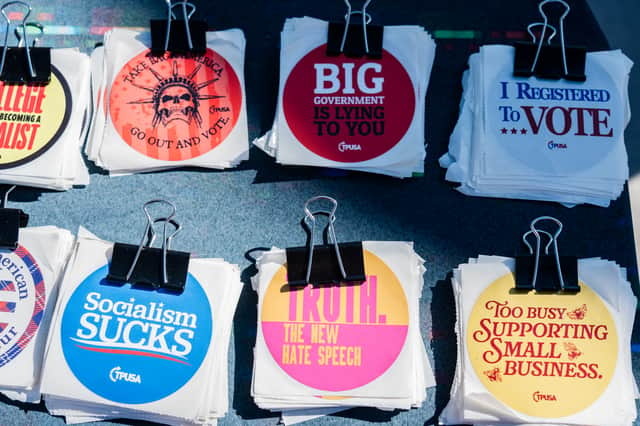
If the former fails, there will always be those who are feeble-minded enough to believe the latter course is permissible or even righteous, especially if they have become convinced their opponent is a “fascist” or a “Nazi”. Kirk was entitled to his arguments and beliefs, however strongly others disagreed with them.
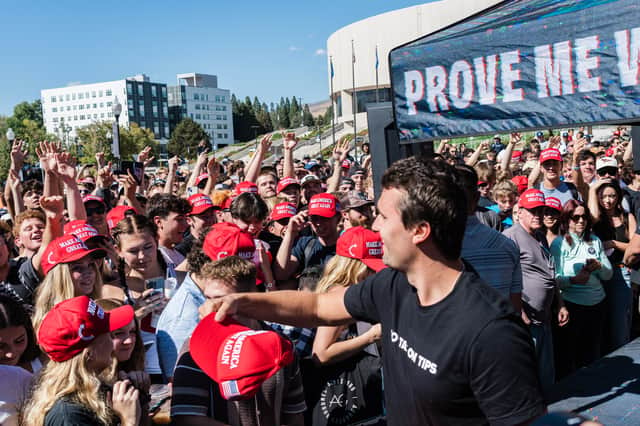
The correct response from opponents is to make better arguments, which is what Kirk, with his roadshow slogan “prove me wrong”, challenged them to do. It seems he would have been alarmed by the backlash from some on the right provoked by the reaction to his death from some on the left.
He would be glad if his legacy became more open debate and greater protection for the First Amendment and horrified if it became less.
“When people stop talking, really bad stuff starts,” Kirk once told a student attending one of his events. “When you stop having a human connection with someone you disagree with, it becomes a lot easier to want to commit violence against that group.
“What we as a culture have to get back to is being able to have reasonable disagreement where violence is not an option.”
Comments
Want to join the conversation? Please or to comment on this article.