
How Scotland's electric travel revolution is set to hit the sea and sky – Alastair Dalton

The joy of zero-emission transport is about more than cleaner air and a cleaner conscience about global warming
Travel can be amazing but it’s really bad for the environment. I often find the experience of getting about to be inspirational – an additional joy to the pleasures to be found once reaching a new destination.
But our wanderlust – and increasing day-to-day mobility – is taking its toll, with transport the largest source of Scotland’s emissions, including one third of its greenhouse gases. The good news is that things are changing, as I realised when I reflected on my own carbon footprint.
My last major journey by road was a 550-mile round trip between Glasgow and Wick in July to meet Britain’s youngest retained lighthouse keeper, which I realised afterwards had been zero emission apart from the last few miles to the lighthouse itself, in a diesel Northern Lighthouse Board car.
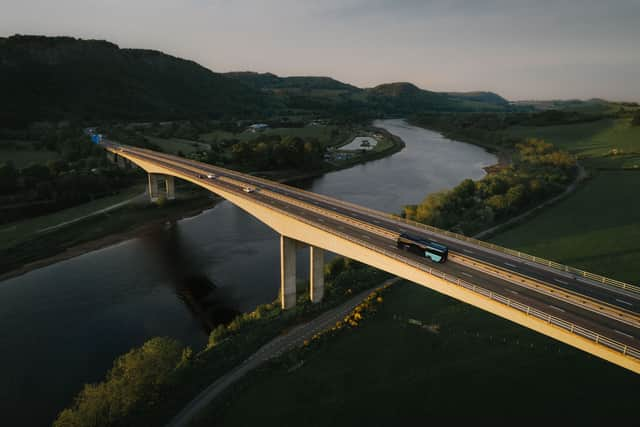

Dramatic changes in just a few years
I had first taken an electric train from home to our office in Glasgow, then an electric coach to Inverness, and an electric bus to where I stayed overnight, followed by another electric coach the next morning to Wick. En route, I’d even taken a spin round Inverness to fill in time on an electric hire bike.
Then, heading south, I got a lift with a friend in her electric car. I don’t think that would have been possible even a few years ago, and I would have been petrol or diesel powered pretty much all the way.
On my daily commute, albeit only three miles and in Scotland’s largest city, I have multiple zero-emission options, from walking – in extremis – to cycling (my own pedal-powered bike or an electric hire cycle) to taking the bus, many of which on my route are electric, or train (electric on my line for 66 years) or Glasgow Subway (electric for 91 years).
Admittedly, I haven’t replaced my 11-year-old petrol car with an electric model, but that’s because I don’t use it much and the relatively high cost that would be involved.
In fact, the car has been kept on mainly for my children to learn to drive, although temporarily insuring it for my daughter until she passed her test was exorbitant enough. It’s just as well that she’s now away to university as the premium for her as a qualified driver would be unaffordable.
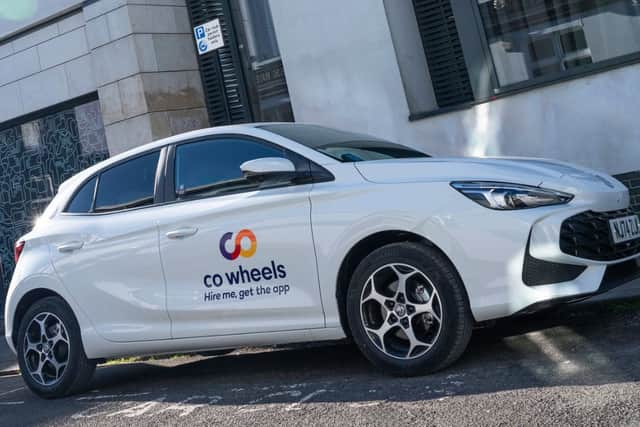
Green-tagged number plates
For my own driving, I’m far more likely in the future to follow a neighbour’s lead and sell the car in favour of a car-sharing club, many of whose vehicles are either electric or hybrid, and one of which is stationed in a reserved parking space opposite my house. That’s my go-to wheels whenever car is the only option and mine is not available.
More broadly, electric vehicles with their green-tagged number plates are now commonplace when only a few years ago they were the preserve of the enthusiast, as I recall thinking when attending the annual electric vehicle showcases held by Edinburgh Napier University.
In choosing to take all these green options to get about, I’m conscious of the environmental benefits, but there’s another equally strong motivation – fun.
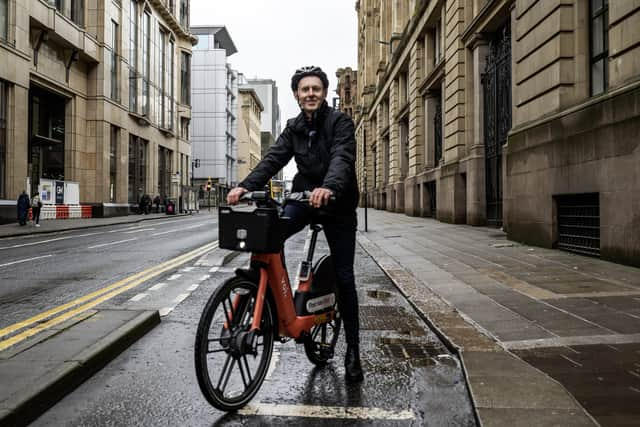
The thrill of electric travel
As I have written before, riding electric bikes and driving electric cars are both hugely enjoyable. I recall when trying them for the first time the thrill of their breathtaking acceleration, and ease of use – smooth, quiet, even relaxing. Though the Tesla’s Autopilot feature that accelerates the car to the speed in a flash was pretty unnerving.
To a lesser extent, there are some similarities when your rail line is electrified and the trains switch from diesel, like the main Glasgow-Edinburgh route eight years ago. Passengers in the Borders and Fife will be next to benefit from the transition, but alas that looks like still being five years away.

Zero-emission bus travel
Meantime, the new kid on the block is the electric long-distance coach. While First Glasgow and Stagecoach have been leading the way in growing their electric bus fleets in Scotland, fast-growing Ember here now has one of the largest electric networks in the world.
That means, on many inter-city routes north of the Border, it’s possible to choose a zero-emission option where public transport used to be a choice of diesel bus or diesel train.
Ember is already the biggest long-distance coach operator in Scotland and plans to nearly double its electric fleet from 100 to 240 vehicles by the end of next year.
What’s true of other electric vehicles is true of buses and coaches too. My experience is they are smoother and quieter, and nimbler too, as you soon learn by rushing to sit or hold on tighter as they move off.
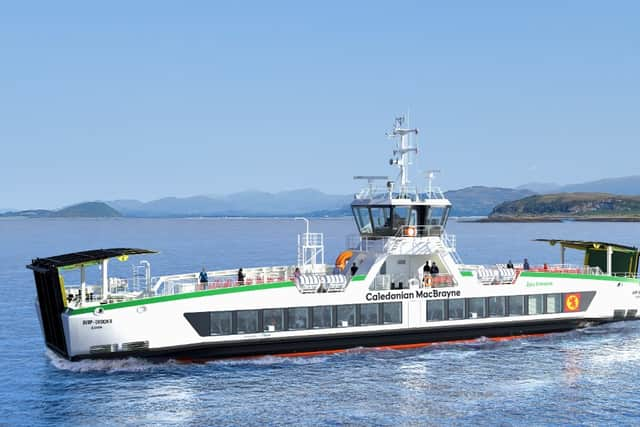
But it doesn’t end there. From next year, if things go to plan – and there have been no delays reported to date – CalMac passengers will be travelling aboard the first of a fleet of all-electric ferries on its shorter routes, such as to Gigha, Iona and Raasay.
Depending on the sea state, the difference in ride quality may be rather less dramatic, but we shall see.
A tough nut to crack
Finally, the prospect of electric flight looks not too far off either. Scottish airline Loganair is in the vanguard here, having conducted several trials, and it hopes electric aircraft will carry their first fare-paying passengers by 2029-30.
This, however, is the toughest nut to crack, and may be restricted to short flights initially, such as within Orkney where some of the research has been focused.

Hydrogen power had been in the ascendant – as it had for trains, buses and potentially even cars – but its cost along with downsides such as weight and tricky handling seem to have shifted the balance back towards battery electric, at least for now.
But as battery technology develops, and the pressure to reduce aviation emissions mounts at a time of continuing air travel growth, longer-range flights could follow.
Here’s to cleaner air wherever we travel, a clearer conscience – and more enjoyment along the way.
Comments
Want to join the conversation? Please or to comment on this article.