
The long farewell: A journey along Scotland’s Coffin Roads
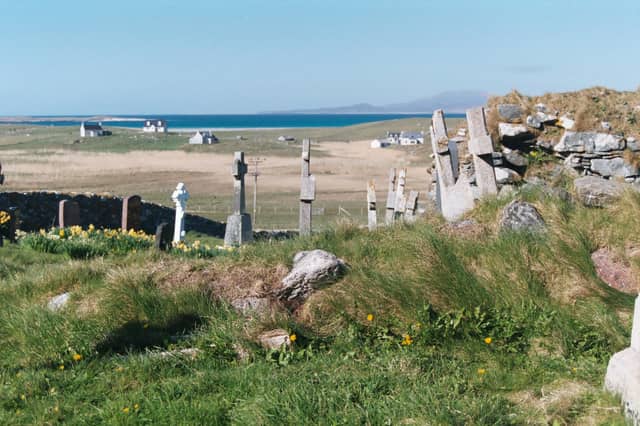

Many of these coffin roads are still accessible as walking routes. They provide a physical link to past communities and a window into Gaelic culture and beliefs in the Highlands and Islands.
Across Scotland’s Highland and Island landscapes, carved into imposing hillsides, desolate moors, and shorelines, the well-travelled routes known as rathadan-ciste, or coffin roads, can be found.
For centuries, remote communities used these roads to carry their dead from small townships to consecrated burial grounds. These final resting places could often be many miles away. The journey could take several days and required the entire funeral procession to cross difficult terrain.
Many of these coffin roads are still accessible as walking routes. They provide a physical link to past communities and a window into Gaelic culture and beliefs in the Highlands and Islands.
These communities considered coffin roads as liminal spaces. They helped ease the departed, and those left behind, through the transition between life and death. As a result, they were seen as places where the ‘veil’ between the living and the dead was particularly thin.
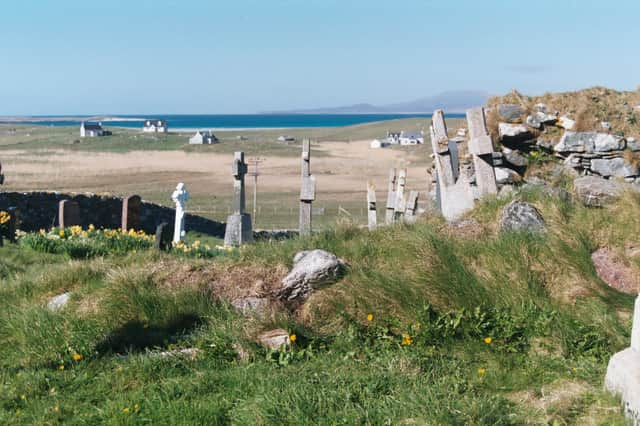
Beginning in the medieval period and lasting until well into the 19th century, burial practices in Scotland were controlled by church law and parish structures. Remote communities could not bury their dead locally, even though challenging terrain could make burying them elsewhere a difficult undertaking.
Church ruled meant burials must take place in specific kirkyards - each parish kirkyard served a defined geographical area and in the Highlands and Islands, those areas were often vast.
For communities living on the outermost boundaries, this requirement created long journeys made along the coffin roads.
The terrain meant carrying coffins often had to be carried by hand, often in relays if over a great distance.
Along with necessity, a deep connection to theology and the importance of consecrated ground in Gaelic Christian and folk belief traditions shaped the use of the coffin roads.
Most coffin roads traverse from east to west. The people of Scotland’s Highlands and Islands shared the desire of many other early cultures to be buried in the west.
This was in accordance with the belief in Celtic mythology that the heavenly realm of the dead (often described as Tìr nan Òg, ‘the land of eternal youth’ in Gaelic) existed as islands far out to the west, beyond the setting sun.
Read more: ‘Jaw dropping’ Highland wall discovery could be ancient deer trap dating back to Neolithic age
In Gaelic culture, the coffin roads, or rathadan-ciste, were the setting for funeral customs that reflected strong community bonds.
Death was not hidden, sanitised or private. It was regarded as an inevitable aspect of the cycle of life. An event which the whole town openly discussed, prepared for, and responded to.
When someone died, their body would rest at home for a two to three day wake hosted by their loved ones.
When it was time for the burial, the entire community was involved in preparing for the procession.
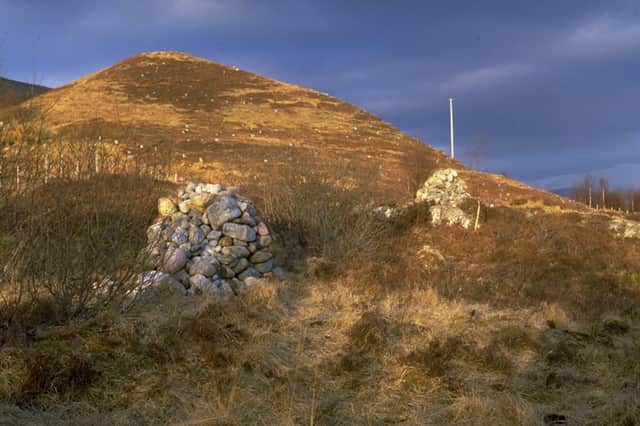
Along longer coffin roads, rest stops for the procession were marked by cùirn cuimhne meaning ‘memory cairns’ built by the men who were carrying the coffin as an act of remembrance.
Another practice that would often accompany processions along the coffin roads was that of caoineadh (keening).
The keening women would follow the coffin and perform a loud, emotive expression of grief in the form of rhythmic crying, wailing, singing, and chanting. Keening helped mourners release their sorrow. It was also believed to guide the soul safely into the next world.
There is a rich history of folklore associated with the coffin roads, and the spiritual beliefs of the communities that used them.
Chief among these was the conviction that certain rituals must be performed to allow the spirit to find rest, preventing them from attempting to return home or haunt the living.
These could include: opening a window after someone died to allow their spirit to leave; using an unfamiliar exit to transport the body out of the home; crossing water during the funeral procession to create a spiritual barrier that prevented the dead from returning; and carrying the dead with their feet pointing in the direction of travel to prevented them from ‘looking back.’
The first of three examples of notable coffin roads is Kilmartin Glen.
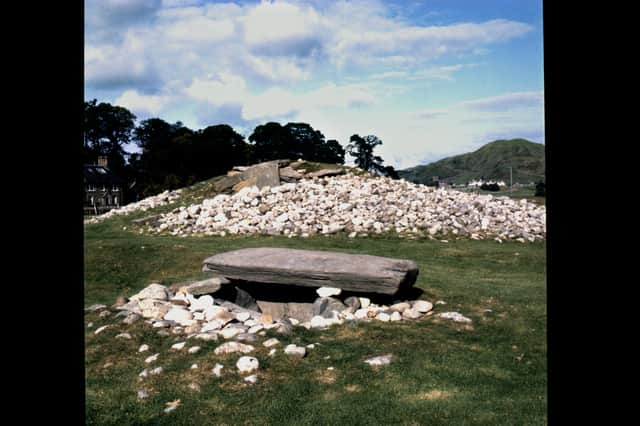
One of the most archaeologically significant sites in Scotland, Kilmartin Glen is also home to what author Ian Bradley (The Coffin Roads: Journeys to the West) describes as the earliest coffin road. For over 3,000 years, funeral processions carried bodies or ashes of the dead through the glen to ancient burial sites.
There are more than 800 prehistoric monuments to be found in Kilmartin Glen. These include burial cists, cairns, and chambered cairns used by Neolithic and Bronze Age communities to house the remains of the deceased.
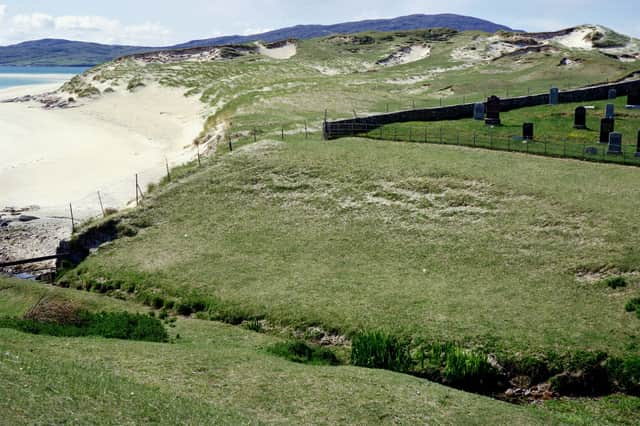
One of Scotland’s better known coffin roads is the Harris coffin road. This road starts on the harsh, rocky east coast and winds for approximately 3.5 miles across the breadth of the island. It finishes at the sandy machair of the west.
The ancient rocks that are a striking feature of Harris’ east coast render it too hard and shallow for burials. This meant coffins had to be carried to the softer, sandier ground of the west. This also aligns with the desire to be buried in the west.
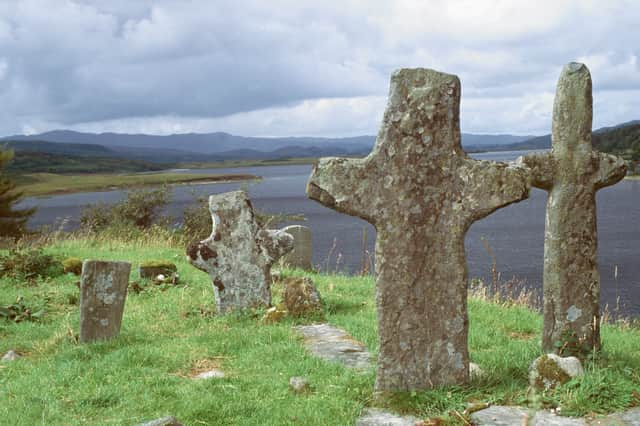
The final example is not a coffin road itself. Instead, it was the destination reached by several coffin roads. Eilean Fhianain (St Finan’s Isle) sits on Loch Shiel, between Glenfinnan and Acharacle.
It is home to several graves from at least the early medieval period, if not earlier. Some of these graves are marked by medieval cross-slabs attributed to the late 15th century. Other uncarved stones may be older still.
The coffin roads survive as a physical trace of Scotland’s cultural heritage. They offer insight into the traditions and beliefs of the people that forged and maintained them. They are a unique demonstration of geography, necessity, and faith combined.
Ciara Rafferty works in the Heritage Information, Recording & Business Service, including supporting the management and accessibility of the National Record of the Historic Environment.
Comments
Want to join the conversation? Please or to comment on this article.