
What do we want from Netflix’s new Pride and Prejudice adaptation? Two Jane Austen fanatics think it through
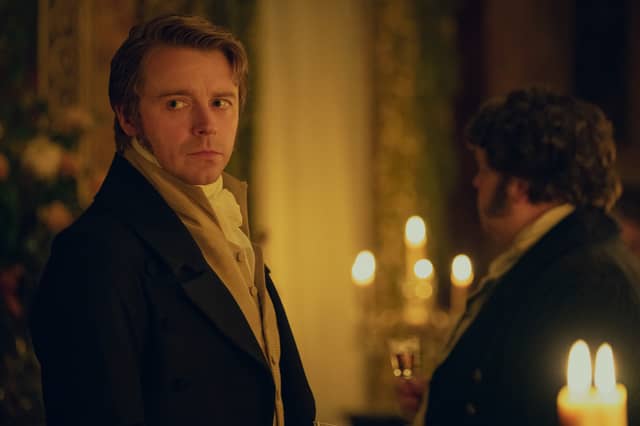

With the new Pride and Prejudice on the horizon, what do Austen fanatics want to see?
We are on the verge of another Jane Austen adaptation, and the excitement is building.
It’s been a strong year for Austen acolytes, with Sense and Sensibility hitting cinemas, and a Christmas special of The Other Bennet Sister joyfully appearing.
Now, it is time for the big one. Pride and Prejudice, arriving on Netflix on December 3, and fans are eagerly holding their breath.
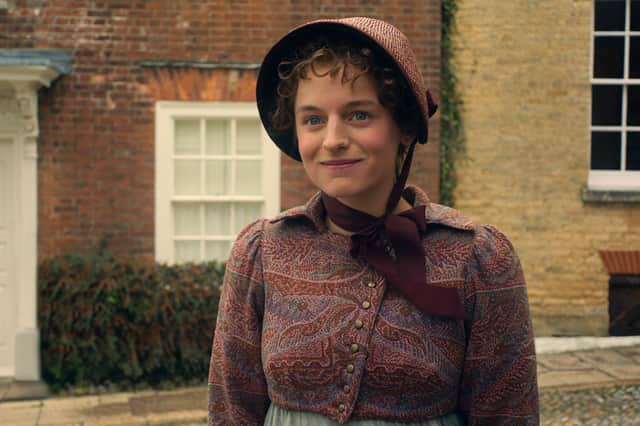
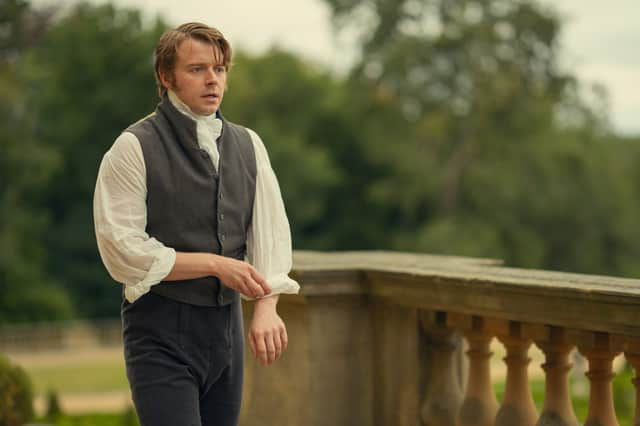
Emma Corrin is taking over the iconic role of Elizabeth Bennet, and Scotland’s own Jack Lowden is stepping into Fitzwilliam Darcy’s stately shoes.
But what can we expect? Are Austen fans apprehensive?
Rachel and Lauren are both Austen mega fans, and have been thinking of little else than their expectations and hopes for the new adaptation.
Here are their thoughts.
Elizabeth Bennet
Rachel
Oh my precious Elizabeth. You have to go through it all again!
My main gripe with previous Lizzy’s is the underlying sexual tension with Darcy - this idea that she is entranced by him, even before the Wickham revelation.
She doesn’t like him. She is not interested in him. He’s a rude man who didn’t want to dance with her, and was cruel to a handsome fella she likes.
She wouldn’t almost kiss him in the rain after rejecting his proposal.
She hates him.
What Jane Austen does best, is allowing all her heroines a journey of self discovery.
We follow them as they learn about themselves, about the world around them, and their place in it.
What is exciting about Pride and Prejudice is that we get to see Darcy’s own self realisation at the same time. We see them both walk their own path, and joyfully, that path merges at the end.
Lauren
I think Elizabeth is one of the most compelling characters ever written because of her growth throughout the story.
It may have been triggered by Darcy, but Austen has made her so deeply human that it feels as though Lizzy’s path of self discovery would happen even without him.
She’s intelligent and quick-witted, both things she is more than aware of, but she sometimes lets that get the better of her. She is, in her own way, equally as proud as Darcy but has a tendency towards casting judgement too soon.
This comes across well in almost every adaptation of Pride and Prejudice from Jennifer Ehle’s sly looks as Lizzy in the 1995 miniseries to Keira Knightley’s more bold take on the character in the 2005 film.
There’s a real charm to Knightley’s performance but her interest in Darcy is implied far too early and there is only so much that an actor can do when the script is working against them.
I think Emma Corrin’s challenge lies, in part, with being able to balance how sharp Lizzy is with how vulnerable she can be, especially when she realises her errors of judgement.
I’m also really interested in seeing how Dolly Alderton will showcase the relationship between Lizzy, her sisters and her mother.
She’s close with Jane and is the apple of her father’s eye in the book, but I think a 2026 adaptation calls for a new reading of connections in the Bennet family.
I think that it would really interesting if we’re able to see Lizzy’s perspective on her family members shift as she goes on this emotional journey, triggered by Darcy, that chews her up and spits her out as a better person at the end.
Fitzwilliam Darcy
Rachel
Everyone has specifications for their perfect Darcy. Tall, dark, handsome, brooding, complex. In many ways, he exists outside of the book and has become a blank page for people to project their dream man.
I personally want him to be awful.
Not all the way through, but I really am not keen on the idea that he is just misunderstood at the beginning, or socially awkward and merely making mishaps.
He’s meant to be a cold, aloof, and a pretty mean person at the start of the story.
This makes his transformation all the more satisfying and meaningful.
The mic drop moment when Lizzy refuses him (spoilers, if spoilers are possible) is a moment where he sees himself, for the first time, through the eyes of others.
He sees how others must see him, and it shocks and horrifies him.
Compounded with the loss of all hope of marrying Lizzy, he must now reckon with this new knowledge. That how he views himself is clashing with how he is presenting to the world. It is a bitter pill, and it is this awakening that brings about change.
This profound transformation, coupled with Lizzy’s own self awakening, is what makes their eventually happy ending so beautiful.
Lauren
I think the trouble with adapting Pride and Prejudice often comes down to the different versions of the characters which exist in audiences' heads, and Mr Darcy in particular. There’s the book version, obviously, but both Matthew Macfadyen’s performance in the 2005 film and Colin Firth’s turn in the 1995 miniseries loom large.
I am confident in Jack Lowden’s abilities as an actor however, the responsibility doesn’t lie solely with him. It comes down to the script, direction, and interactions with other characters as well.
I think the main thing Netflix’s version of the show must get right with Darcy is how “abominable” his behaviour towards Elizabeth is in the beginning. From the very first ball, Austen writes that Darcy, while handsome, quickly turned ugly to those in attendance due to his proud nature and “forbidding, disagreeable countenance".
Meanwhile, the film implies romantic tension between Lizzy and Darcy from their very first introduction, which isn’t the case at all.
The self-discovery and character growth required from Darcy is something that can be lacking when he appears on screen, largely because of the condensed time that there is to tell the story — especially in the case of the 2005 film. The hand flex is iconic, of course, but the film is hardly able to scratch the surface in terms of Darcy’s emotional arc.
Equally iconic is Firth’s wet shirt, but over the course of the six episode miniseries the creators were quite able to delve into the intricacies of Darcy, from his initial behaviour to his gradual realisation and understanding.
My main hope for Netflix’s Pride and Prejudice is that the creators have faith in the audience’s ability to understand the journey that Darcy needs to go on to be worthy of Elizabeth, from his near irredeemable first impression to the slow unravelling of who he actually is.
Darcy needs to have demonstrable changes in his behaviours, otherwise it just isn’t satisfying.
Nuance
Rachel
Often it feels like there is no world outside Lizzy and Darcy, it all melts away as they go to the dance floor. But Pride and Prejudice is a rich tapestry of characters.
We have seen from the recent book, and wildly successful adaptation, of The Other Bennet Sister that there are a myriad of interesting and playful ways that some of the more background characters in Austen’s novel can breathe and move.
I am not against this and am keen and interested to see more of it.
Similar to Darcy, many of Austen’s characters have taken a life of their own beyond the novel, and I would like to see some of the more egregious type-casting altered in this new version.
Lydia. Poor, sweet, silly, silly Lydia. She’s 15, groomed by a much older man because she was indulged by her mother and ignored by her father. She is not cruel, or malicious. She’s a silly child.
And poor Mary, can we ever look at her the same after The Other Bennet Sister? Don’t worry Mary, we’ve seen your future and it is glowing bright.
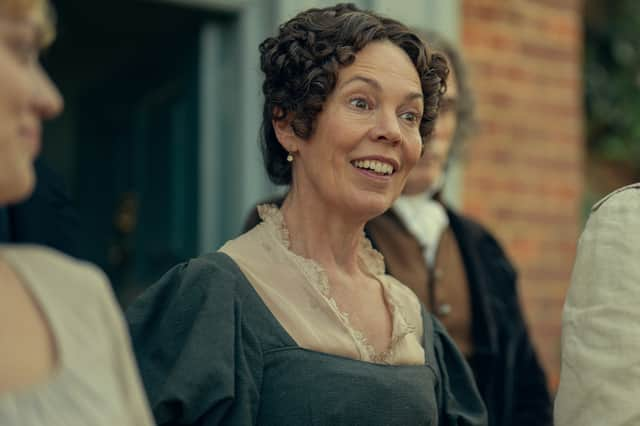
Perhaps I am most interested in Mrs Bennet.
I can’t see Olivia Coleman doing anything but a phenomenal job, but I am keen not to see us lean too much towards the “misunderstood heroic figure”, just a little is fine. But I like my Mrs Bennet vulgar and difficult to handle.
I will add, Mr Collins has been perfect in every single adaptation of P&P. He’s such a joyous character to watch, and I am sure this time will be no different. It seems impossible to go wrong with him.
Lauren
The beauty of Pride and Prejudice isn’t just with the slow burn romance between Elizabeth and Darcy, but in the people surrounding them as well.
There are so many excellent characters in Austen’s book and I think if you’re adapting something for the umpteenth time that getting the fundamentals right should be a priority — but that you should also be willing to do something a little different. (But not too different, like Netflix’s Persuasion.)
Often these characters take a life of their own, which is always exciting. I reference the 2005 film and the 1995 miniseries all the time.
Mostly, Alison Steadman as Mrs Bennet yelling about her nerves, or Tom Hollander as Mr Collins when he says: “What excellent boiled potatoes.”
These are two characters who have been played very differently depending on the adaptation, which is never clearer than in The Other Bennet Sister.
The BBC series is based on a book by Janice Hadlow, which follows the plain and bookish Mary Bennet as she finds love for herself, and has softer views of characters like Mr Collins while being more critical of those like Mrs Bennet.
It’s a great example of how nuanced a lot of Austen’s characters are. Hadlow has a hugely different view on Mrs Bennet than I do.
In Pride and Prejudice, for the most part I find Mrs Bennet to be someone who has the best intentions for her family, even if she often ends up making a fool of them and herself in the process.
I think Olivia Colman being cast in the Netflix series is a bold statement that she’s going to play a bigger role than she has in previous adaptations. In the series trailer, Mrs Bennet even says aloud the book’s opening line: “It is a truth universally acknowledged, that a single man in possession of a good fortune must be in want of a wife.”
I think that it will be interesting to see which form this will take, exactly, as Mrs Bennet is by no means perfect and neither is the rest of the Bennet family.
It’s one of the reasons why I really hope that her role is full of nuance. Mrs Bennet can wish for one thing but her actions actively harm her goals.
She can be a powerhouse mother seeking wealthy male suitors for her daughters, but she should also be messy and offputting to some. What Mrs Bennet absolutely shouldn’t be is a perfect mother though.
Which leads into the Lydia problem. There are different ways this can go, and I am intrigued by the possibilities.
I think it’s important to draw comparisons between Lydia and Darcy’s sister Georgiana, both of whom fall under Wickham’s spell. But at the end of the day, Lydia is a child who has essentially been groomed and, because of the time, ends up married. She is silly and a bit vain, yes, but that doesn’t mean that she’s evil or deserves unhappiness.
I think she’s a very interesting character for lots of reasons, but especially because a lot of her actions come back to the parents — again! Nuance.
I could go on and on, about how important that is in Austen novels, but in terms of Netflix’s Pride and Prejudice, I really hope it means that we will get alternative perspectives on the events in the book which help it stand out from those which came before.
Even if I hate the direction the show takes, I think it’s important to have something which separates it from the pack. (But again. Not like Persuasion. Anything but that.)
Aesthetics
Rachel
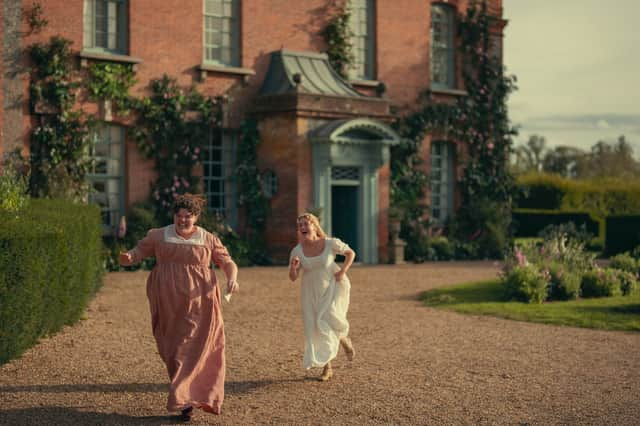
Even from the trailer, we can tell that this is going to be a visual feast. The costumes look beautiful, and the world that it exists in is compelling and breath-taking.
I hope, as the 2005 version already exists, we steer away from the sweeping, yearning, vistas and get back into the characters.
The Joe Wright scenery was magnificent, but I’m far more interested in the little conversations, glances and intricacies of the people in Pride and Prejudice. Not just Lizzy and Darcy when they’re together, but how they live and exist apart - as they are through most of the story.
I read somewhere, from someone claiming to have seen a preview, that this adaptation had a Greta Gerwig’s Little Women feel to it and I melted with happiness. I hope this is true because yes, that’s exactly what I want to see and feel. I am looking for that sparkling warmth to leap off the screen.
Lauren
From what we’ve already seen, I’m excited about what lies in store with the visuals for the miniseries.
I love the BBC miniseries, but I really wish I could watch it in higher quality. I think the 2005 film is perfectly cinematic, but the Bennet house bothers me a little. Works for film, but I want to see something more akin to the 1995 show from Netflix.
The locations and set design already seem promising in showing the wealth disparity between the Bennet’s and Mr Darcy.
Then there’s all of the grand landscapes and the subtle, shared looks between characters which help establish their relationships.
It’s going to be pretty, but I hope it’s a good mix of previous adaptations, and that if there is a moment such as the wet shirt scene or the hand flex, that it feels organic.
What I don’t want from a Pride and Prejudice adaptation
Rachel
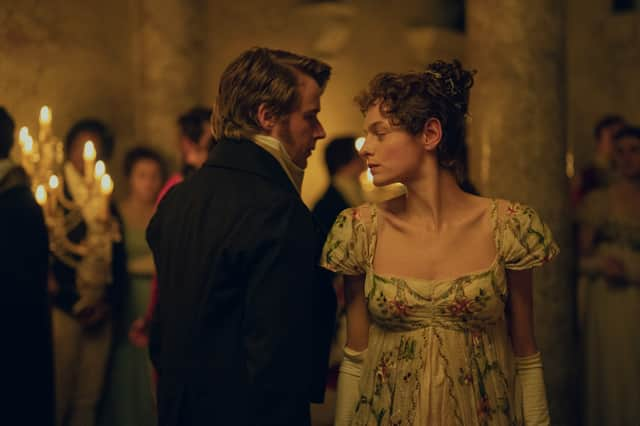
I shall say it bluntly. I don’t want tropes.
So much of our romance is a tick box of moments between the two main lovers, and in between, we’re just twiddling our thumbs until the next moment.
I understand the modern desire for “yearning”, and I love that too, I do. But I don’t want it to dominate the entire production, leaving little room to spend time with the rich and joyful array of characters that Austen created for us.
The reason the 1995 adaptation surely sits in the “best book adaptation of all time” list, very near the top, is that it lets our Bennets, our Bingleys, our Collins and our Darcy’s breathe and live without tapping through a regimented trope quota.
I want to feel that I know our heroic couple as individuals, with inner lives and thoughts, rather than them just existing to ‘get together at the end’.
Lauren
Pride and Prejudice is the origin of the enemies-to-lovers trope. It will never be replicated as successfully ever again and I will be extremely disappointed if the show decides to lean too heavily on our modern understanding of that trope to help tell the story.
The beauty of Austen’s work is that she shows us the ways Lizzy and Darcy need to grow in order for them to come together and choose a relationship.
I love a romance novel but so many contemporary books tell the audience how they are supposed to feel instead of showing it, and I am concerned that this will rear its head with Pride and Prejudice.
Netflix are very guilty of holding viewers' hands and including clunky lines of dialogue instead of taking the time to properly show the intent of characters.
Using tropes can be a way of cheating this understanding, but unless they are executed perfectly it can very easily sour a piece of media for me.
The slow burn between Lizzy and Darcy; that deep yearning has to be present. The story requires time to breathe, and it is less satisfying when rushed. It’s a full miniseries, so there’s no excuse for this.
Comments
Want to join the conversation? Please or to comment on this article.