
Drinking cup raised by Burns at Ellisland returns to his 'sweet poetic ground'
.jpeg?trim=0,0,0,0&crop=&width=640&quality=70&enable=upscale)

The cup was sipped from by the bard at his farm in Dumfries and Galloway, to where it will now return
It is an object that takes us to the heart of the daily life of Robert Burns, in the place that he called his “sweet poetic ground”.
A drinking cup that belonged to the bard has returned from Australia to go on show at the farmhouse near Dumfries where the poet is thought to have used it more than 200 years ago.
The cup was owned by the Taylor family for many generations after they bought it at a sale of the poet’s effects in 1791.
In the years that followed, it descended through seven generations of the family, who around 1805 acquired Ellisland Farm, the home Burns designed and lived in from 1788 to 1791.
Early in the 20th century it was taken to Australia by a member of the family who emigrated and was treated as a treasured heirloom.
The cup recently surfaced at an auction in Australia and was identified by the Robert Burns Ellisland Trust as an object of potential national significance.
It was bought at auction by an Australian antiques dealer and conservation work was carried out before it was offered for onward sale.
The cup has now been acquired by the Robert Burns Ellisland Trust with help from the National Fund for Acquisitions and will go on display later this month at Ellisland Museum and Farm near Dumfries.
Adam Dickson, project curator at the Robert Burns Ellisland Trust, said: “Every new piece of evidence at Ellisland deepens our understanding of what makes this place so exceptional.
“Objects like this are particularly precious because they connect us directly to Burns’s daily life.
“The cup has had a remarkable afterlife, and it was even used at a Burns Supper in Adelaide in 1956, where it was drunk from by the governor of South Australia, Sir Robert George.
“Its journey has parallels with the reach of Burns’s legacy, carried around the world by the Scottish diaspora.
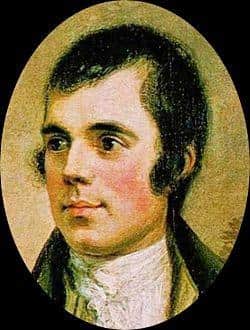
“To have the cup back at Ellisland, in the room where Burns would very likely have used it, is an extraordinary moment for the collection and for everyone who cares about this place.”
The cup is made of horn and was later embellished with a silver rim, edging and provenance plaque.
The trust was able to authenticate the cup against its own detailed research into the Taylor family and their descendants, which was carried out by Logan Fry, a local student who helps with curatorial research.
Mr Dickson said: “We are very grateful to the National Fund for Acquisitions for making this acquisition possible and to Logan whose meticulous research helped us prove its authenticity.”
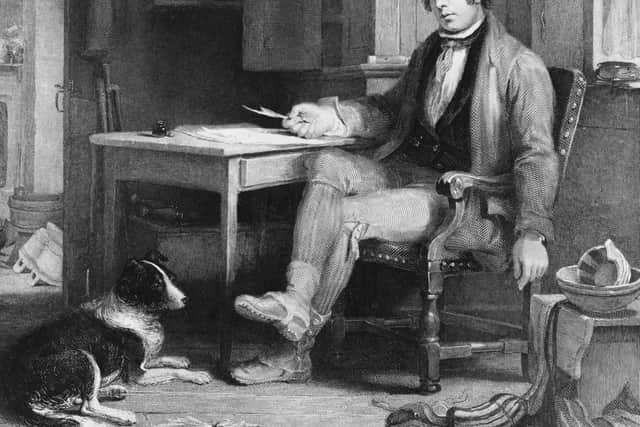
The cup arrived back in Scotland in May and is undergoing a gradual acclimatisation process to minimise any impact of changes in temperature and humidity following its return from Australia.
It will go on display on July 21, the anniversary of the poet’s death in 1796.
The National Fund for Acquisitions is administered by National Museums Scotland on behalf of the Scottish Government.
Dr Hazel Williamson, National Fund for Acquisitions Manager at National Museums Scotland, said: “We are delighted to support the acquisition of this cup, used by Burns at Ellisland Farm where he wrote some of his most celebrated works.
“The support provided by the National Fund for Acquisitions is vital in enabling museums and other heritage organisations in Scotland to continue the important work of preserving our shared heritage”.
Burns wrote works such as Auld Lang Syne and Tam o’ Shanter while living at Ellisland.
Dr David Hopes, trustee of the Robert Burns Ellisland Trust, Head of Leeds Museums & Galleries and former Director of the Robert Burns Birthplace Museum in Alloway, said: “This is a genuinely important acquisition for Ellisland. It is a modest object but that’s what makes it valuable to Ellisland, because it speaks to his daily life here.
“This is a cup Burns would have drunk from at his own table, and its return to Ellisland is an important moment for the wider Burns collections landscape in Scotland.
“That the cup will go on permanent display in Burns’s spence, the room in which Burns wrote of raising a cup of kindness in remembrance of old friends, brings a poignant symmetry to the object’s return.”
The trust is running a £12 million “Save the Home of Auld Lang Syne” appeal to restore the site and secure its future.
Set within a 140-acre landscape, Ellisland Farm is where Burns wrote Auld Lang Syne, Tam o’ Shanter and more than 130 other poems and songs.
He called it the property his “sweet poetic ground.”
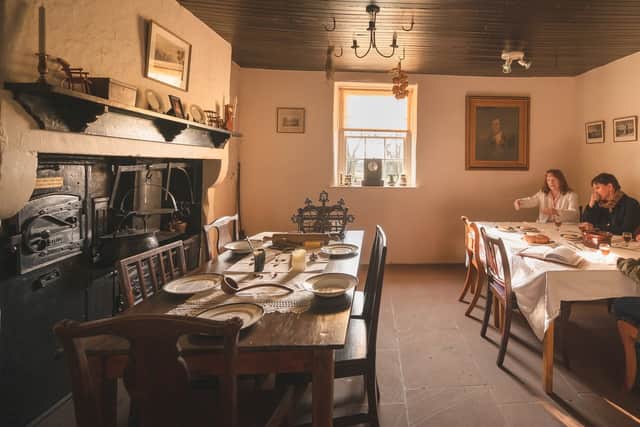
The Category A-listed farmstead and courtyard remain largely unaltered since the poet built them in 1788 with the Dumfries architect Thomas Boyd and the stonemason Alexander Crombie.
.jpeg?crop=3:2,smart&trim=&width=640&quality=65)
Proposals by Collective Architecture for the Robert Burns Ellisland Trust have been submitted to Dumfries and Galloway Council and which set out a plan to repair the historic site while introducing modern facilities in a subtle way.
Those behind the project said the aim is not to reinvent the site but to simply restore it.
.jpeg?trim=0,0,0,0&crop=&width=640&quality=65)
The proposals, which were granted conditionally in April, will lead to every room in the 1788 cottage being opened to the public for the first time.
The proposals include a small café to sit behind the courtyard, designed with a simple rural look using natural materials. The front door to the property will be reinstated to its original position, allowing visitors to enter as Burns himself once did.
The interiors will be recreated using newly-uncovered archival material discovered at Barnbougle Castle in East Lothian by Professor Gerard Carruthers of the University of Glasgow, an Ellisland trustee.
Comments
Want to join the conversation? Please or to comment on this article.