
New plans released to restore the only building Robert Burns ever built

If the plans are approved, every room in Burns’s 1788 cottage will be opened to the public for the first time.
Plans to restore the only home ever designed and built by Robert Burns have been released.
Set within a 140-acre landscape, Ellisland Farm, in Dumfries and Galloway, is where Burns wrote Auld Lang Syne, Tam o’ Shanter and more than 130 other poems and songs.
He called it the property his “sweet poetic ground.”
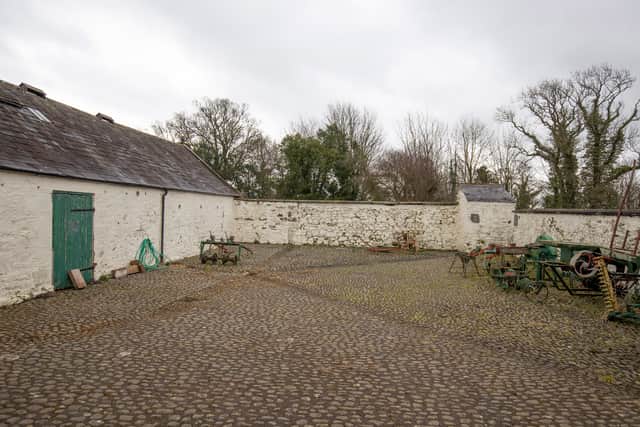
The Category A-listed farmstead and courtyard remain largely unaltered since the poet built them in 1788 with the Dumfries architect Thomas Boyd and the stonemason Alexander Crombie.
.jpeg?crop=3:2,smart&trim=&width=640&quality=65)

Now, proposals developed by Collective Architecture for the Robert Burns Ellisland Trust are to be submitted to Dumfries and Galloway Council, setting out a plan to repair the historic site while introducing modern facilities in a subtle way.
Those behind the project said the aim is not to reinvent the site but to simply restore it.
If the plans are approved, every room in Burns’s 1788 cottage will be opened to the public for the first time.
.jpeg?crop=3:2,smart&trim=&width=640&quality=65)
The proposals include a small café to sit behind the courtyard, designed with a simple rural look using natural materials. The front door to the property will be reinstated to its original position, allowing visitors to enter as Burns himself once did.
The interiors will be recreated using newly-uncovered archival material discovered at Barnbougle Castle in East Lothian by Professor Gerard Carruthers of the University of Glasgow, an Ellisland trustee.
.jpeg?crop=3:2,smart&trim=&width=640&quality=65)
Among the finds are detailed “bills of fare” listing the original contents of the house — everything from nails and slates to box beds and latches — offering an unusually precise picture of how the Burns family lived.
Staff facilities will be relocated from the original farmhouse into outbuildings, of which many are under-used or suffering from decay.
Elsewhere on the site, Burns’s own barn will be adapted and insulated to become a new Centre for Song, providing space for education and performance in the setting where the poet once worked. The granary will be upgraded to museum standards to display manuscripts and artefacts belonging to Burns and his family.
There are also plans for visitor accommodation across the wider estate, intended to generate income to support the property’s long-term conservation.
Duncan Dornan, chairman of the Robert Burns Ellisland Trust and former head of the Burrell Renaissance project in Glasgow, said the work would be guided by scholarship as much as conservation craft.
“Through rigorous research and modern conservation techniques, we are working to create the most authentic experience possible of Burns’s life and creative environment at Ellisland,” he said.
“Recent archival discoveries are revealing crucial details about how the Burns family lived here during the most productive period of the poet’s career. This level of scholarly input ensures the restoration will meet the highest heritage standards.”
Joan McAlpine, the trust’s project director, emphasised the deliberate gentle touch when it comes to restoring the site.
“The aim is not to transform Ellisland, but to make it more like the place Burns created,” she said.
“Modern facilities are necessary if we are to safeguard the site for the future, but they are designed to sit quietly within the farmstead, not compete with it. By restoring the cottage to 1788 and opening every room to the public, we will give visitors an experience of Burns’s home that has never before been possible.”
Collective Architecture, appointed in July 2025, is led on the project by the RIAS Advanced Accredited Conservation Architect Emma Fairhurst, supported by architect Maisie Tudge. Fairhurst described Ellisland as “a site of deep historical and cultural value” and said the team hoped to work closely with the trust to preserve it for future generations.
Those behind the project said action is urgent given recent surveys identified structural deterioration and timber decay across parts of the farmstead. If planning consent is granted, the trust will move into the next stage of fundraising and delivery.
Comments
Want to join the conversation? Please or to comment on this article.