
Warning over Glasgow's 'declining' arts landscape amid Trongate 103 rent protest and closure of the CCA

The closure of the CCA and furore over rent rises at Trongate 103 has hit Glasgow’s culture sector
Glasgow’s artistic landscape is “declining” and the city is in danger of losing its cultural crown with the loss of creative hubs such as the Centre for Contemporary Arts, arts organisations have claimed.
Former staff members of the defunct CCA warned of “years of underinvestment and growing precarity” in the city’s arts sector, while others raised “significant concerns” about the longer-term impact of closures and rent rises on the sustainability of Glasgow’s arts community.
David Williams, director of Glasgow Media Access Centre (GMAC), which is in the process of moving out of city cultural hub Trongate 103 following a row over rising rents, said the situation was making Glasgow “a less interesting city” which was losing its cultural vibrancy.
He warned talented students would be put off studying - or subsequently staying - in the city if the state of cultural decline continues.
“When Trongate 103 started, it was groundbreaking, it was a gamechanger,” said Mr Williams, adding that there had been a “real buzz” around culture when he moved to Glasgow 30 years ago.
Glasgow was named European Capital of Culture in 1990 and had a growing reputation as a vibrant cultural centre in the following years.
“Now, I think there’s a danger that people will stop coming here to study arts, they’ll look at the the wider landscape,” he said. “You can see a landscape where it's just declining, becoming a less interesting city.”
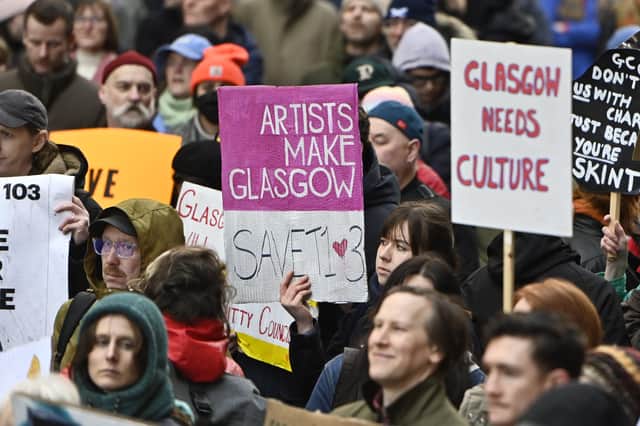
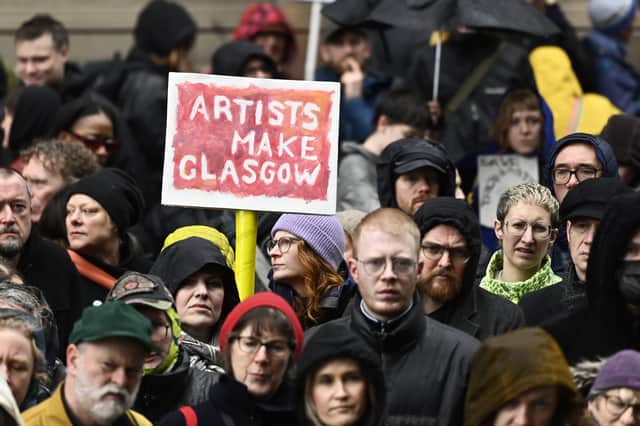
Tenants of Trongate 103 held protests last weekend amid “unsustainable” rent increases, with tenants expected to sign new leases or receive notices to quit. The building was renovated at a public cost of £8 million in 2009 to create a grassroots arts community managed by council arms-length company City Property.
The furore came weeks after the CCA closed its doors, with tenants locked out as the organisation fell into the hands of liquidators.
Mr Williams pointed to the closure of not only the CCA, but the Lighthouse and The Arches, which shut for the final time last year, as well as the People’s Palace, owned by Glasgow Life, which says timelines and costs for planned work are "continuing to evolve" since it closed for a £37m refurbishment in 2024.
The Lighthouse, designed by Charles Rennie Mackintosh and run by Glasgow City Council, did not reopen as an architectural hub after the Covid pandemic due to council budget concerns.
Mr Williams branded the situation at Trongate 103 a “toxic mess”. The hub is home to seven organisations: Sharmanka Kinetic Theatre, Glasgow Print Studio, Street Level Photoworks, Project Ability, Project Rooms and Transmission Gallery, as well as GMAC.
Mr Williams claimed at least three of the organisations - including GMAC - are set to leave. GMAC has found new premises in the Pyramid, at Anderston.
He added: “Because City Property deems that we haven't been paying enough rent, they don't maintain the building properly. It's going to need millions of pounds spent on it in the not too distant future.
“If we move out, nobody is going to move in. We've put up with it over the years, because we're there, but nobody walking around with fresh eyes would say, ‘Oh yes, I'd like to take space on this floor’.”
He added: “20 years ago, we [as arts organisations] were part of the solution of the regeneration of Trongate, now we’re part of the problem. We’re collateral damage.”
Janos Lang, director of the Ando Glaso Roma Fest, formerly based in the CCA, warned that burgeoning small multi cultural organisations would not have the capability to get started without the support he received from the arts community as a tenant of the centre.

“For ethnic minority organisations, it's even harder to get into the mainstream,” he said. “Being able to to be based in the CCA gave us that kind of credibility and exposure,” he said.
The tenants of Trongate 103 were given some support by Glasgow City Council earlier this week, when the council announced a new Culture and Creative Industry Property Support Fund offering £200,000 to assist with property costs.
Ahead of the meeting, Bailie Christy Mearns warned that the “original creative purpose agreed for the building” - to provide a long-term home for arts and culture - “may be undermined”.
She said: “The council recognises that without greater collective intervention, important cultural anchor organisations within Trongate 103...may be put in serious jeopardy, along with all of the artists and communities that sustain, and are sustained by, them.”
Culture Connections, an organisation formed from former staff members at the Centre for Contemporary Arts, is holding a public meeting next Thursday - dubbed City of Culture, not City of Closure - where it is calling on Glasgow’s cultural workers to help reform the sector.
It said: “Across Glasgow, cultural spaces are closing, being evicted, or lost - reflecting years of underinvestment and growing precarity in the sector. CCA’s closure is not isolated.”
Just half an hour away from Glasgow city centre at Dumbarton Studios, the last few weeks of filming of soap River City, which is to end next month after 24 years, is underway. The studios, which were leased by the BBC, have been sold off to an unnamed developer outside the film sector.
Maureen Hascoet, of Firewalker Pictures, who bid to retain the studio for the Scottish screen industry, attended the Trongate 103 protest last week.
“It was so well attended,” she said. “But the fact that it got to that and also the cumulative effect of all the closures is sad. The thing that strikes me most is just the lack of support, the lack of policy for the arts, for the screen industry.”
However, Ms Hascoet is adamant that Glasgow’s cultural scene will continue to thrive, despite the closures.
“In the end, it is the people,” she said. “People make Glasgow. I don't think artists are going anywhere. The arts is never a lonely, isolated endeavour. It thrives in community, in a hub. It thrives when you have other artists, like-minded people, who push you, who you can use as sounding boards and that's when your brain sparks up all these creative ideas. “
She said people would “always congregate somewhere” to create the arts, but added: “But in terms of image, it doesn't reflect well. This is the massive dichotomy. How can we say that the creative arts are thriving in Scotland if there is nowhere for them to practice?”
Glasgow City Council, Creative Scotland and City Property have all been contacted for comment.
Comments
Want to join the conversation? Please or to comment on this article.