
‘Old school, relatable’: return of the Commonwealth Mile and the Scots bidding for Glasgow 2026 glory

Coe celebrates revival of ‘quintessential Commonwealth athletics event’
Sebastian Coe calls it the “quintessential Commonwealth athletics event” and it’s a race that resonates with runners of all ages and abilities.
And it’s why Games organisers have made the Commonwealth Mile the centrepiece of the athletics programme at Glasgow 2026.
It is an old favourite with a rich history but it is 60 years since it was last contested. Its return is set to be one of the highlights of the Glasgow Games and it’s been given a primetime slot on Saturday, August 1, the final night of the athletics schedule.

There is a universal appeal about the mile, a classic distance in which to measure oneself.
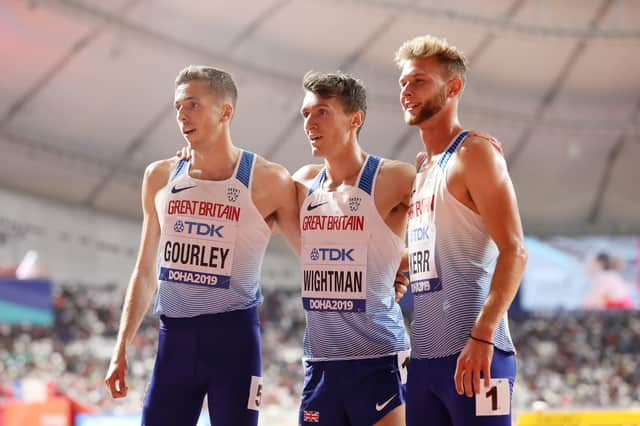
“I mean, it's just so old, it's so understood,” said Josh Kerr, who will be going all out to win gold for Scotland in the men’s mile. “You know, if you run it in gym class or if you watch it at the professional level, everyone understands it hurts. Everyone understands there are tactics, and at that speed, it's just a sprint. It's a hard distance.”
Lord Coe’s brainchild
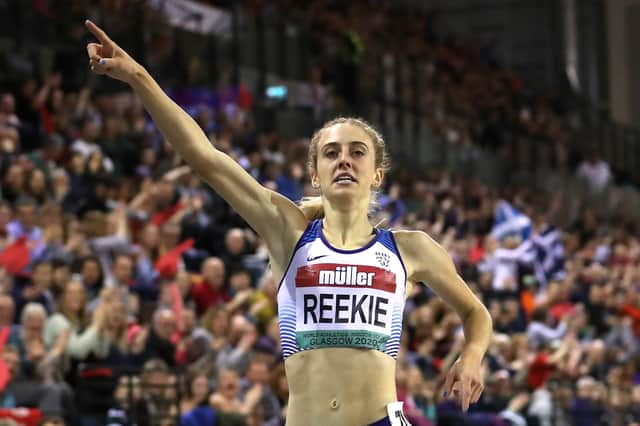
Kerr will lead a three-pronged Scottish challenge alongside Jake Wightman and Neil Gourley, while the women’s mile will feature the tartan trio of Jemma Reekie, Sarah Calvert and Erin Wallace.
It’s an event that has dropped off the radar at major championships, replaced long ago by the 1500 metres, the so-called ‘metric mile’. But it remains the only non-metric event to be recognised by World Athletics for world records and rankings.
Its reintroduction at the 2026 Commonwealth Games was the brainchild of Lord Coe, the World Athletics president and himself a former mile world record holder. It was intended to run the race in Victoria and when the Australian state pulled out of hosting and Glasgow stepped in, World Athletics and the Commonwealth Games Federation stuck with the plan.
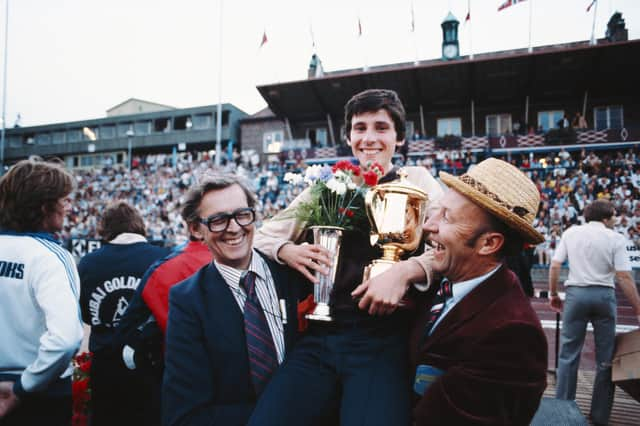
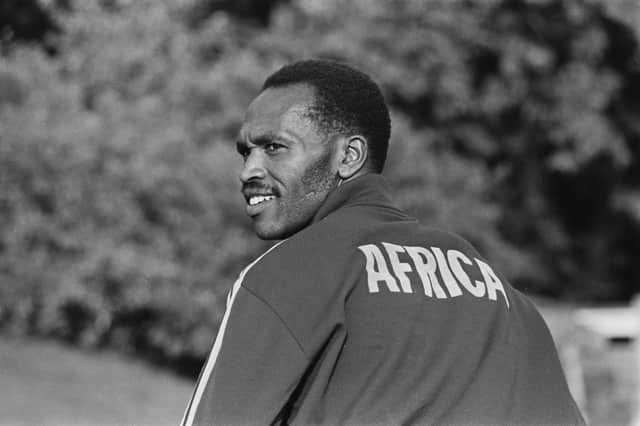
“The mile is easy to understand; it is four laps of the track and remains a standard everyday measurement across the Commonwealth,” said Coe who famously broke the world record in Oslo in 1979 with a time of three minutes 49 seconds when British middle-distance runners dominated and his rivalry with Steve Ovett was front-page news.
Steve Cram, in 1985, is the last Briton to hold the mile record on the track, running 3min 46.32sec in Oslo. Kerr is aiming to change that at the London Diamond League meeting this weekend where he is targeting Hicham El Guerrouj’s world record of 3:43.13 which has stood for 27 years.
‘I want to be known as the best miler in history’
“I just want to put my name up against some of the best Brits there have been in the history of the sport and I want to be known as the best miler in history,” said Kerr.
“I can't ask for a better prep than going out and running the mile world record and then going after a Commonwealth Games gold medal at home,” he said.
It is the Scots who now carry the torch for British male middle distance running and some of the main threats to Kerr’s bid for Commonwealth Games glory at a revamped Scotstoun Stadium will come from rivals he knows only too well.
Wightman, like Kerr, is a former world champion over 1500m and close to finding the form that saw him clinch the global title in Oregon in 2022. A run of injuries in the aftermath of his finest hour hampered Wightman and he missed out on the Paris Olympics but the last year has seen him return to close to his best.
He took the major step of changing coaches, meaning a split from his father Geoff. John Hartigan took over.
The Edinburgh AC runner won 1500m silver behind Portugal’s Isaac Nader at the World Championships in Tokyo last September which convinced Wightman, 32, to put thoughts of retirement behind him. His form coming into the Games is good and he broke his own Scottish record for 1000m in Monaco last week. Wightman’s time of 2:12.77 saw him finish second behind Kenya’s Emmanuel Wanyonyi who ran 2:11.83 to set a new world record. Now it's a case of stepping up to four laps.
“The mile is a classic old-school distance, but I think the main thing is that most people can relate to the mile a bit more and it makes more sense to the average person coming to watch in a way that the 1500m perhaps doesn’t,” said Wightman.
‘I would crawl the four laps’
Gourley has also been blighted by injury but there is no way he is missing the Commonwealth Games in his hometown. “I will be there if I have to crawl round the four laps of the track,” he told the BBC.
A tendon tear in his knee followed soon after by a broken foot disrupted Gourley through winter and into spring but he is primed for the mile at Scotstoun. “I will never shy away from the fact I want to be at the top end of championships and I would love to win a medal in Glasgow, but it is going to be incredibly challenging,” said Gourley, who took silver at the World Indoor Championships in Nanjing last year.
Gourley, who is also due to run in the mile at the Diamond League in London, has been struck by bad luck on two previous occasions Glasgow has hosted major championships. In 2019 he reached the final of the 1500m final at the European Indoors in the city but missed the race through illness. And in 2024 injury denied him the chance to run at the World Indoors at the Emirates Arena. He hopes it will be third-time lucky.
The Scots trio won’t have it all their own way, of course. The men’s mile looks set to feature a top-class field, with Australia’s bright young talent Cameron Myers among the confirmed entries. The 20-year-old from Canberra won the Bowerman Mile at the Prefontaine Classic Diamond League meet in Oregon earlier this month, breaking the Australia record in the process with a time of 3:46.06. He had broken the Aussie 1500m record in Paris the previous week.
Another Australian, Olli Hoare, will also be there, looking to replicate his success at the Commonwealth Games in Birmingham in 2022 when he won gold in the 1500m.
Myers and Hoare will be joined in the Glasgow mile line-up by Kenya’s Timothy Cheruiyot, a former world champion and an Olympic silver medallist at Tokyo 2020, and his namesake (but no relation) Reynold Cheruiyot, who won world championship bronze last year.
In the women’s race, Reekie, who usually runs at 800m, is relishing the step up to four laps. “The mile is a really cool event and it's nice to do something different,” she said.
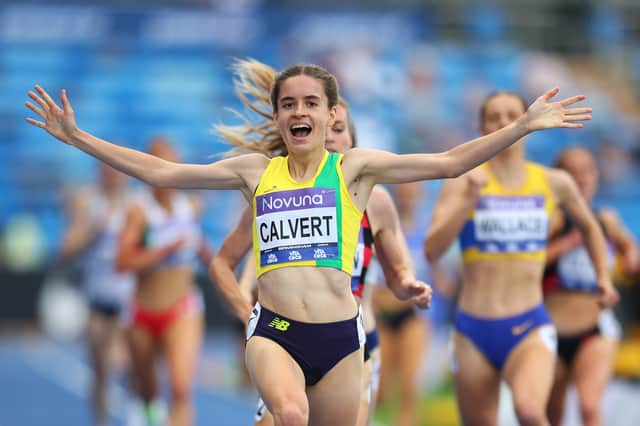
Calvert, meanwhile, goes to the Commonwealth Games as double British champion. The 25-year-old Livingston AC athlete won the 1500m at Birmingham last month, beating Laura Muir into third place and retaining the title she won at the 2025 British Championships.
Inspired by the Miracle Mile
The women’s race will close the athletics programme at Glasgow 2026, bringing the curtain down on six days of competition at Scotstoun.
You have to go back to 1966 in Kingston for the last time the mile was run at the Games. The men’s race in Jamaica was won by Kenya’s Kip Keino, a first major international medal for the athlete who blazed a trail for middle and long distance runners in his homeland.
Twelve years earlier, England’s Roger Bannister and Australia’s John Landy had gone head to head in Vancouver in the 1954 Games. Dubbed the ‘Miracle Mile’, the legendary Bannister surged past his rival on the final bend to take gold and glory. It was the first time two runners had broken the four-minute barrier in the same race, with Bannister clocking 3:58.8 to Landy's 3:59.6.
It was that race that inspired Coe to push for its revival in Glasgow. “The magic of the mile continues to resonate with sports fans,” he said.
Comments
Want to join the conversation? Please or to comment on this article.