
Scottish football summit: huge ramifications, Celtic-Rangers issue, the 'albatross around its neck'

SFA to meet 42 clubs in St Andrews to address future of game
Although the chosen venue is St Andrews, perhaps to keep things as neutral as possible, a case could have been made to hold Friday's Scottish football crisis summit in Livingston.
After all, a town so closely associated with roundabouts might be apt for a meeting where the cynic could reasonably claim those involved will simply be going round in circles. We have been here before.
Credit, nevertheless, to the Scottish Football Association, who have called this meeting of all 42 of Scotland's senior clubs. The governing body must be applauded for its timing. In his efforts to encourage all parties to attend, nothing new SFA chief football officer Craig Mulholland could have said would have proved as compelling as Celtic and Rangers both suffering contenders for their worst-ever European defeats against LASK and Jablonec in the week prior to Friday’s gathering.
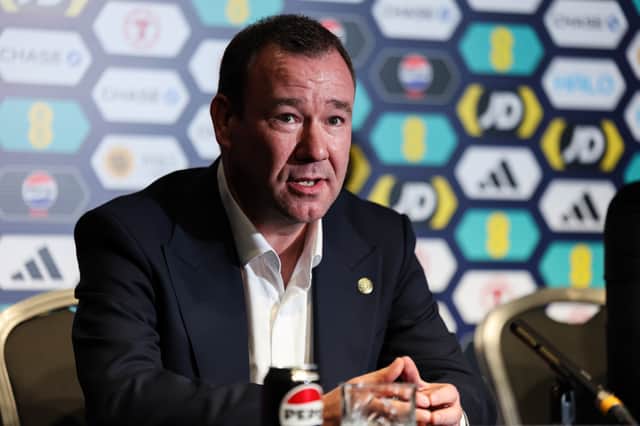

The Old Firm are probably a little more interested than they might otherwise have been in joining the other 40 clubs on the road to the Old Course Hotel in Fife.
Hibs, too, crashed out of Europe, along with Motherwell. Only Hearts saved face although a post on the club’s X account, as deliciously catty as it was, summed up one of several major obstacles to the idea that clubs can work together for the greater good. The social media administrator noted, with a glance towards the east end of Glasgow, that winning a play off in Austria “is not for everyone”. Tribalism greases the wheels of Scottish football and has done so for as long as anyone can remember. Can we see beyond it? Can we put aside self-interest? Do we even want to?
These are some of the questions Mulholland will hope to tackle at the end of this week. Described on the missives sent out to clubs as a “club forum on creating opportunity for Scottish talent”, the event is titled: “Made in Scotland?”
Hard to be anything other than pessimistic
A likeable, infectious character, Mulholland has been careful to avoid coming across as adversarial. He stressed no one has been “summoned” to St Andrews. Attendance is voluntary, although chairmen, CEOs and directors of football—and all other titles making up the boardroom these days—have been told to set aside around six hours of their day, comfort breaks included. They could be some time.
Oh to be a fly on the wall. While the SFA’s determination to hold such a meeting must be applauded, it’s hard to be anything other than pessimistic given how many times such gatherings, although organised with the best of intentions, have yielded little of substance. Perhaps the shockingly scant number of native players playing in Scotland’s top flight will help concentrate minds as might Scotland’s collapsing coefficient.
Chris Sutton entered the debate earlier this week when pointing out on social media that only 27 per cent of those starting last weekend’s Scottish top-flight games were Scottish compared, for example, to 64 per cent of Norwegian home-grown talent in that country’s top tier. Also providing food for thought is another transfer window deadline day rush to find short-term fixes. Celtic are in talks to sign Joel van den Berg for over £3million. He has barely played for the PSV first team.
As Mark Eglinton, a high-profile Celtic commentator noted on X earlier this week, after news emerged that the Parkhead club were close to signing the 19-year-old Dutch midfielder: “If you’re Sean McCardle, a promising 19-year-old home grown midfielder, you’re hailing a taxi on the London Road in disgust today”.
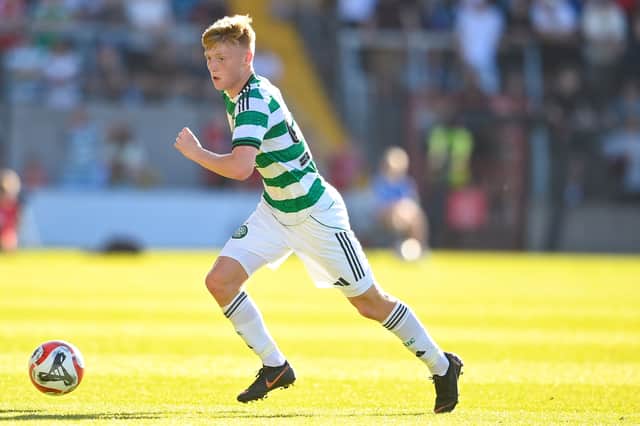
Similarly, what is 17-year-old Lucas Clearie thinking? The striker scored a hat-trick for Celtic B in a 4-3 Challenge Cup win over Stranraer on Tuesday night – McCardle scored the other – and woke the following morning to learn Celtic are close to securing 18-year-old Chelsea striker Shim Mheuka on loan. Where is the pathway?
Not to pick on Celtic – they at least included promising 17-year-old defender Liam Kennedy in their matchday squad for the first time against Falkirk at the weekend. They are also the victims. Only last week they lost the highly rated 16-year-old striker Erskine Rennie to Fulham, where he has signed on a “scholarship agreement”. Rennie is the latest in what has become a flood of young Scots being lured by lucrative contracts in England in return for minimal development fees, another major issue.
Rangers are signing 'Scottish-blocking' players at perhaps a faster rate than Celtic, despite chairman Andrew Cavenagh’s stated intent to adopt a “pro-Scottish bias” in their recruitment strategy.
Meanwhile, Dundee United, perhaps the club still most associated with bringing through young homegrown talent stretching back to the late 1970s, have been regularly naming matchday squads featuring just a sole Scot. The Tannadice club have begun to address this issue by capturing Lyall Cameron on loan from Rangers.
The 23-year-old has time to get his career back on track having spent 12 months failing to establish himself at Ibrox. Such case studies are very relevant ahead of Friday.
Smaller clubs have role to play
Although he now lives in Fife, Iain McMenemy won’t be involved in the summit. It’s over two years since he stepped down as chairman of currently high flying Stenhousemuir having also served on a number of Scottish Professional Football League (SPFL) and SFA committees, including the SPFL Competitions Working Group. He is encouraged that all clubs have been invited on Friday, because he has long argued that smaller clubs have a role to play in supporting bigger clubs. But then smaller clubs are not really the problem.
“The lion’s share are Scottish-born players in League 1, League 2 and the Championship,” he said. “And through the Cooperation Agreement, there are guys getting game time at that level. Clearly it is not making its way to the top of the game and that is where the problem is.”
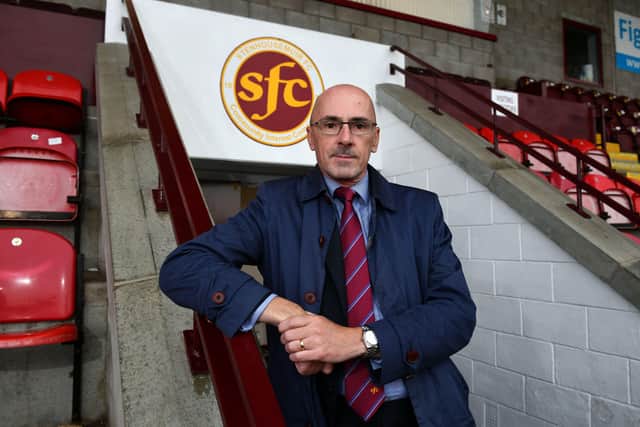
McMenemy has identified a problem: clubs in cooperation agreements with Premiership sides are getting 18 and 19-year-olds still some way short of first-team involvement. They aren’t being blooded on their return to their parent club.
It’s better than nothing, though. Steven Pressley, whose club Dundee recently announced a tie-up with Montrose, has hailed the innovation. “Development is not that difficult,” he told The Scotsman. “Opportunity and young players playing games is the biggest part of development. Playing men’s games ideally.”
He praised the SFA’s resolve regarding cooperation agreements. “It’s actually better than going on loan in England,” he noted. “As the owning club, you still get the player in every day for training and you are still on top of a lot of their development.”
This partnership between clubs concept was introduced last season. More time is required to assess the impact. McMenemy doubts such isolated programmes can have the desired long-term effect. According to him, a “more root and tail review” is required, such as introducing a mandatory domestic home-grown player quota for league games. In this respect, he’s not confident much change can be achieved.
“Take the league table right now, Rangers already have a bit of a gap to make up on Celtic,” he said. “If they are told that by playing a certain amount of young players they get a little extra cash – it won’t be millions – or buy players from abroad and strengthen their team to maybe close the gap on Celtic more quickly, it is obvious what they will choose.”
McMenemy is glad to see former Rangers Academy director Mulholland back in Scotland following a stint with Nottingham Forest. “Craig is a bit of a thinker,” he said. “He does his homework."
But he faces the bulwark bedevilling Scottish football for so long: the 11-1 vote required in Scotland’s top league to push through anything of significance.
“Ultimately, the clubs have to vote on this stuff and be in agreement among themselves about quotas and all these things that need to be introduced,” said McMenemy. “That is Scottish’s football’s Achilles' heel, the albatross around its neck: self-interest, particularly in the Premiership.
"That is where it will fall down, because two clubs can kill it. I am, not saying the Old Firm necessarily, any two.”
It is impossible to exaggerate Friday’s importance. Don’t hold your breath, hard-bitten observers might advise.
But nothing that happens across the Scottish league fixture card this weekend, perhaps even this season, can come close to matching the potential ramifications of this summit - which the SFA are trying to avoid calling “a summit” - for Scottish football. Those playing golf on the famous fairways outside aren’t the only ones facing an almighty test of nerve.
Comments
Want to join the conversation? Please or to comment on this article.