
Scotland could raise more of its tax take from ‘highly unequal’ distribution of housing wealth
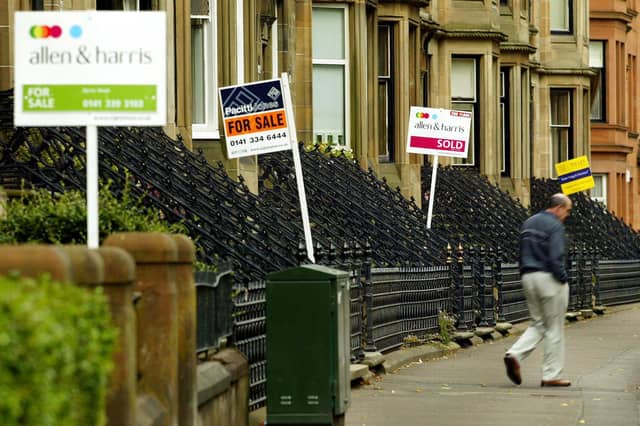

Example of tax changes in Northern Ireland show new direction is ‘credible’
There is much debate about getting Scotland out of a finance ‘black hole’. We spend little time reimagining better use of our devolved property taxes – council tax and land buildings transactions tax (LBTT).
However, policy movement is underway. The Scottish government consulted over a general revaluation of council tax alongside possible amendments to tax design. A review of responses was published but nothing yet about future decisions.
Following UK proposals, Scotland intends to also introduce a new housing wealth tax on properties worth more than £1m via two new council tax surcharge bands. The government insists this is separate from the broader council tax consultation, even though the high value properties need to be revalued.

The Programme for Government also announced it would explore a restructuring of local government into larger strategic and smaller community-level councils. Finance and taxation are inherent to this agenda.
Council tax is seriously flawed. It is based on valuations from 35 years ago, and bills are regressive by income but also spatially (higher value areas tend to have lower average bills as a percentage of house value). There are arbitrary exemptions and discounts, and the banded system (disproportionately concentrated in the lower four bands A-D) is not a good property tax in terms of reflecting current value, which may be why only one other OECD country adopts banding. The council tax is neither a good tax for local government, nor does it stabilise the housing market.
Many argue that it is just too difficult, there are many losers from reform, and it would be electorally too damaging. This leads to endless non-decision.
Tax reform needs to be explained and sold to the public. It should be accompanied by demonstrably better local services. Active deliberative democracy schemes like citizens’ panels have suggested that once informed and with space to think, voters can be positively disposed to reform. A well-designed citizen’s assembly should debate local taxes. Mitigation needs to be built in through time-limited capping of losses, deferred payment schemes for the asset-rich, cash-poor, and a well- functioning national rebate scheme. Worries about a general revaluation are overstated
In England, a clutch of proposals seek to replace council tax with a proportionate property tax (PPT) – a regularly revalued locally-determined percentage tax on the current value of residential property. There is also interest in abolishing stamp duty land tax - or LBTT - and raising equivalent revenue by adding a second tax to the PPT but paid by owners of residential property only - replacing the tax paid by movers with a recurring annual tax spread across all owners. Economists have long argued that transaction taxes like LBTT are inefficient, reducing mobility.
If the PPT seems fanciful, note that Northern Ireland, since 2007, has had a successful PPT based on a tax rate on capital value, split between local government and Stormont. While not perfect, it does suggest that this direction is credible.
Finally, Scotland could raise more of its overall tax take from what is a highly unequal distribution of housing wealth and simultaneously reduce reliance on income tax. Shouldn’t that be something for public service reform to consider?
‘Council Tax and Wider Property Reform’ by Ken Gibb is published by the Policy Press.
Comments
Want to join the conversation? Please or to comment on this article.