
Reform UK to force MSPs to vote on burqa ban in Scotland

Reform UK says a previous debate they led on the issue was ended “prematurely”.
Reform UK is set to force a vote on banning burqas in Scotland, saying other political parties “conspired” to end their previous debate on the issue “prematurely”.
Last month, the party’s deputy Scottish leader Thomas Kerr led a members’ business debate on restricting face-coverings in public, including the burqa and the niqab.
During that debate, Mr Kerr described the veils as “oppressive” and said they had “no place in modern Scotland”, arguing that a ban is needed in the interests of public safety.
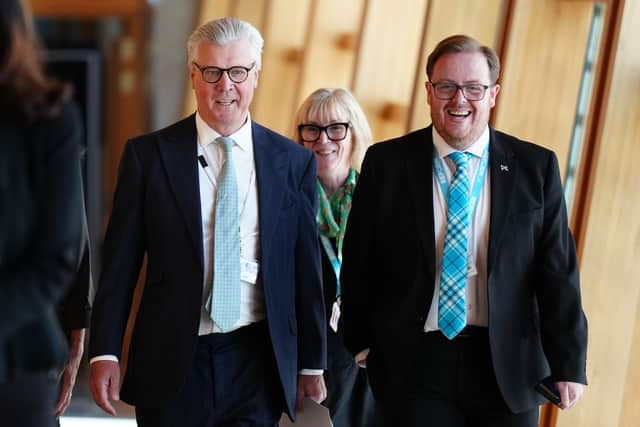

However the debate descended into chaos, with Reform UK being accused of racism and women protesting outside the parliament.
MSPs do not vote on members’ business debates, but Reform UK has now tabled an opposition debate on the same issue for Wednesday afternoon. Unlike members’ business debates, MSPs will be required to vote in an opposition debate.
Mr Kerr told The Scotsman the previous debate was cut short before many Reform UK MSPs were able to have their say.
He said: “During the previous face-covering debate, I was the only Reform MSP who had the chance to speak before other parties conspired to bring the debate to a premature end.
“A members’ debate had not been denied a continuation in this way before.
“My fellow MSPs who hold a variety of views regarding face-coverings in public places intended to speak on that evening so this second debate effectively follows up the original slot to allow the full spectrum of those voices to be heard.”
The debate on Wednesday afternoon will be led by the party’s health spokeswoman Helen McDade MSP.
Her motion asks MSPs to “note the ongoing debate across Scotland regarding the wearing of full-face coverings, including the burqa and niqab, in public places”.
She adds that further restrictions on these veils could improve “public safety, individual liberty and community cohesion”.
The burqa is a veil worn by some Muslim women that covers the face and body, leaving a mesh screen over the eyes to see through. The niqab is a similar veil that leaves the area around the eyes clear.
A number of European countries have either banned or restricted the wearing of burqas and other full-face veils in public spaces in recent years, including France, Belgium, Bulgaria, Austria, Denmark, The Netherlands, Germany, Luxembourg, Portugal and Italy.
Under section 60 of the Criminal Justice and Public Order Act 1994, police officers can stop and search pedestrians and vehicles for offensive weapons. While the legislation does not allow police to remove face coverings, it does authorise searches, during which this could happen.
In England and Wales, police officers can order people to remove face coverings under similar circumstances. As of April, police officers elsewhere in the UK also have the powers to declare mask-free zones for up to 24 hours during protests, but there are exemptions for religious, health and work reasons.
Those in breach of these rules can face fines of up to £1,000 and up to one month in jail.
SNP MSP Steven Bonnar said: “This is yet another dangerous attempt by Reform at sowing division in our communities.
“Women should be free to choose to wear what they want - the SNP will always back their right to do so and stand squarely against Reform’s toxic agenda of inciting racial tension in our society.”
Comments
Want to join the conversation? Please or to comment on this article.