
Exclusive:Kate Forbes 'deeply concerned' by deindustrialisation and admits 'number of businesses' have sought help
The Deputy First Minister has suggested plenty of work goes on from ministers behind the scenes to help struggling companies stay out of trouble.

Kate Forbes has warned she is “deeply concerned” over the scale of Scotland’s accelerated industrial decline as she admitted “a number of businesses” have pleaded with SNP ministers for lifeline support to stay afloat.
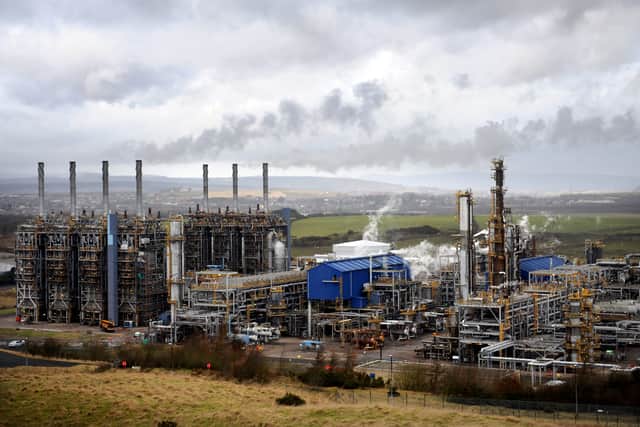
The alarm from the Deputy First Minister, who is also the Scottish Government’s economy secretary, comes as she held a meeting at Mossmorran after oil and gas giant, ExxonMobil, announced last Tuesday that it will close its manufacturing plant in Fife.


The Fife ethylene plant – which produces the base material for plastics – is expected to shut in February.
According to the company, 179 directly-employed jobs will be at risk along with 250 contractors, with the possibility of 50 staff transferring to the Fawley petrochemical complex almost 500 miles away in Hampshire.
The news comes after Petroineos confirmed it was closing Scotland’s remaining oil refinery at Grangemouth amid widespread fears over further industrial assets declining, alongside a shrinking of the North Sea oil and gas sector.
Speaking to The Scotsman, Ms Forbes said: “I am deeply concerned about the scale of industrial assets declining in the last year and a bit.
“We've had Grangemouth, we've had challenges around Alexander Dennis and now we've had the announcement around Mossmorran.”
The Deputy First Minister suggested that there were “common themes that run throughout them”.
She said: “If we look at Mossmorran, they were very clear that it's to do with an uncompetitive environment. That means higher costs compared with elsewhere.
“What's driving those costs? They would say it's higher energy bills and certainly I've heard that from other energy-intensive industries, where at times, our energy costs have been 50 per cent higher than European costs.
“They also talked about additional costs in the form of carbon taxation and the need to make a decision about whether to invest in, essentially, the future of the asset with declining off-take from oil and gas.
“They're not that far removed from what you heard from Grangemouth as well in terms of high energy bills. Householders are struggling with high energy bills so imagine what energy intensive industries are doing.”
Ms Forbes stressed that she had been told by ExxonMobil on November 11 that “they were considering closure”.
She added: “They had been in touch, with communication with the UK government, since I think, April - looking for a solution.
“Obviously with no solution forthcoming from the UK government, they made the decision that they made.”
Asked about why government actions appear to only come forward when businesses hit a crisis point, Ms Forbes insisted that plenty of work was going on behind the scenes to offer help. But she admitted that a number of other companies have also reached out to the Scottish Government to keep them afloat.
She said: “Right now I'm engaging intensively with a number of businesses that are looking for additional support.
“To disclose who they are would be commercially sensitive and create challenges. But my mission with engaging with them is to avert them from being in the same position in a year's time, in two years' time.”
Comments
Want to join the conversation? Please or to comment on this article.