
John Swinney to press ahead with SNP's controversial food price cap at supermarket giants

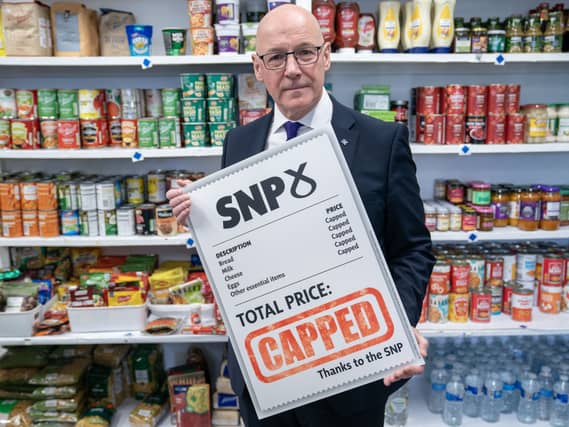

Government documents have warned the strategy could hike food prices when the policy ends while retailers could source cheaper goods from overseas.
John Swinney’s controversial food price cap has been thrown into disarray after government officials insisted legislation would be approved by Christmas - despite an initial consultation to run until November.
SNP ministers are pressing ahead with plans to cap essential food prices at supermarket giants with potential unlimited fines on the cards for retailers who do not comply.
But concerns have been raised that the strategy could hike prices once the measures are reduced and lead to retailers sourcing cheaper goods from outwith Scotland.
Mr Swinney made the policy a flagship cost-of-living measure in the SNP manifesto ahead of May’s Holyrood election, but has been under pressure from retailers and food and drink producers to scrap the plans.
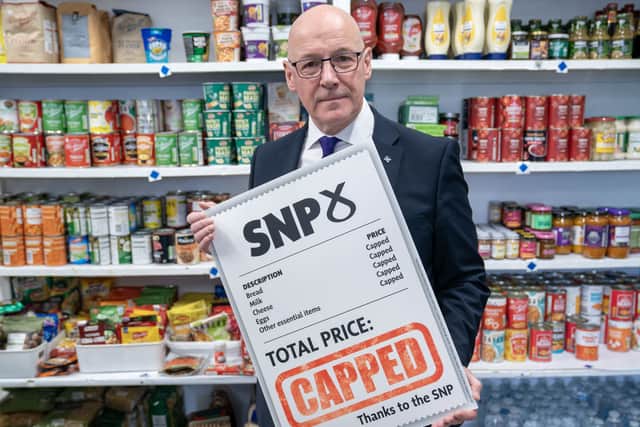
But SNP ministers have confirmed the government is pressing ahead with the proposals.
Under the plans, a set list of essential items at large retailers would be subject to a price cap.
The draft plans state that retailers subject to the plans “would be under a duty to sell at least one type of that product at or below a maximum price”.
The specific items are not included in the draft primary legislation, with proposals issuing powers for ministers to specify the products through secondary legislation.
The proposals state that retailers “could choose which particular produce to use to meet the duty as long as it meets the description of the product” as set out in regulations.
The draft blueprint adds that if the earmarked product sells out, “the retailer would have to substitute it with another type of that product at or under the price cap” or face being in breach of the regulations.
Businesses that would be subject to the price cap are large retailers with the draft legislation stating those qualifying have had more than 250 employees and a turnover of more than £250m at the end of the previous financial year.
To qualify, more than 50 per cent of the business’ turnover will be related to the sale of groceries. Some takeaway services would be exempt, under the draft plans with other exemptions to be agreed.
READ MORE: Top SNP civil servant warns services will 'stop or be consolidated' as John Swinney to set out cuts
Local authorities would be responsible for enforcement of businesses that did not comply with the price cap and would appoint authorised officers to undertake day-to-day enforcement, under the proposals.
If businesses do not respond to enforcement, the draft regulations state that they could face “a fine under summary procedure up to the statutory maximum, currently set at £10,000, and an unlimited fine prosecuted under solemn procedure”.
Business impact documents, prepared by Scottish government officials, have warned that “if a price cap has constrained prices below prevailing market levels for a sustained period, there is a risk that consumers could face a relatively sharp increase in prices once the intervention ends”.
The consultation document also warns the policy could “potentially increase reliance on imported products” if “retailers or suppliers seek to source lower-cost alternatives to maintain margins or manage costs”.
During the election campaign in April, Mr Swinney said: “I want the price cap on essential items to be in place by the end of the year.”
Despite an acknowledgement from the government that “no decisions have been taken regarding implementation timescales”, Mr Swinney’s official spokesperson insisted that it was still intended to roll out the scheme by Christmas.
Asked whether the First Minister’s vow to implement the scheme by the end of the year, his official spokesperson said he was “not aware of any changes to that”.
It is likely that the legislation will require an exemption under the post-Brexit UK Internal Market Act.
It is understood that Scottish government officials have undertaken an initial assessment of the Internal Market Act requirements, but will not open up talks with the UK government after a consultation ends in November.
Ewan MacDonald-Russell, deputy head of the Scottish Retail Consortium, argued that “there seems little evidence ministers have the first idea how to deliver the policy”.
He added: “What the lengthy consultation paper does show is how fiendishly complex, costly, and onerous this unnecessary exercise will be if it is implemented.
“The rules on product substitution alone would lead to products being pulled off shelves and risk shortages on the shelves. There is a paucity of detail on how to help Scottish farmers and producers who could see products replaced with cheaper imports.
“Ministers have fluffed the chance to provide the clarity retailers’ and the supply chain have repeatedly asked for. They should scrap the cap and work with industry to get on top of inflation – including public policy costs.”
Scottish Labour economy spokesperson, Daniel Johnson, said: "We need real action on the cost of living, not more gestures, let alone political stunts that will not help people right now.

“There have been serious concerns raised about these proposals by those in the industry, with warnings it could backfire and drive up costs.
“Time and again, we have seen the SNP push forward with poorly thought out and ultimately unworkable policies, and they must make sure that this is not just another example of that.”
He added: “Crucially, people across Scotland need help with the cost of living right now. They cannot afford to see another botched policy which ends up being challenged in the Supreme Court.
“They must set out concrete plans to put more money back into people’s pockets and help working families in the here and now.”
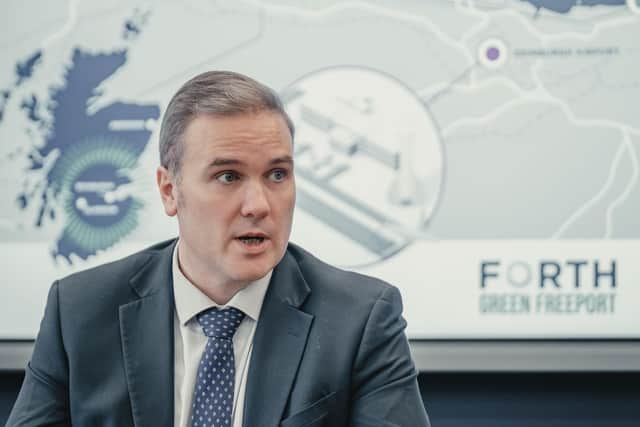
SNP business minister, Tom Arthur, said: “Helping people with the cost of living is a top priority of this government.
“Our aim is to make essential food items more affordable for households struggling to pay for their weekly shop, particularly those on lower incomes.”
He added: “The consultation covers the wide range of factors we need to consider to implement a food price cap. I am committed to taking action to address food affordability that works with retailers and protects farmers and food producers.
“I have spent the last three months engaging with bodies with an interest in this and encourage everyone to have their say.”
Comments
Want to join the conversation? Please or to comment on this article.