
SNP programme for government: John Swinney faces battle to deliver manifesto promises
The Scottish government will publish the legislation it intends to push forward in the next 12 months.
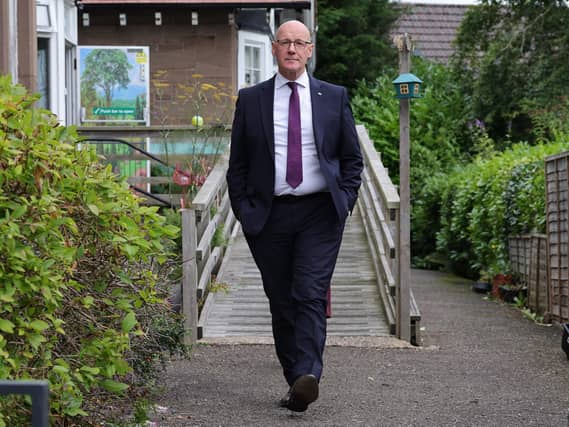


John Swinney will this week publish his first programme for government since reforming his administration following May’s Holyrood election victory.
But with several manifesto promises to deliver alongside previous pledges that have been delayed, the SNP leader will have to grapple with a gloomy financial picture and win support from opposition MSPs to get any legislation over the line.
We take a look at some of the potential pieces of legislation that could feature in Tuesday’s programme for government.
Food Price Cap Bill
The most eye-catching policy in the SNP’s election manifesto was a plan to cap the price of essential foods at supermarkets.
Mr Swinney pledged to “publish draft legislation to ensure affordable prices for food essentials” within the first 100 days of forming a government - with Tuesday’s programme for government the deadline.
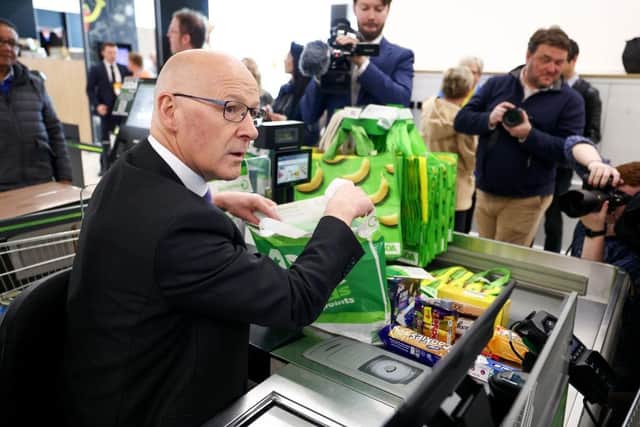
But retailers have called for the plans to be scrapped, while opponents have claimed the proposals are not workable. The proposals would also need an exemption from the UK government’s Internal Market Act in order to proceed.
Misogyny Bill
Last week, Mr Swinney suggested he will take “significant measures” to tackle violence against women and girls in his programme for government.
It comes after new statistics this week showed annual sexual crimes were nine per cent higher than the previous 12 months while rape crisis services have experienced standstill funding.
The SNP government came under intense criticism after leaving misogyny out of its hate crime legislation with a promise of a stand-alone law, only to shelf those plans after claiming there was no time to bring them forward before Holyrood’s election.
Mr Swinney’s manifesto pledged to put plans for a misogyny bill back on the table.
Rape Crisis Scotland’s external affairs manager, Nicola Love, said Mr Swinney’s strategy “must include long-term and inflation-proof funding which allows survivors of sexual violence to access support when they need it”.
She added: “However, we also need bold action to tackle the rising prevalence of sexual violence and misogyny. This includes investment in prevention, so that every young person in Scotland has the tools to challenge violent and misogynistic online content and has access to age-appropriate education around consent and healthy relationships.”
Heat in Buildings Bill
SNP ministers have delayed and watered down initial plans to decarbonise heating systems, first tabled under the previous government’s co-operation deal with the Scottish Greens.
The initial plans that would have set out targets for households to replace fossil fuel boilers with sustainable heating systems such as heat pumps was paused before May’s Holyrood election over concerns it would place too much of a financial burden on Scots.
But campaigners are calling for updated plans to be published as soon as possible and be meaningful in order to get progress back on track.
READ MORE: SNP warned 'significant risks' in net zero plans as fears raised over lack of heat pumps strategy
Claire Daly, head of policy and advocacy at WWF Scotland, said: “How we heat our home accounts for over a fifth of Scotland’s carbon emissions.
“Having first consulted on a Heat in Buildings Bill in 2021, people in Scotland have waited long enough on ministers to get this legislation over the line. Further delay will only make the transition to clean heat harder, more expensive, and less fair.
“Scotland is already well behind where it needs to be on clean heat. A strong bill would provide certainty for households and businesses, stimulate investment in a clean heat supply chain, and help protect people from volatile fossil fuel prices.”
Human Rights Bill
Another piece of legislation that the SNP failed to bring forward in the last parliament was a law to embed human rights into Scots law. But the SNP has acknowledged complexities around reserved and devolved matters - after legislation to embed children’s rights needed to be redrafted.
The SNP manifesto recommitted to bringing forward a human rights bill and “incorporate a range of conventions into Scots law”.
But the party warned that “the experience of the last parliament demonstrates how restricted Scotland is to incorporate human rights under the strictures of devolution”.
Independence Referendum Bill

The SNP leader published draft legislation on Friday for a second independence referendum.
The party’s manifesto made no reference to legislating for a referendum if the SNP fell short of an overall majority. Instead, the document pointed to “a majority that will secure a referendum to deliver independence”. Following the election, there remains a pro-independence majority made up of SNP and Greens MSPs.
The bill does not specify a date for such a referendum to be held, saying it will be “decided by the Scottish Parliament”.
Opponents have already branded the proposed legislation “a complete waste of time”.
Rural Renewal Bill
The SNP manifesto pledged to bring forward plans for a rural renewal bill before the next election.
The proposed legislation could include reforms to rural planning such as improving development rights like small-scale renewable energy schemes. The plans could also create new small land holdings to help rural repopulation efforts and include steps to make land ownership more transparent.
But while work on the proposed legislation is likely to start in the coming year, the legislation may not be brought forward in the next 12 months.
Budget Bill
The Scottish government’s annual programme for government includes the yearly budget bill - but this year’s fiscal situation already looks bleak.
Graeme Roy, chairman of the independent Scottish Fiscal Commission, warned this week that Deputy First Minister and Finance Secretary, Jenny Gilruth, facing a “really tight settlement” from Westminster when she brings forward her budget for 2027-28.
Professor Roy said the financial position going into next year’s budget discussions is “very tough”, warning that balancing the books will be “exceptionally difficult”.
The SNP will need to win the support of another party in order for its budget to pass - the same situation with all its legislation as a minority government. But ministers will have less headroom to meet budget requests to encourage support from opponents.
Comments
Want to join the conversation? Please or to comment on this article.