
How would Labour's gender ID policy work and how is it different to the SNP's plans?

The Labour proposals are not self-ID, but a modernising of the process.
The process under which people can legally change gender would be modernised under a Labour party government.
Similar to the plans outlined last year in Labour’s national policy forum, the changes would end the requirement to present evidence showing a person has lived as their new gender for two years, replacing it with what the party are calling a period of reflection, lasting the same amount of time.
It will also scrap the requirement for a panel of doctors and lawyers to give approval for a gender recognition certificate, with the process instead being done by just one doctor, with a specialism in gender issues. This aims to make the process less complicated, and more humane.
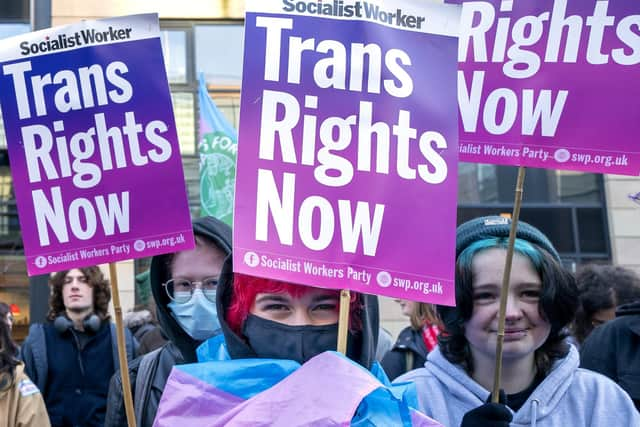

To receive a gender recognition certificate under the current rules, people are asked to show evidence from multiple sources over the two year-period and produce documents showing their new name or gender such as payslips or official correspondence. There is also an end for the need for approval from a spouse.
Given this issue is devolved, the changes will not automatically be applied to Scotland, but could well be followed by the SNP, and certainly by a Labour Government if Anas Sarwar becomes First Minister in 2026.
Labour argues this is not about changing the way doctors diagnosed gender dysphoria, but making it a purely medical process, and one that cannot be politicised.
A Labour spokesperson said: “We will remove indignities for trans people who deserve recognition and acceptance; while retaining the need for a diagnosis of gender dysphoria from a specialist doctor, enabling access to the healthcare pathway.
“Britain is a reasonable and tolerant society where most people know that there are a small number of individuals who do not identify with the gender that they were born into.
“Labour’s plans will protect single-sex spaces, treat everybody with respect and dignity, maintain the existing two-year timeframe for gender recognition, and ensure that robust provisions are in place to protect legitimate applications.”
This is in contrast to the gender recognition reform (Scotland) bill, which would have removed the need for a psychiatric diagnosis of gender dysphoria in order to obtain a gender recognition certificate , and extended the application process to 16- and 17-year-olds for the first time.
Unlike that of the SNP, Labour’s policy is not self-ID, and maintains the two year requirement. Under the SNP proposals, vetoed by a Section 35 order from the UK Government, the time someone must be living in their acquired gender before being formally recognised as such would have been reduced to three months.
For those aged 16 and 17, it would be six months with a three-month reflection period during which an individual can change their mind. Labour is not reducing the time required, or lowering the age limit.
Sir Keir Starmer has also confirmed he will not reverse the Section 35 order. He has said: “There will be no change of position on that, and I think there’s a lot to learn on gender self-ID from the way it has been dealt with in Scotland, which is why we’ve got a different proposition in our manifesto.”
Comments
Want to join the conversation? Please or to comment on this article.