
Exclusive:Heavily pregnant mother left to wander streets for 12 hours due to lack of hospital beds
Local campaigners say the stress is putting women off having babies in the area.

A heavily pregnant woman wandered city streets for 12 hours because there was no space for her at her nearest hospital.
Since the maternity unit at Caithness General Hospital was downgraded in 2016, women in the far-north Highlands have had to travel more than 100 miles to Inverness to give birth.
Ashlyn was one of these mothers - she made the three hour journey from her home to Inverness to be induced, but was told to go home and come back later as there were no beds available for her. She was given no instructions on what do to in the meantime, such as wait in the waiting room.
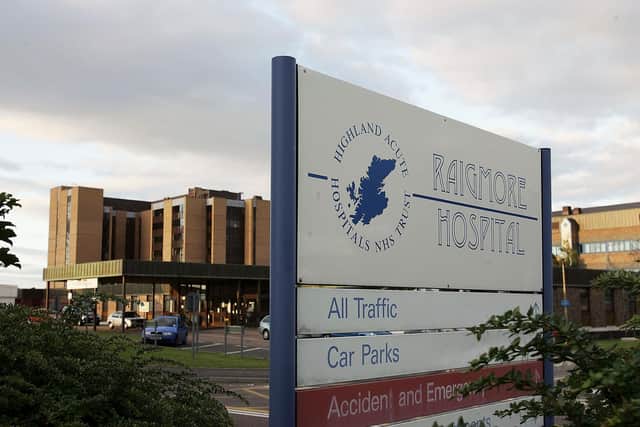

As her home is so far away, she wandered the streets of Inverness waiting for a bed to become available.
Iain Gregory from the campaign group Caithness Health Action Group says Ashlyn’s experience is “not unusual" in the most northern parts of the Scottish mainland.
“The experience this woman had was absolutely dreadful,” he told The Scotsman. “She was taken down to the hospital 100 miles away by her husband to be induced and was told there was no space and to go back two hours later.
“She was left wandering around Inverness on her own and when she did go back two hours later, there was still no space for her.
“In total she waited 12 hours on the streets of Inverness.”
The woman was later told there was a possibility her newborn son would be transferred to Aberdeen or Dundee while she remained behind in Inverness because of capacity issues.
Mr Gregory said: “This young woman had a traumatic experience, but she is not alone. It is not unusual to find women having to kill time in Inverness while waiting to have a baby.
“We’ve been told of women travelling down two or three days early because they are too scared to travel in labour. It is shocking.
“One thing we hear from these young women who have gone through this experience when we ask if they are prepared to have another baby, in many cases they say ‘I would but to, but I can’t go through that again’.”
The campaign group said another mother recently was forced to give birth to her two twins in two separate hospitals.
They said the first twin was born in Golspie, but then the mother had to take two separate ambulances to give birth to the second twin in Inverness.
READ MORE: Significant changes to Old Course at St Andrews include restoration of 'historical route'
Caithness Health Action Group is now calling for consultant-led midwifery services to be reinstated in Wick. They say in the interim birthing parents should be transferred to hospital via air ambulance and offered proper accommodation like those from Orkney and Shetland are.
Earlier this year the group took their concerns directly to the Scottish Human Rights Commission and the UN in Geneva.
Mr Gregory said: “We have reached the point where women are reconsidering planning a family because of the strain and the stress.
“We have had horror stories over the years. We want a return to what we had until 2016, when the vast majority of women gave birth here in the county.
“The alternative is providing transport such as helicopters. We are effectively an island community because we are cut off from Inverness.”
Scottish Labour health spokesperson Jackie Baillie said: "Giving birth to a child should be a special moment in any mother's life, but sadly for the women in Caithness it is often one of the most stressful.
"It is clear that the status quo where heavily pregnant women are forced to travel more than a hundred miles and sometimes left to wait for hours in a unfamiliar place is not acceptable.
"The SNP government must listen to the women in rural and remote areas and deliver a proper maternity plan that puts mothers and babies at the heart of care."
A Scottish Government spokeswoman said: “NHS Highland moved to a midwife-led unit at Caithness General Hospital on patient safety grounds.
“Women can still give birth locally with midwife support, while those needing specialist care deliver at Raigmore.
“Women are provided with information to make informed decisions about where to give birth. Weekly obstetric clinics and scans continue in Caithness, with travel support available.
“NHS boards are responsible for delivering services that best meet local needs. NHS Highland continually reviews services to ensure they’re safe, effective and sustainable.
“Women’s Health Minister Jenni Minto visited the unit this summer, where she met staff and local campaigners and heard about NHS Highland’s commitment to working with communities to provide safe, sustainable maternity care.”
Caithness Health Action Group told The Scotsman that less than 10 per cent of women in the area give birth locally.
A spokesperson for NHS Highland said: “Safety and quality are at the forefront of all of our service planning, and we provide as many gynaecology and maternity procedures as is safe to do so in Caithness General Hospital.
“There are regular consultant clinics in Caithness and we have successfully increased the midwifery team there.
“High risk or complex cases continue to come to our District General Hospital in Inverness – this is the same for all our remote and rural areas in the Highland region. We plan our theatre lists to support travel for those travelling longer distances and accommodation and expenses are also provided.
“We do have some restrictions given our accommodation to support partners staying within the unit, i.e. limited single rooms available, however we strive to provide local onsite accommodation.
“We have recently updated and refreshed our standard operating procedure (SOP) for organising accommodation to ensure we are supporting our families from our remote areas.
“We engage regularly with our Highland maternity voices partnership and CHAT to hear feedback around how we might improve the environment for families staying in our patient accommodation.”
Comments
Want to join the conversation? Please or to comment on this article.