
Scotsman Obituaries: Ulrich Loening, pioneering molecular biologist who led Centre for Human Ecology
Dr Ulrich Eduard Loening BA DPhil, biochemist and human ecologist. Born: 18 June 1931 in Berlin. Died: 10 July 2025 in East Lothian, age 94
Born into a respected industrial and scientific family of Jewish origin, Ulrich Loening was the only child of Lilli and Erich Loening. His grandfather and great grandfather had managed Berlin’s notable bronze foundry Gladenbeck which cast the four equestrian statutes at the Hohenzollern bridge in Cologne. His father was a photo-chemist who developed early colour printing methods.
In 1937, the family was advised to leave Germany immediately. They emigrated to London where Erich set up a colour printing company, Belcolor, which, however, closed in the early years of the Second World War. He then worked until retirement in the Kodak photochemical laboratories, and his later work contributed to the manufacture of computer chips. As the tourniquet of war tightened, the police turned up in 1941 and took Erich, as an “enemy alien”, into internment on the Isle of Man. Ulrich, then nine, recalled giving him a shilling to ease the suffering of such knock-on uprooting.
The family found what they would describe as a place of “welcome and shelter” throughout the war in Jordans, Buckinghamshire. The village of Jordans was built in the 1920s by the Quakers as a self-help community, around the historic Jordans Meeting House.
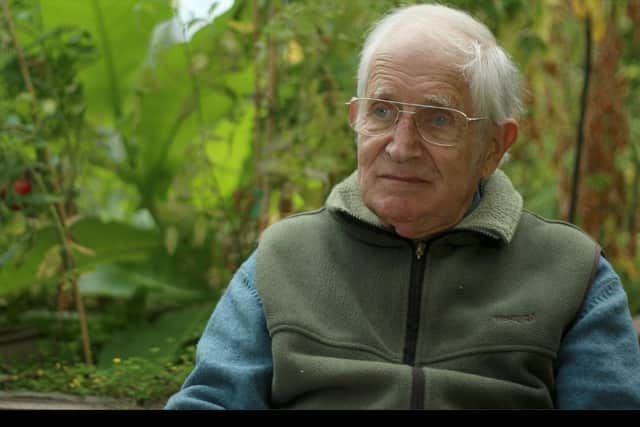

The Quakers were conscientious objectors, engaging instead in medical and refugee relief for which they were awarded the Nobel Peace Prize in 1947. According to Ulrich’s family, “he attended many Quaker meetings and was guided by their ethos and morals all of his life. His lifelong interest in green issues undoubtedly stemmed from his teenage years in Jordans.” His father, who had never before wielded a spade, became adept at vegetable growing, even becoming Secretary of the gardening club with his teenage son as deputy!
The lad attended Gayhurst preparatory school, followed by Merchant Taylors’ and Oxford University. He obtained a doctorate in biochemistry in 1958.
By delightful coincidence, on 18 June 1933, a little girl, Franziska, was born in Berlin’s La Charite hospital where, two years earlier, Ulrich had come into the world. The two met 22 years later playing music at Oxford. She played violin, he had inherited his father’s love of the cello. They wed in Jordans Meeting House in 1957, and throughout their near 70-year marriage, music was central to their lives.
In 1959 Ulrich, with Francesca (Franziska), came to Scotland on a three-year Agricultural Research Council research fellowship at the Edinburgh Botanic Gardens. At the end of this he was offered a junior lectureship in the Botany Department at Edinburgh University, and in 1969 he transferred to the Zoology Department where he continued in molecular research on both animals and plants. He both designed and built the equipment that wasrequired to determine, with great precision, the size of large molecules. As Professor Saveria Campo, who worked with him on papilloma virus, recalls: “Those were exciting times: Ulrich had developed polyacrylamide gel electrophoresis and Ed Southern had developed the Southern blot. The two techniques allowed, respectively, the analysis of RNA and DNA during the dawn of molecular biology.”
Ulrich’s understanding of science was always broad-ranging. In 1972, his colleague the geneticist Conrad Waddington had founded the School of the Man-Made Future, which the University of Edinburgh shut down after his death in 1976. Largely through Ulrich’s efforts, it was re-established as the Centre for Human Ecology (CHE) and he became its director in 1986. The CHE addressed transdisciplinary questions which ranged from why organic agriculture is healthy for the soil, to planetary “limits to growth”.
In the late 1970s, global warming had been creeping up the agenda, but the UK lacked a coherent energy strategy. Margaret Thatcher’s government favoured the mega technology of nuclear power, which Ulrich was actively against. He helped set up a cross-party coalition, the Parliamentary Liaison Group for Alternative Energy Strategies. Made up of concerned MPs and Peers, with a full time Westminster parliamentary liaison officer, it sought to bring new insights into renewable energy for a sustainable future.
This was followed by the formation of the Lothian Energy Group in 1982 and the renewables exhibition, “Living with Energy”. Hugely popular, it was launched in Edinburgh in 1983, before touring the UK.
Come 1992, and with a tiny cohort of part-time colleagues, he established the UK’s first master’s degree in human ecology. The CHE prioritised quality teaching over research and consultancy. Ulrich was much loved by his students, his teaching style cultivating their critical faculties. He would walk into class and throw out a gambit: “Nuclear power may be the answer”, then after a short pause, “but what was the question?”, and question why we need all this consumption and why not more energy conservation.
The CHE was challenging to mainstream academia, whether questioning the sustainability of industrial farming, raising the alarm on climate change or pressing the case for Scottish land reform. In 1996, after a protracted struggle, the university closed it down. A New Scientist editorial said “at considerable loss to the university’s intellectual tradition” it had “decided to be rid of its outspoken Centre for Human Ecology” and “a tradition of fearless inquiry will be broken.”
However, through the efforts of its former students, staff and scholarly well-wishers, the MSc course ran on. Initially this was through the Open University, then at Strathclyde University until it contracted its social sciences teaching in 2010. Today, the CHE (but no longer the MSc) is a small but independent educational unit based in Govan.
“Human Ecology” is puzzling to most people. As Ulrich wrote in an essay in Radical Human Ecology: “Most people readily appreciate what gorilla or elephant ecology is about; but not when applied to humans.”
Public policy, he continued, must move towards “fitting our activities into nature’s patterns, making us more fit to survive.” For this, “the attitude of Human Ecology is vital to stimulate imaginative creativity for solutions... to How, Where and in the end Whether humans live on the Planet.”
Central to the CHE’s success was Ulrich’s and Francesca’s hospitality, not just in Edinburgh, with dinners around the student-made elm wood table after the Tuesday public lectures, but also out in East Lothian where, with their own hands-on effort and skills, they had renovated the derelict coach house at Ormiston Hall.
Here students graduated under the ancient Ormiston Yew Tree. Scholars gathered for small but weighty conferences. Travellers from around the world were welcomed by the Loening householdthrough Servas, an organisation devoted to “connecting for peace”. Francesca wrote two simple-living handbooks, Small Change and Too Good to Waste, both used by schools and community groups.
Together, Ulrich and Francesca gardened and kept bees. Ulrich created Lothian Trees and Timber, a small company promoting sustainable forestry and the use of Scottish hardwoods for furniture and stringed instruments. It never made money, it made music.
While not subscribing to any formal religion, Ulrich maintained a lifelong connection to his German Jewish roots, and remained a fervent European. In May this year he attended a conference in Athens, and into his last weeks, while already seriously ill, he completed papers and worked on his autobiography until he died in July.
He is survived by Francesca, his three children Gica, Adrian and Nicolas, seven grandchildren and two great grandchildren.
Obituaries
If you would like to submit an obituary (800-1000 words preferred, with jpeg image), contact [email protected]