
Obituary: Maureen O’Neill, voluntary sector campaigner and policy-maker
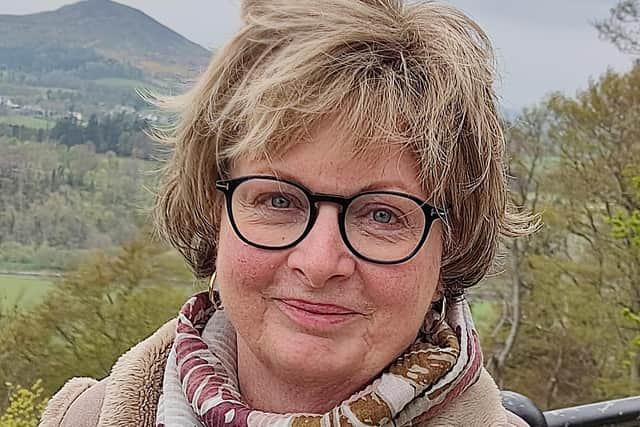
Maureen O’Neill was a seasoned leader, highly respected by her peers nationally and internationally, with a vast experience of driving the development of voluntary organisations and of influencing public policy agendas. She will be remembered as a quiet powerhouse, whose considerable energy and influence spanned a wide range of social concerns, not least those related to older people, and who enriched the lives of everyone who knew her. Her persuasive campaigning for free personal care bore fruit in 1997 when the Scottish government finally introduced this policy, but she later expressed surprise (and quiet amusement) to be designated as one of Scotland’s 100 most influential women. In 2019 she was awarded an OBE for her services to older people and the voluntary sector.
Maureen O’Neill was a seasoned leader, highly respected by her peers nationally and internationally, with a vast experience of driving the development of voluntary organisations and of influencing public policy agendas. She will be remembered as a quiet powerhouse, whose considerable energy and influence spanned a wide range of social concerns, not least those related to older people, and who enriched the lives of everyone who knew her. Her persuasive campaigning for free personal care bore fruit in 1997 when the Scottish government finally introduced this policy, but she later expressed surprise (and quiet amusement) to be designated as one of Scotland’s 100 most influential women. In 2019 she was awarded an OBE for her services to older people and the voluntary sector.
Maureen was born in Kampala in 1948, where her father, a banker from Scotland, and her mother, a nurse from Wales, had met in the 1930s. She and her elder brother, Malcolm, enjoyed life there and in Tanganyika to which her father was posted, until she was flown home, aged about five, to boarding school in England, a common practice in the ex-patriot community in those days.
After she left school she worked briefly in the law courts in London, then for Guy’s Hospital as an administrator, and after that at North London Polytechnic and the Royal College of Nursing. Meantime, she was studying at the University of London, leading to a BA (Hons) in History in 1978.

In 1980 she moved to Edinburgh at the suggestion of her friend Anja Amsel, working in turn for the Scottish Council for Single Homeless, West Lothian Community Council, YWCA Edinburgh, Scottish Association for Mental Health and then as Chief Executive of Age Concern Scotland, which she led for 11 years. In 2007 she was asked to take on Faith in Older People (FiOP). During the next eighteen years she advocated tirelessly for the importance of the spiritual dimension to the health and wellbeing of older people and those who care for them.
Maureen’s long career brought her into close contact with central and local government, NHS boards, the European Union, academics, faith communities and the private sector. She had a highly varied skill-set, including policy development, excelling at creating partnerships, building relationships and networks. Examples of her achievements include the introduction of advocacy to the State Hospital and the setting up of Handicabs Lothian. Beyond her paid roles she devoted considerable energy to the many charity boards she served on, most recently the Scottish Partnership for Palliative Care, Voluntary Health Scotland and the Primrose Day Centre. At various times she was Chair of Edinburgh Voluntary Organisations Council, Braeburn Care Home, the Scottish government’s Active Communities Forum and the Lay Committee of the Royal College of Physicians.
Between 2002 and 2014 she was a Scotland-nominated UK member of the European Economic and Social Committee, which she regarded as a great privilege. She relished the opportunities the role offered her for transnational collaboration and contributed to a significant number of Committee Opinions. She was rapporteur on Opinions relating to older people and Alzheimer’s disease and was elected President of its Social Affairs Section, covering employment, health, social issues, poverty, immigration and justice. She led the work the Committee undertook on poverty in 2010, the EU year on poverty.
In the latter years of her life, which some may term the “sunset years”, Maureen’s sun burned as brightly as ever. It was during this period that Maureen would build on the accumulated experience, compassion and wisdom previously acquired to do what could be regarded as her greatest achievement yet. As Director of FiOP Maureen’s leadership was to transform the charity into a highly respected influencer in the field of ageing and spiritual care, recognised nationally and internationally. Her tenure was remarkable for the impressive programme of education, research, lectures, workshops and policy work. During the COVID-19 pandemic she set up a listening service to support social care staff. She developed e-learning modules for the NHS NES learning platform, enabling health and social care staff to become better informed, more empathetic and confident about spiritual care for older people. It is impossible to quantify this important work as, even now, it still cascades out into society through faith communities, government policy and care professionals.
As a founder partner of the James Houston Center for Faith and Successful Aging based in Birmingham, Alabama, Maureen also worked closely with other partners in the USA and Canada to ensure that lessons learned locally would continue to have an ongoing international impact.
Throughout her seventies Maureen continued to work at an astounding pace, a living example of creative, dynamic ageing. She inspired others through her continued membership of charity boards and her mentoring of charity leaders through Charity Leadership Scotland. Prior to her retirement Maureen commenced Anna Chaplaincy training with a view to volunteering in retirement as an Anna Chaplain, while never ceasing to promote their work.
Despite her increasing illness she always had time for everyone. People who knew her well regarded her as a skilled listener, highly organised and a superlative collaborator. Her friendship was deeply valued.
In October 2026 Maureen died peacefully in Borders General Hospital in Melrose. She is survived by her husband Jonathan Clogstoun-Willmott, children Chloe and Kit, their partners Erik and Natasha, and her grandchildren Mae, Leo and Noah.
A Service of Remembrance will be held for her at Holy Trinity Church, Haddington, on Friday December 4 at 12.30pm.
Obituaries
If you would like to submit an obituary (800-1000 words preferred, with non-copyright image), contact [email protected]
Comments
Want to join the conversation? Please or to comment on this article.