
Readers' letters: Nuclear power is not the answer for energy needs
Readers take different views on the merits of nuclear power versus renewable energy
Brian Wilson suggests that renewables are the problem, with fossil fuels and nuclear as the way forward (Scotsman, 29 August). Perhaps he should consider the following:
In 2025, wind and solar became the bedrock of European energy self-reliance, with power generation from renewables in Europe reaching a new record of 384.9 TWh. Meanwhile, Norway has just said no to nuclear power, and Nato now backs renewables as the solution to energy security.
In 2025 renewables made up 85.6 per cent of all new global power capacity additions. Renewables are now 53 per cent cheaper than nuclear for total system costs and, with a doubling cost over-run, nuclear remains the most expensive power source. With construction of just one station taking 20 years-plus, nuclear projects in Europe run years behind schedule and vastly over budget. Nuclear power construction has an average time over-run of 64 per cent.
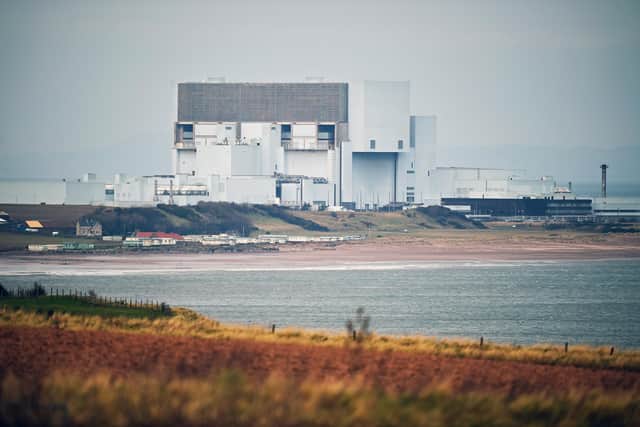

The fact is, each year nuclear adds only as much net global power capacity as renewables add every two days. For Scotland, the direction of travel is clear. The challenge now is not just generation, but how quickly grids, batteries and flexibility can be deployed.
Paul Dorfman, University of Sussex, Brighton
Unwelcome facts
The facts Brian Wilson outlines in his recent article will not be welcome in certain quarters. France generates 70 per cent of its electricity from nuclear power and has reliably over the past year supplied the UK with 8.5 per cent of the UK’s electricity requirements.
He is spot on when he says that renewable energy is not cheap. Neither is it reliable, despite all the hype.
Chris Stark, now the government’s head of mission on clean power, had previously said that closure of the North Sea oil and gas fields would have little impact on emissions and imports would be much worse.
Whilst some politicians and the Greens claim that the UK is winning the race to net zero 2050 most of the rest of the world have not even got off the starting blocks.
Norway will continue developing its oil and gas resources in the Barents Sea, ignoring the European Union’s call for a moratorium on Arctic drilling. Norway is now Europe’s largest supplier of natural gas and, as Brian Wilson states, 60 per cent of UK's imported gas comes from the North Sea.
More on the same theme please, Brian.
Clark Cross, Linlithgow, West Lothian
Too dangerous
I have quite a high regard for Brian Wilson, but am dismayed by his ongoing advocacy of nuclear power in his article on energy supply.
His cost argument fails to include guarding dangerous fission-products for centuries, and the fact that nuclear power plants have the advantage of being state-insured against litigation for environmental damage.
Most importantly, they’re potential war-targets (we know that from Iran and Ukraine). And it needn’t be a strike on a reactor; even a destroyed waste-storage facility would, on an adverse wind, require the evacuation of hundreds of thousands. Just think of Chernobyl.
The US predictionists at Polymarket are offering odds of 25 per cent (a one in four chance) of a NATO/Russia clash before the year is out (excluding cyberattacks). Now is the worst possible time for Brian to be promoting nuclear power.
George Morton, Rosyth, Fife
Good call
Nicola Benedetti and her team are to be congratulated on their stance against the use of mobile phones during performances at this year’s Edinburgh Festival. My enjoyment was greatly enhanced by the exclusion of what has become an irritating distraction elsewhere.
Ella Wilson, Kirkcaldy, Fife
Move to England
I believe Nicola Sturgeon has paved a way for the majority of Scots: those that voted no in 2014.
She seems to be having a ball on the money she earned from the Scottish Parliament during her eight years of achieving nothing more than handing out baby boxes and alienating every woman and girl in the UK. And this happiness is in deepest Englandshire.
I can empathise, having spent five weeks in England, over many shires, even though I was in touch with the sleep-inducing Scottish Parliament and the talentless incumbents within thanks to The Scotsman’s digital edition.
I found the removal from the “death star” that Scotland has become relaxing in a way impossible while in Scotland. The daily diatribes of drivel uttered by the usual suspects seemed not to affect me in the usual smothering manner.
So, all those second home owners about to be destroyed by the latest ploy of 300 per cent council tax rises, those sick of money wasted on defying Supreme Court judgments, those upset that they aren’t at school now so won’t recieve a new school bag and those who, in general, are sick to the back teeth of the SNP, the option is, sell up and leave this basket case to the usual suspects, the Central Belt, most of Glasgow, Dundee and all the other downtrodden places that support the benefit fairies.
The other option for the second home owners in Edinburgh, and all the others on 200 per cent council tax, simple: don’t pay it.
David Millar, Lauder, Scottish Borders
Low standards
Oh dear! Jenny Lindsay writes: “Jenny Gilruth’s critics should realise high standards are not bullying” (Scotsman, 31 August). The chance of seeking high standards in anything the SNP does would be a fine thing. Simply cast your mind back 20 years – before the SNP took over – to see the contrast.
Public services were much better in Scotland than now. Education was better and Scottish children were not refused entry to Scottish universities like they are now. You did not have any problems finding an NHS dentist nor getting a GP appointment. Hospital waiting lists were negligible. Ferries were there for you, the roads were not destroyed by cycle lanes and you were not made to feel guilty by turning on your gas central heating, which was more affordable then than now. Prisoners were not released early.
I could go on but the message is crystal clear. The SNP has never set high standards it could achieve and whatever level they were at has fallen. This is not bullying, it is a failure to reach even acceptable standards all under the watch of the SNP.
Gerald Edwards, Glasgow
Data centres
It is understandable that there has been debate about planning permission being granted for two major new data centres in Edinburgh and Fife.
There are perhaps some outstanding questions considering the infrastructure requirements of data centres in terms not only of electricity but also management of the heat they produce and their heavy use of water.
In effect, each data centre likely demands electricity equivalent to that produced by a sizeable power station; it also needs large amounts of cooling water and apparently gives off enough heat to service the needs of a town district heating system. The question is: where is this infrastructure to support these data centres?
Are there plans for new power stations in Edinburgh and Fife to service these data centres? And how are the large water requirements to be met? Will there require to be new sea water distillation plants given that there are no pumped water storage plants existing near either site? And how will the vast amounts of heat given off be used? Are there new town district heating schemes planned to utilise the heat?
Without considerable new investment in supporting infrastructure it is hard to imagine how these proposed new data centres can be viable assets to their adjacent communities.
Elizabeth Marshall, Edinburgh
Parties pooper
If the past few decades have shown anything it is that political parties inherently stifle democratic integrity and should be entirely replaced by a system of independent representatives.
Modern parties control their members through political blackmail, forcing representatives to rigidly toe the party line rather than exercise independent thought. This dynamic strips politicians of their personal integrity, turning them into cardboard cutouts and dangerously concentrating power within a small group of ruling elites. Consequently, governance ceases to be a true democracy.
To restore democratic efficacy, governance should operate strictly through independent candidates. Without partisan constraints, candidates can speak their minds freely, and voters can select individuals who genuinely reflect their local interests. In this post-party parliament, members would elect ministers and the prime minister directly from among themselves. These leaders would answer directly to parliament, allowing incompetent ministers to be replaced smoothly without triggering costly, polarising general elections. Ultimately, eliminating political parties empowers representatives to vote purely by conscience and constituent need.
Doug Clark, Currie, Edinburgh
Final destination
Donald Trump has repeatedly said he wants to revoke birthright citizenship for children born in America to immigrant parents. He also repeatedly reminds us that his mother was Scottish and his grandparents were German. So if he abolished birthright citizenship, where exactly would he go?
Judith Campbell, Portree, Highland
Write to The Scotsman
We welcome your thoughts – NO letters submitted elsewhere, please. Write to [email protected] including name, address and phone number – we won’t print full details. Keep letters under 300 words, and in the body of the email – no attachments – and avoid ‘Letters to the Editor/Readers’ Letters’ or similar in your subject line. If referring to an article, include date, page number and heading. No poems.
Comments
Want to join the conversation? Please or to comment on this article.