
Why it's time to bust myths about 'cheap' renewables, nuclear and the need for gas – Brian Wilson
We should have gone for France’s mix of nuclear and renewables, which has delivered the second-lowest electricity prices in Europe


We’re back in the “energy bills to rise” season with the usual hand-wringing and clueless pronouncements, mainly from people who would, on past form, make matters worse.
They will certainly never admit that the biggest mistake in UK energy policy in recent decades was to run down our civil nuclear capacity with an ambition (which persists in Scotland) to obliterate it completely. Instead, we should build memorials of gratitude to the workers of Hunterston and Torness.
The medium-term alternative was never renewables, as pretended, but gas, of which the UK has been a net importer since 2004. Forty per cent of our electricity still comes from gas-powered generation. When wars force the price up, we are all vulnerable and there’s not much government can do about it, while oppositions bluster.
£28 billion of re-wiring work
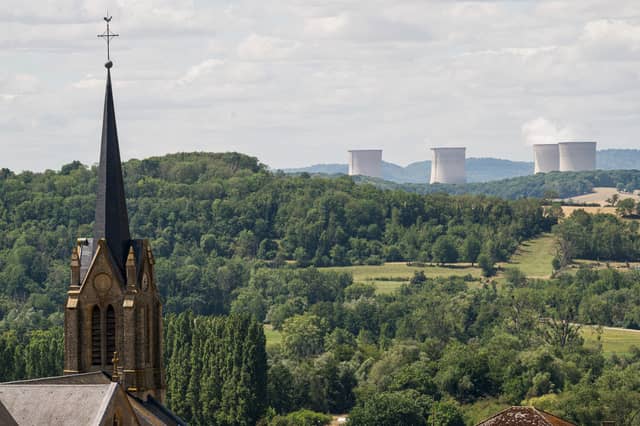
Why, they ask, do we have the most expensive electricity in Europe? Actually we don’t. Germany and Ireland are higher. But guess who is second lowest – France with its long-term reliance on nuclear now enhanced by renewables. An ideal mix that Scotland could have emulated.
It also depends what you count within household energy bills. There is one way to knock £400 off the average bill which makes rational sense. Simply transfer the costs of building and maintaining infrastructure from consumers to general taxation. It would still be paid for, but not by consumers through their bills.
Instead, persisting with current practice means another £108 being added to the average bill by 2031 to fund £28 billion of re-wiring the UK (disproportionately in Scotland) to accommodate renewables. There will be lots more to come.
Myth number one. Whatever the other merits of renewable energy, cheapness is not one of them. Pretending otherwise is an example of how so much discussion around energy relies on false narratives which, when they gain traction, become drivers of crucial policy decisions – usually the wrong ones, particularly if the Greens are anywhere near them.
‘Endless debate about oil and gas licences’
Myth number two. Premature closure of the North Sea will make a damn bit of difference to the UK’s progress towards net zero. There is nothing incompatible, and never was, about maintaining the domestic industry while pursuing the transition to non-fossil fuel options as rapidly as is practical and affordable.
The most sensible words in that debate were spoken by Chris Stark, now the government’s head of mission on clean power. Prior to taking up that role, he told a Holyrood committee how frustrated he was by the “endless debate about oil and gas licences” when the impact is marginal and imports would be much worse.
“We know that we will need gas until 2045,” said Mr Stark. “We see that, without new licences, there will be a 97 per cent reduction in North Sea gas production by 2050. With new licences, that reduction will be 95 per cent.”
Yet thousands of jobs have been put at risk by presenting Jackdaw and Rosebank as the only yardsticks by which the integrity of our energy policy should be measured while 60 per cent of our imported gas comes from the Norwegian sector of the same North Sea. The Lord preserve us from zealots.
Hypothetical lunacy of my Labour colleagues
It’s more than 20 years since I fought a battle within a Labour government to keep the nuclear option open at a time my more saintly colleagues were devoted to closing it down for ever. The most I could achieve was to “keep the option open” which was just as well, as it turned out.
To demonstrate how single-issue zealotry damages the brain, it’s worth recalling how the run-down of nuclear was rationalised in the 2002 Energy White Paper. By 2020, it theorised, 80 per cent of our electricity would be generated from gas and – wait for it – 80 per cent of that would come from Russia. It was hypothetical lunacy.
Since then, other gas suppliers – notably because we built pipelines with Norway – opened up and more progress was made on renewables than anticipated. The Russians also, obligingly, cut off supplies to Ukraine in 2008 which undid the mantra that they would always be reliable suppliers regardless of politics. Aye, right.
The point of continuing significance is that in order to sustain a prejudice, promoters of a single-issue cause will go to any lengths to rationalise away – to their own satisfaction at least – inconvenient arguments. At that time, the contribution nuclear made to a low-carbon generation mix was completely discounted.
Which takes me on to the Greens and why I find their sanctimony so unconvincing. To anyone lacking historical perspective, which means 90 per cent of those who vote for them, they have always been standard-bearers of the battle against climate change, long before it was fashionable or profitable.
It isn’t true. They started out in Germany as opponents of nuclear power. Their success guaranteed that Germany would remain dependent for decades on dirty old coal. Their impact on UK policy, when the anti-nuke priority was embraced by the gullible in other parties, was to ensure long-term dependence on imported gas.
Need for Burnham’s plain speaking
There were enlightened environmentalists who understood that, whatever the problems of nuclear, they were as nothing compared to the threat of climate change. They found no succour in the Greens who have always been more interested in demonising what they are against than in discussing implications.
Andy Burnham will find it difficult to cut energy bills because so many of the major factors are outwith his control, unless he does something dramatic like transferring the infrastructure costs to taxation.
However, he can certainly apply his gift for plain speaking to explain the realities which underpin why only a balanced energy policy ever makes sense – especially when faced with a clamour based on contempt for that principle.
Comments
Want to join the conversation? Please or to comment on this article.