
Why rewilding isn't to blame for Scotland's wildfires, it's part of the solution – Steve Micklewright
By restoring nature and working together, we can create more fire-resilient landscapes
Every summer another area of Scotland suffers wildfire, devastating for people, wildlife and landscapes. Few landscapes are immune. In 2025, a ‘megafire’ the size of Manchester affected mostly moorland at Dava. This summer, a Dundee-sized fire burnt through Glenmore and Abernethy in the Cairngorms.
Wildfires are usually caused by people. Drier, warmer summers, due to human-caused climate change, are increasing their likelihood and severity.
Yet, while the Cairngorms fire raged, and firefighters – including over 100 volunteers – heroically brought it under control, cynical attacks by some in the media attempted to blame ‘rewilders’. Now the flames are out, it’s time to wake up to the growing threat of wildfires.
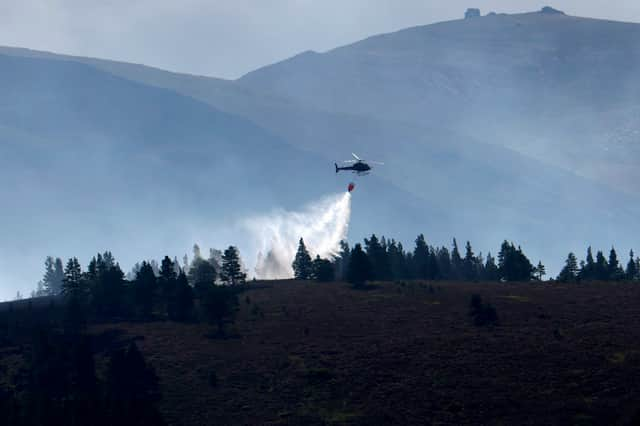

Firefighting helicopters needed
I recently visited the Cairngorms fire site and heard from firefighters and land managers. The Scottish Fire and Rescue Service leads wildfire response, but the skills and knowledge of land managers and communities were essential in controlling the fire.
More investment is needed, especially aircraft to drop water. It took 30 hours for helicopters to attend the Cairngorms because they were fighting fires down south.
Community preparedness is vital. Scotland should learn from the Cairngorms National Park’s Climate Adaptation Fund. It granted over £200,000 this year to 12 business and community groups for firefighting machinery and equipment, much deployed to fight the recent fire.
National awareness campaigns to prevent reckless behaviour are essential too. Should the Cairngorms byelaw banning summer campfires be extended nationwide?
It’s shocking that lessons from previous fires have not resulted in much-needed change. We don’t need another inquiry to ‘learn lessons’. They have been learnt, but too little done. What’s needed is serious action and investment by government.
Rewilding helps stop wildfires
This brings me to the attacks on rewilding. While the Cairngorms fire raged across habitats being restored for nature, the Dava mega-fire took place on land managed for sheep and shooting.
The reality is that intensively managed landscapes are vulnerable. Burning and draining grouse moors creates dried out conditions and flammable monocultures. If underlying peat catches fire, it smoulders for weeks or months.
Water stops fire. Rewilding approaches including rewetted peatlands, beaver wetlands, less-flammable native broadleaf trees, re-wiggled rivers, reconnected floodplains put water back into the landscape, where it belongs, creating resilience against flooding, drought and wildfire. Natural grazing by cattle can reduce fuel loads too.
It’s significant that rewetted peatland and naturally grazed areas seem to have escaped the worst of the most recent fire. Restoring nature can be one of our best long-term defences.
While sometimes land being ecologically restored may prove flammable in the short-term, that requires good stewardship – including fire breaks or natural grazing – not action against nature.
For resilient, safer landscapes, we need to move beyond finger-pointing towards cooperation. Gamekeepers have much to teach rewilders about firebreaks and wildfire suppression. Rewilders can help gamekeepers restore diverse, resilient habitats. This will benefit us all – remembering we’re in a biodiversity crisis, with one-in-nine Scottish species facing extinction.
The Scottish Rewilding Alliance is calling on the Scottish government to bring together land managers from every sector – alongside emergency services and communities– to establish a joined-up approach.
The Cairngorms wildfire proved we can come together to tackle these crises. Now we need to pool our knowledge, and work together, for a safer future.
Steve Micklewright is Trees for Life chief executive and a former Scottish Rewilding Alliance convener
Comments
Want to join the conversation? Please or to comment on this article.