
Why joining the European Union is looking increasingly attractive for Iceland
Europe faces a security environment shaped by ‘great power’ rivalry, economic coercion, and uncertainty in transatlantic relations
On 29 January 1983, when I was 14, I was lying on the green carpet of my parents’ living room in Kópavogur, a suburb of Reykjavík, reading a daily newspaper. Like many teenagers of that era, I was not searching for politics. I was looking for music.
That Saturday, the paper carried a half-page interview with The Stranglers. Much was made of the band’s hard-edged image, the black clothes, the severity, the martial discipline.
Then came a brief aside that stayed with me: “The Stranglers are politically engaged and have spoken out in favour of European integration. The idea of ‘the European’ has often been raised, and the band’s latest single is titled European Female, which scarcely needs further explanation.”
This was the Cold War at its most brittle. The United States and Soviet Union were escalating their nuclear stand-off, the rhetoric was unforgiving, and the prospect of catastrophe felt close at hand, even on Europe’s margins. In that climate, the suggestion that Europe might be something more than a strategic chessboard, that it could become a political community with agency of its own, was quietly appealing.
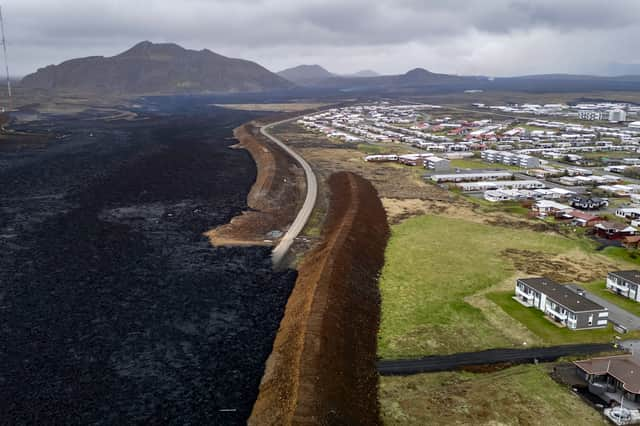

Lasting legacy of the Cod Wars
For a young Icelander living in a peripheral European country that nonetheless hosted a large American military base, the idea resonated deeply. Long before I had the vocabulary of international relations, the notion that small states might gain security and voice through shared rules rather than raw power had taken hold.
That sensibility will sound familiar in Scotland. Like Iceland, Scotland sits at Europe’s northern edge: outward-looking, maritime, culturally confident, yet historically shaped by decisions taken elsewhere. In both places, debates about Europe have rarely been abstract. There have been questions about agency, voice, and the capacity of small nations to shape their own futures in a world dominated by larger powers.
In Iceland, however, this argument has always been difficult to sustain politically. Independence is recent, hard-won, and bound up with economic struggles over natural resources, most notably the fisheries, secured only after three ‘Cod Wars’ with Britain. Against that backdrop, the claim that the European Union is a foreign power seeking access to Iceland’s prized resources has been easy to make and politically effective.
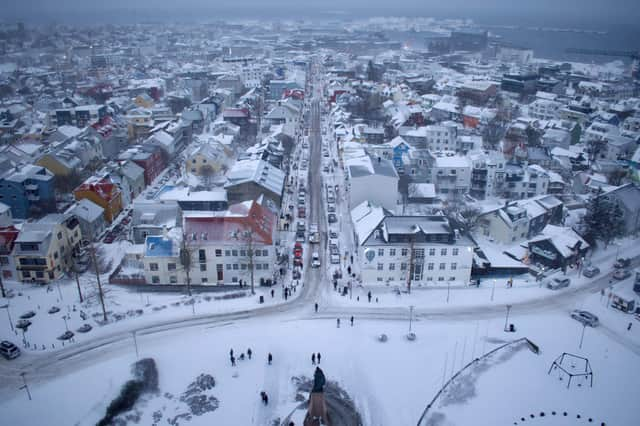
Iceland not an exotic ‘other’
This difficulty is reinforced by a deeper cultural idea of Iceland’s place in Europe. The historian Guðmundur Hálfdanarson describes this as ‘Borealism’, a northern counterpart to Edward Said’s Orientalism.
For centuries, European visitors to Iceland experienced it as a place beyond society and closer to nature, a landscape of sublimity, authenticity, and isolation. To 19th-century travellers, the North Atlantic represented not only the “un-European” but also the pure and the elemental.
At the beginning of the 20th century, Icelandic authorities and intellectuals sought to escape this framing. Iceland, they argued, should be neither an exotic ‘other’ nor a liminal Janus figure between the Old World and the New. It deserved to be recognised as an integral part of modern, civilised Europe.
Earlier sources suggest that Icelanders themselves were acutely aware of their peripheral status. The historian Sverrir Jakobsson has shown that in the High Middle Ages, Icelanders already understood their country as an útskagi – an outlying promontory at the very edge of the European world. Distance from the centre was not merely imposed; it was recognised, internalised, and lived.
Europe or the US?
That sense of borderland persists. Hálfdanarson notes that contemporary visitors to Iceland still feel as if they are crossing a threshold. Driving from Keflavík Airport to Reykjavík, they pass through a black lava desert, often the first such landscape they have ever seen. It is not the border between the Old World and the New, but something subtler: a boundary between Europe, or even civilisation, and what feels like nothingness.
This matters because peripherality is not just a cultural idea; it is a political condition. Today, it continues to shape Icelandic debates about Europe, security, and alignment.
The question is no longer simply whether Iceland should move closer to the European Union, but whether it should anchor itself more firmly in Europe or in the United States, an old dilemma made newly urgent by geopolitical instability and the chaos of Donald Trump’s second presidency, including threats directed at Iceland’s nearest neighbour, Greenland.
As the anthropologist Kirsten Hastrup has observed, “People are literally habituated by their experiences; in turn, this habituation implies different ways of literally sensing history.” In Iceland, we never fully acknowledged that we do not live on the European continent. We built massive timber churches that blew away in winter storms. We starved trying to cultivate wheat. We still dress for winter as if we lived in London or Paris.
Return of ‘great power’ rivalry
Seen in that light, the case for Iceland’s membership of the European Union is both about identity and strategy. The European Union is, at its core, a system designed to protect smaller countries through the rule of law, predictability, and shared decision-making.
For Iceland, remaining outside while aligning with most EU policies through the European Economic Area means accepting rules without a seat at the table, an arrangement that may feel comfortable in calm times, but looks increasingly fragile in an era of geopolitical disruption.
Recent events have only sharpened this reality. Europe is once again facing a security environment shaped by ‘great power’ rivalry, economic coercion, and uncertainty in transatlantic relations.
In such a context, EU membership would anchor Iceland firmly within a political community that pools sovereignty precisely to prevent domination by larger powers. For a country whose history has been defined by distance and vulnerability, joining the EU would be a logical next step in strengthening its sovereignty in a community of like-minded nations.
Magnús Árni Skjöld Magnússon is a professor of politics and chairman of the European Movement in Iceland
Comments
Want to join the conversation? Please or to comment on this article.