
UK must take Donald Trump at his word – and seek shelter in Europe
Donald Trump is a crass individual for whom Greenland is interchangeable with Iceland, historical truth is an irrelevance and personal vanity is his guiding influence

If there is one lesson to be learned from recent events, it is that the UK needs to be part of Europe – politically, militarily and culturally – because, for the time being at least, there is nowhere else to go.
I have no idea if these upheavals are being driven by some strategic masterplan in Moscow or Beijing, though they are certainly eager beneficiaries. Or if the conduct of President Donald John Trump marks an epoch-changing relationship between the United States and its allies, or merely the erratic nature of an appalling individual.
Whatever lies behind it, the force of events points in one certain direction – that the interests of the UK lie in working closely with reasonably like-minded partners in Europe to present a united front against whatever may arise. The UK cannot stand outside that imperative, while there are many reasons for full engagement.

For starters, there now seems little risk for Keir Starmer’s government in adopting a bolder approach to its relationship with the European Union. In the run-up to the general election, commitments were guided by pragmatic caution, which was understandable. There was nothing to be gained from turning it into a re-run of the Brexit referendum.
Since then, Starmer has certainly improved relationships with Brussels and EU partners. Useful steps have been taken to remove barriers which Brexit created but there has been no grand gesture or declaration of intent which comes close to challenging the basic premise, or bogus claims, of Brexit.
Politically, this has not worked. In an irrational age, the arch-party of Brexit, Reform UK, has soared in the polls at the same time as public opinion claims to be strongly in favour of resuming closer ties with Europe. It is difficult to see what Labour has to lose by making that paradox a lot more uncomfortable for Farage and his camp-followers by offering a much stronger commitment to European alignment.
Politics aside, that would be the right thing to do for the UK economy and also in tune with these other pressures from external sources. These are forcing us to recognise the need for Western Europe to come closer together diplomatically and militarily in response to upheavals in the world order, largely promoted by the great disruptor in Washington.
Again, Starmer acted sensibly by seeking a positive relationship with Trump in the interests of the greater good. Potentially, being outside the EU could have strengthened this possibility, as could Trump’s part-Scottish heritage, just possibly. In practice, none of it has succeeded. As the Greenland episode confirmed, there is a point at which that has to be admitted.
Beneath the surface of Trump’s antics over Greenland lies a more fundamental truth. He and the cronies around him hold the liberal democratic values of western Europe in contempt and feel no real attachment to the “Special Relationship” with the UK or western Europe on which we have placed so much post-war reliance. For a few more years, and possibly a lot longer, we might as well get used to that reality.
This creates uncertainties which have never existed in our lifetimes. The military one is most obvious at a time when aggression coming closer to our doorsteps no longer seems unthinkable. Nobody then knows where Trump’s allegiances, other than to himself, might swing on any particular day or within a global context.
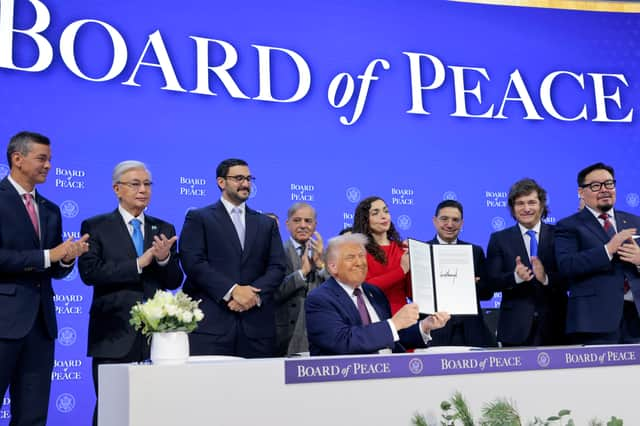
His child-like missive to the Norwegian Prime Minister, berating him for not giving him the Nobel Peace Prize (which was not within his gift) concluded with the words: “I no longer feel an obligation to think purely of Peace, although it will always be predominant, but can now think about what is good and proper for the United States of America.”
In this respect at least, we should take the President of the United States at his word and recognise the implications. If, for example, Russia encroaches beyond Ukraine, will it be deemed “good and proper” by America to say “nothing to do with us”? If a few more energy cables off European coasts are severed, will Washington shrug? These questions are certainly being probed in Moscow, so they should also command attention here.
Europe needs to look to its own devices, without assuming that the guarantees which have existed for the past 80 years still apply. In seeking resolution through diplomacy and protection against aggression, there is no longer certainty that Trump’s America will remain as part of the balance which has underpinned the post-war peace.
It hardly needs to be asserted that Trump is a crass individual, for whom Greenland is interchangeable with Iceland, historical truth is an irrelevance and personal vanity is the ever-present guiding influence. But he is also a dangerous one because of the power awarded to him by 70 million Americans, most of whom subscribe to his world view.
Looking on the brighter side, asserting our Europeanism should not just be a reluctant fall-back position. We have a lot to learn from those with whom we share a continent and not all of it depends on the EU, Nato or any other institution. Indeed, I have long wished we would put a lot more effort into investigating what succeeds in these societies and applying the lessons learned to our own.
To be truly European, for example, we could give far more powers to local authorities to express their regional distinctiveness and civic pride. We could emulate policies which produce thriving town and city centres, with innumerable retail and hospitality outlets. We could have strategies for strengthening our geographic periphery rather than allowing it to decline. The “learning from Europe” list is endless.
If the new world order could open that door, even Trump will have served a useful purpose.
Comments
Want to join the conversation? Please or to comment on this article.