
I work in war-torn countries like Iraq, and UK is experiencing similar divisions
The UK needs to learn from conflict zones how social division, inequality, and weakened institutions can destabilise societies
I have spent much of the last two decades working in places shaped by conflict, displacement, and structural injustice. In Ukraine, I documented and profiled personal stories of individuals striving to preserve dignity amid trauma, teachers whose schools had been shelled, children displaced multiple times, and families navigating grief while displaying remarkable resilience.
In Indonesia, I worked with the Orang Suku Laut communities, whose lives on the sea made them targets of assimilation policies, persecution, and structural violence. Their struggles were not sensationalised suffering but the slow grind of injustice: limited access to education, discrimination in housing and employment, and the steady erosion of identity by more powerful groups.
Across Iraq, Ukraine, and Southeast Asia, I have witnessed destroyed education systems, overcrowded housing, unaffordable rent, stereotyping of minorities, and how easily resentment escalates into violence. I have seen what happens when small groups are scapegoated, when those who ‘don’t fit in’ are harassed, excluded, or persecuted.
READ MORE: Why everyone must read near-apocalyptic warning from Nato chief about war with Putin's Russia

Avoiding relapses into violence
I have watched societies polarise along lines of identity, memory, religion, and politics, places where the vulnerable suffer while the wealthy flourish. What unsettles me now is how recognisable some of these patterns have become in the UK.
Post-conflict environments are shaped by social upheaval, damaged infrastructure, weakened institutions, and severe economic hardship, including unemployment, poverty, and lack of opportunity. Key challenges include establishing security, rebuilding government services, promoting social reconciliation, and rebuilding the economy, all while managing a high risk of a relapse into violence. Successful recovery relies on strong local leadership, meaningful citizen participation, and a sustained commitment to building capacity in governance and public administration.
READ MORE: On the platforms: My reflections as I feel guilt at leaving Kyiv and Ukraine behind for Scotland
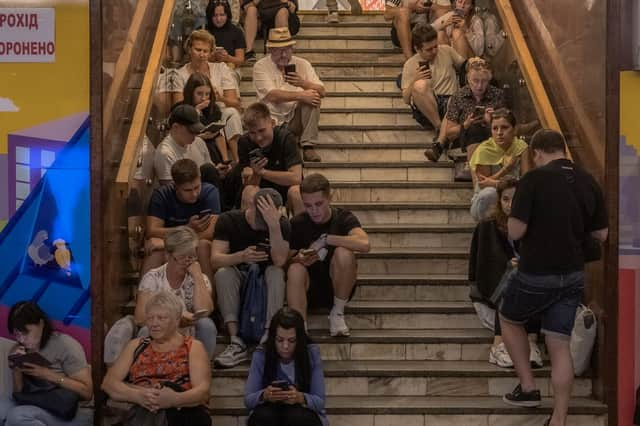
Ukraine provides a stark, ongoing example. The war has displaced millions internally, worsened poverty and unemployment, and caused severe disruptions to education and family life. Mental health issues are widespread, and women and children are disproportionately affected. Frontline areas see the highest humanitarian needs, and social cohesion is under extreme strain.
In conflict-affected countries, polarisation is rarely about a single issue with cumulative layers of grievance, identity, hurt, and fear. Ukraine taught me how quickly ‘us versus them’ thinking hardens, and nuance disappears when people feel existentially threatened.
READ MORE: Trump’s wrong, Russia is eminently beatable but UK needs to end its isolationist approach
Tribalism and scapegoating
I see similar dynamics emerging in the UK. Political identity has become a tribal badge; disagreement is less about policy than loyalty. Fear of difference, scapegoating, and opportunism increasingly shape public debate. Once societies lose the ability to disagree constructively, they risk echoing fragile states where polarisation was the precursor to violence.
In Iraq, families displaced by Isis had lost faith in the government, police, and the legal system. When institutions are seen as corrupt or indifferent, communities retreat into smaller, defensive units. Today, trust in British institutions, government, local authorities and health services sits at historic lows. Without public confidence, even small shocks can magnify social tensions.
Across the settings I’ve worked in, identity is territorial, and disputes over land or housing are rarely about property; they are about memory, justice, and belonging. Overcrowding, high rents, and insecure tenure breed resentment.
In Ukraine, education disruptions and housing instability have magnified mental health issues and deepened social divides. In the UK, we are now seeing similar pressure points: housing crises, land reform debates, and local disputes over public space are triggering anxieties about who belongs and who benefits.
Importance of ‘social protection’
Loneliness is another hallmark of fragile societies. In post-conflict contexts, the collapse of schools, workplaces, and community spaces erodes the social fabric. In the UK, the rise of isolation, digital echo chambers, and weakened civic engagement mirrors that pattern. Anxiety and fractured workplaces are warning signs of a society under stress, even if they do not involve bullets or bombs.
The UK Government has just published a policy paper advocating a global agenda to expand social protection in fragile and conflict-affected settings. Social protection, ranging from pensions and skills training to child protection and healthcare, is described as a basic human right and, importantly, an investment in peace and stability. In fragile states, it supports the most vulnerable and prevents deprivation from fuelling grievances.
I cannot help but see the relevance to Britain. We’re experiencing rising inequality, precarious work, housing insecurity, and fractured communities. Social protection in the UK context would not merely cushion hardship; it could reduce social polarisation, reinforce trust in public institutions, and give people a tangible sense of dignity and security.
The same principles that stabilise war-affected countries – like people-centred design, inclusion of women and youth, and engagement with national systems – could strengthen our society before fractures deepen.
The early warning signs
The hardest lesson from my work abroad is that societies rarely realise they’re on a dangerous trajectory until it becomes unavoidable. Conflict is not a moment; it is a pattern. Fear of difference, economic inequality, erosion of trust, and exclusion of vulnerable groups are early warning signs. They are present in the UK today.
The UK still has immense capacity for cohesion, fairness, and renewal, but these strengths must be rebuilt. The parallels with fragile and conflict-affected states should serve as a warning: the conditions for social fracture exist here already. Investment in social protection, strong institutions, and inclusive community engagement is not just a moral choice; it is a preventative strategy for long-term stability.
Social protection is one of the few tools that can simultaneously protect the vulnerable, strengthen legitimacy, and foster peace and resilience. Delivered effectively, it saves lives today, sustains institutions tomorrow, and builds the foundations for stability and peace in the future.
If the UK applies these lessons at home – recognising early warning signs, investing in dignity, and strengthening social cohesion – we can prevent erosion before it deepens, ensuring that our society remains resilient in the face of growing economic, social, and political pressures.
Frazer Macdonald Hay is a peace-building consultant, the founder of Uniform November, a consultancy working internationally on post-conflict recovery, and a writer
Comments
Want to join the conversation? Please or to comment on this article.