
On the platforms: My reflections as I feel guilt at leaving Kyiv and Ukraine behind for Scotland
Leaving Ukraine bound for Scotland has not come without guilt, writes Frazer Macdonald Hay.
Sitting on a platform bench, I am caught between journeys — just part of the way home to Scotland, still acclimatising after a 12-hour sleeper train from Kyiv to the borderlands.
Around me, life unfolds in soft, broken movements: small acts of care, quiet resilience, invisible grief. These stations are far from the roar of artillery, the drones overhead, the smoke that marks the front lines, yet they carry the weight of survival and the residue of loss.
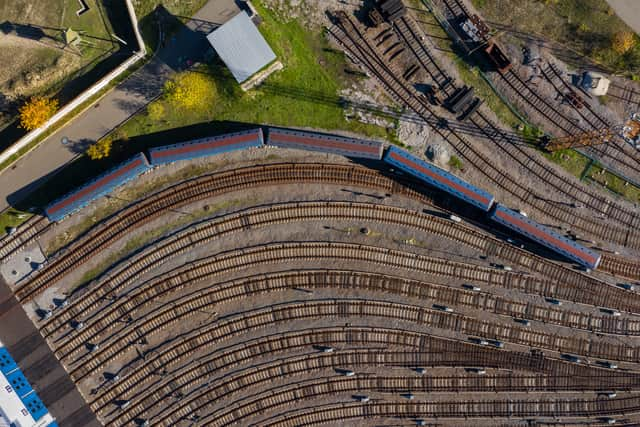

The platforms pulse with absence. Fatherless families move carefully through the crowd. Women shepherd children, dragging bags of clothes, food, cooking pots, and the few belongings that tether them to a life already fractured.
Police patrol slowly, scanning for men of draft age, a reminder that absence is not accidental — it is duty and danger. Bright clothing glints in the early sunlight, but eyes tell a different story: exhaustion, sorrow, and the uneasy knowledge that “home” may now exist only as memory.
I close my eyes and think of those who have chosen differently: the families who remain in occupied territories, clinging to fragments of land, property, and memory.
Some risk a call to displaced neighbours, suggesting they risk retrieving what they can before soldiers arrive; most remain silent, fearful, detached or complicit. There is no simple choice — stay in a home that is no longer what it was, or leave knowing it will never be your home again.
Around me, subtle shifts in society emerge: older generations reclaim labour, sweeping streets and repairing buildings with hands hardened by necessity, while the young seek postponement, avoidance, survival — through study, work, migration, or careful navigation of what is left.
Opening my eyes again, I watch children run and chatter behind chaperones, clutching UNICEF backpacks, toys, tiny symbols of fleeting normality. Their laughter is a fragile counterpoint to the adults weighed down by worry.
Mothers sit with hands on phones, eyes locked to screens — an effort at composure that only accentuates strain. Young women move cautiously; men pass with quiet respect.
Babushkas patrol like watchful magpies, collecting lost bracelets and hairbands. Trains clank into the station, releasing women, children, ex-combatants, the elderly, and the occasional foreigner.
Calls for taxis echo, luggage shifts, hands clasp, and children tug. Phones light up with messages of missing loved ones, funerals, exchanges and birthdays. Smoking and cheap alcohol offer small, unkind relief; sirens are mostly absent here — the alarm internal, relentless. Tattoos mark grief, resilience, and pain.
And I feel guilt. Why was I not closer to the front, sharing some of the risk? My sons, safe far away in Scotland, only magnify the unease for those sons who cannot leave.
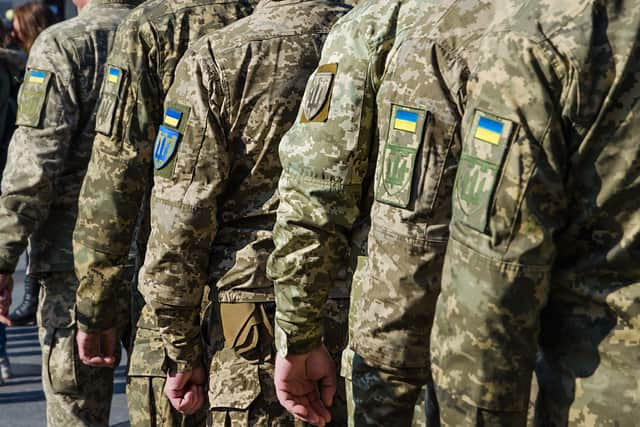
The young here are more than statistics or pawns — they are human beings facing the front lines with all that they love and fear.
Outside, endless sunflower fields flare in fragile beauty before giving way to checkpoints and armed border police. Life moves on, even as the world behind the travellers is fractured, stolen, occupied.
These platforms are more than transit points. They are liminal spaces where new memories form even as past memories linger. Grief and hope intertwine. The smallest acts, a helping hand, a shared smile, a carried bag, become lifelines. Here, the ordinary is extraordinary: testament to resilience, survival and the human need to keep moving, even when the ground beneath feels gone.
Amid the movement and stillness, the quiet memory of Ukraine’s back lines whispers both loss and fragile hope. Life endures.
- Frazer Macdonald Hay is the founder of Uniform November, a peace-building consultancy. A writer and practitioner, he works internationally on the intersections of architecture, memory, and violence, with experience in Iraq, Ukraine, Mexico and Indonesia. He holds a Master’s degree in Peace and Conflict Studies from the University of St Andrews.
Comments
Want to join the conversation? Please or to comment on this article.