
UK will not sign Donald Trump's board of peace, says foreign secretary

Yvette Cooper says the UK is concerned with Russia’s involvement in the board of peace signing ceremony in Davos.
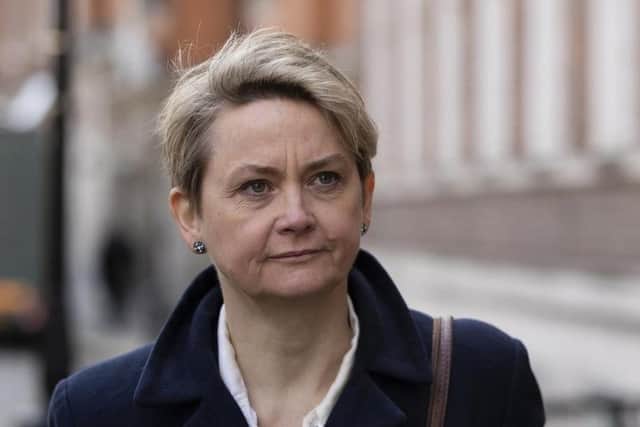
The UK will not take part in Donald Trump’s board of peace signing ceremony today over Russian President Vladimir Putin’s involvement.
Mr Trump’s board of peace will be signed today at a ceremony at the World Economic Forum in Davos, but Foreign Secretary Yvette Cooper said the UK will not take part because of “concerns about President Putin being part of something which is talking about peace”.
She told BBC Breakfast: “We still haven’t seen any signs from Putin there will be a commitment to peace in Ukraine.”

The board was originally designed to help end the war in Gaza and oversee reconstruction in the area, but the proposed charter does not mention Palestine and appears to supplant the functions of the UN.
Countries which have already agreed to sign up to the board of peace include Saudi Arabia, Turkey, Egypt, Jordan, Indonesia, Pakistan, Qatar, UAE, Bahrain, Albania, Armenia, Azerbaijan, Belarus, Hungary, Kazakhstan, Morocco and Vietnam.
It is understood the UK, Canada and The Vatican were all invited to the ceremony today. No members of the UN Security Council have agreed to sign the deal.
On Wednesday evening Mr Trump said an invitation had also been extended to Mr Putin, and that the Russian president had accepted the invitation. Russia has said Mr Putin is still to decide whether or not to accept the invitation.
Mr Putin was not present at the ceremony on Thursday morning. Mr Trump was joined by Argentinian President Javier Milei and Hungarian Prime Minister Viktor Orban to sign the charter.
Leaked text of the board’s founding charter says it will be “an international organisation that seeks to promote stability, restore dependable and lawful governance, and secure enduring peace in areas affected or threatened by conflict”.
The document says the board of peace’s charter will come into force once three states formally agree to be bound by it. Member states will be given renewable three-year terms and permanent seats if they contribute $1 billion (£740 million).
Mr Trump would be the chairman of this body. Last Friday the White House named seven members of the founding executive board, including US Secretary of State Marco Rubio, Middle East envoy Steve Witkoff, Mr Trump’s son-in-law Jared Kushner and former UK prime minister Tony Blair.
This comes after Mr Trump U-turned on his threat to impose tariffs on a number of European countries, including the UK, for opposing his plans to take over the Danish territory of Greenland.
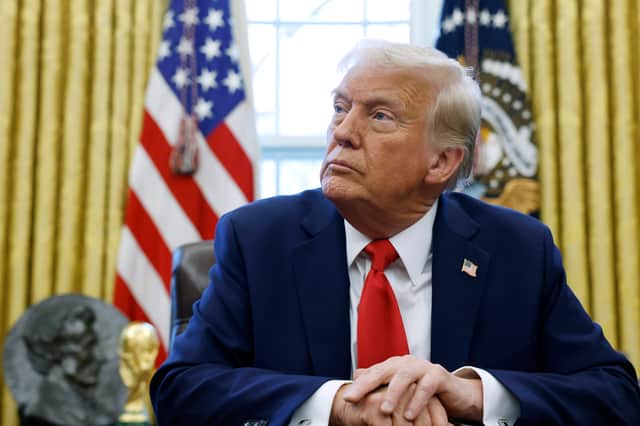
Mr Trump said he had formed “the framework of a future deal” regarding Greenland when he met Nato Secretary-General Mark Rutte.
CBS says there is no agreement for American control or ownership of the territory, and Mr Rutte said he did not discuss Danish sovereignty over Greenland during his meeting with the US president.
On Thursday morning, Ms Cooper told Sky News she hoped “we are now in a much better place” to focus on collective Arctic security, She said: “We’ve been unwavering in our principles and calm and very coordinated with our allies in pursuing the UK’s national interests.
“I hope this now means we are in a much better place to actually focus on what the real issues should be, which is our collective Arctic security, how Nato countries work together, respecting sovereignty, respecting our shared collective security in the face of shared threats, particularly from Russia.”
Comments
Want to join the conversation? Please or to comment on this article.