
UK must own its historic crimes against Palestinians if it's to be peace broker – Alex Cole-Hamilton
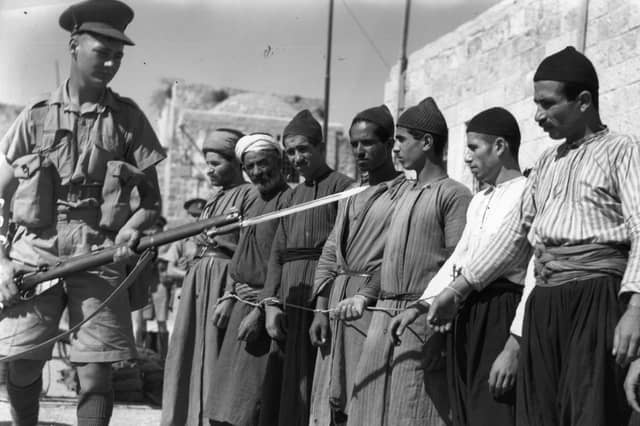
In the late 1930s, during the British Mandate in Palestine, the Colonial Secretary privately admitted that ‘atrocities’ had been carried out by the police

In the past year, Britain has recognised Palestinian statehood, sanctioned violent settlers and the Netanyahu government’s extremist ministers, and committed £10 million to support the Palestinian Authority’s services. These are positive steps.
However, one line in Foreign Secretary Yvette Cooper’s recent statement caught my attention. Discussing Palestinian governance, she said simply: “Palestine should be run by Palestinians.” She is right but the problem is that Britain spent decades ensuring that this did not happen.
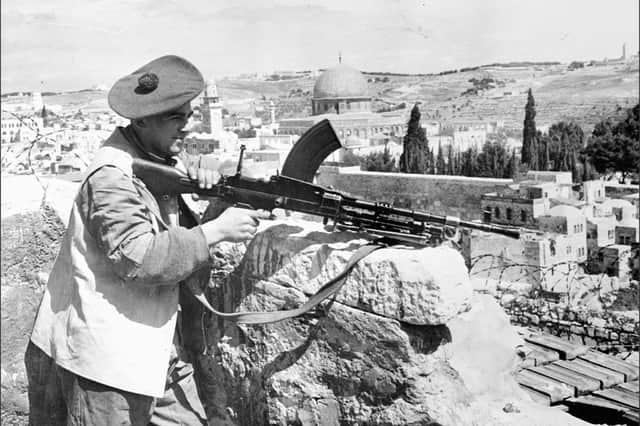
When Britain controlled Palestine from 1917 to 1948, the rights of Palestinians were not accidentally overlooked but deliberately set aside. The UK has never acknowledged that suffering or how its methods of control and coercion laid the groundwork for many of the ills perpetrated by the Israeli government today.
READ MORE: How I found hope amid the ruins of Syria, a country shattered by civil war – Melanie Ward
Britain Owes Palestine
This is the central question that the Britain Owes Palestine campaign has put before the government in a 400-page legal petition drafted by leading KCs and historians.
The petition sets out a disturbing history and one that has been absent from the wider public consciousness. The 1917 Balfour Declaration committed Britain to supporting a Jewish national home in a land that was over 90 per cent Arab, without the consent of those who lived there. In the decades that followed, Britain denied the Palestinian majority any meaningful democratic voice. When a Legislative Council with an Arab majority was proposed, parliament voted it down.
The UK's failure to advance conditions for a two-state solution before the end of the Mandate laid the groundwork for decades of violence.
Today, if we are serious about a long-term solution, with Arabs and Jews living peacefully side by side, we need to be full-throated in our support for the holding of free and fair legislative and presidential elections across the occupied territories, which President Mahmoud Abbas has now confirmed for November 2026 and early 2027. These elections would be an opportunity to wrest power in Gaza away from Hamas and deliver peace and security for both sides.
We also need to empower the moderates in Israeli and Palestinian society and draw power away from the extremes – including by progressing multilateral plans for the disarming of Hamas, and by ensuring and applying sanctions to Netanyahu and extremist ministers in his Cabinet.
We should also ban UK trade in goods and services with the illegal settlements across the occupied territories, recognising that they constitute a major block to a two-state solution. While Israeli settlers can take and hold ever more land, backed by the guns of the IDF, there will never be peace. It also makes a stable Palestinian state less viable by depriving it of water and farm land.
Britain’s actions still echo today
However any viable solution also means reckoning with Britain’s past failures. When Palestinians rose up in the Arab Rebellion of 1936 to 1939, Britain responded with collective punishment, military courts, and methods its own Colonial Secretary privately admitted to Cabinet were police “atrocities” deliberately concealed from Parliament. At least 5,000 Palestinians were killed and 15,000 wounded.
When Britain withdrew, 750,000 Palestinians were displaced in the war that followed, in an expulsion the petition describes as foreseeable, avoidable, and linked to Britain’s abdication of responsibility. Parliament then passed legislation retroactively immunising every British official from prosecution for acts committed during the Mandate.
Britain is responsible for what it did, and its impacts today. Look to Palestine now and the use of military courts, collective punishment or property destruction – fixtures of Britain’s Mandate – are in use by the Israelis. A country that now purports to champion Palestinian rights while simultaneously refusing to engage with a legal petition on its own acts of suppression, is not applying its principles consistently. You cannot be an honest broker for a cause you helped to destroy without first acknowledging what you did.
Scotland’s call
Last September, I stood in the Holyrood chamber and said that recognition of a Palestinian state was a vital step towards peace, that the Liberal Democrats were in no doubt that the actions of the Israeli Cabinet and IDF were in breach of international law, and that the UK government should go further in implementing a full arms embargo and targeted sanctions against Netanyahu’s government.
The Scottish Parliament voted 65 to 24 in support. Scotland has spoken on the present crisis. But holding Westminster to account must also mean pressing on the historical question too.
Holyrood cannot compel Westminster on reserved matters, but Scotland has always been willing to use its voice to speak out on questions beyond our devolved capabilities. The cross-party consensus at Holyrood – on statehood, arms restrictions, and international law – represents mainstream Scottish views. That consensus should press for something more: an honest British reckoning with the history that helped create the conditions we are now trying to remedy.
Despite nine months passing since the petition was handed to the UK government, and a cross-party group of 45 MPs and Peers in Westminster having written to the Prime Minister calling for a response, there has been none. The lead petitioner, Munib Al Masri, was shot by British soldiers as a teenager. He and 13 other Palestinians, whose families were directly affected by Britain’s Mandate-era actions, are still waiting.
Britain should not only ask itself what more it can do to bring peace and justice for Palestinians and Israelis now. It should ask what its role is in creating the crisis today.
That’s why I am calling on MSPs across every party to join me in demanding that the UK government finally responds to the petition, engage honestly with Britain’s record during the Mandate, and recognise that peace built on selective memory is not a peace that will hold.
Alex Cole-Hamilton is leader of the Scottish Liberal Democrats
Comments
Want to join the conversation? Please or to comment on this article.