
How I found hope amid the ruins of Syria, a country shattered by civil war – Melanie Ward

Syrians are on a mission to rebuild their country and the UK must help them
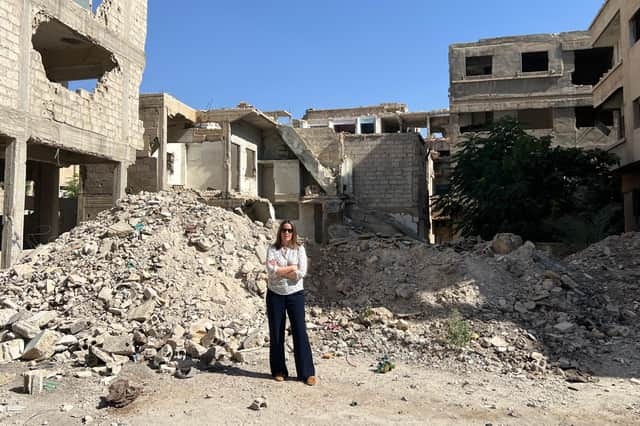
Standing in rubble that was once a suburb of Syrian capital Damascus, I see the pink, fluffy head of a child’s teddy bear. Covered in dust, it has been decapitated from its body. Its softness is a sharp contrast to the grey, jagged ruins all around us. What was once a bustling neighbourhood is now bombed-out shells of apartment buildings, the silence as eerie as the occasional signs that there was once life here.
It’s not the first time I’ve seen such destruction – in my previous life as a humanitarian aid worker, I saw the ashes of war in other countries. It is always the human objects amidst the ruins that bring a lump to your throat. It makes you wonder about the child who once loved that teddy; did they survive the attacks that destroyed their home? Did they manage to escape? What terror must they have felt as the bombs were dropped?
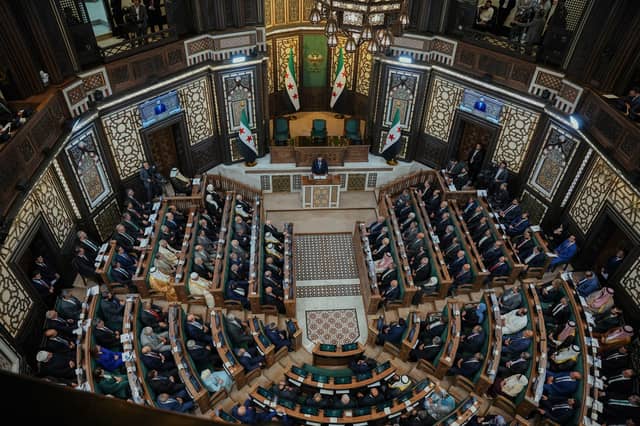
This month I led the first delegation of British parliamentarians to visit Syria since the fall of the Assad regime in 2024. For decades, the Assad family ruled Syria as a brutal dictatorship. The civil war between 2011 and 2024 saw the deaths of some 500,000 Syrians and over 12 million fled their homes.
A huge task ahead
Iran-backed Bashar al-Assad used chemical weapons on his own people. Syria was ground zero for the horrifying new trend in military attacks on hospitals, now seen in other war zones. In Syria, the bombing of hospitals was perpetrated both by Assad’s military and Russian forces. As perpetrators discovered impunity, attacks on healthcare spread to Ukraine, Palestine and Sudan.
Newly liberated from within by President Ahmed al-Sharaa, the challenges that Syria faces are enormous. But what I found in Damascus, with government ministers, businesspeople, church and civil society leaders, was ambition backed by hope and deep optimism.
The transitional government knows the scale of their task: from security to reconstruction to opening up the economy. Ministers want the UK’s backing in building that future. Hind Kabawat, the only woman Cabinet minister, told me that, by the end of 2027, they will have rehoused all internally displaced people currently living in camps.
She outlined priorities for recovery of the state and its citizens, for transitional justice and advances in legal equality. She asked for UK assistance in building an education system that can support the 27 per cent of children with disabilities.
Syria must not become a failed state
At the Foreign Ministry, an impressive list of the new government’s achievements was shared. They want us to appoint a new ambassador to Syria, following the closure of our embassy in 2012. It is surely time.
I spoke at the launch of the new Syria Britain Business Council, where the economy and transport ministers laid out plans to attract private sector investment and transform national infrastructure. Direct flights between Syria and Europe are reopening.
It is in the UK’s interests for Syria to succeed. A failed state would be a disaster for the region – and for us. The last civil war saw 4.5 million Syrian refugees flee to Europe. Isis and other armed actors, both state and non-state, must be overcome. Syrians are on a mission to rebuild their country. We must stand with them as partners in doing so.
Melanie Ward is MP for Cowdenbeath and Kirkcaldy
Comments
Want to join the conversation? Please or to comment on this article.