
If only the whole CalMac saga was as predictable as the ferry equivalent of Sagrada Família – Alastair Dalton
Apart from unfinished Glen Rosa, it’s tricky keeping up with all the twists and turns of the CalMac fleet

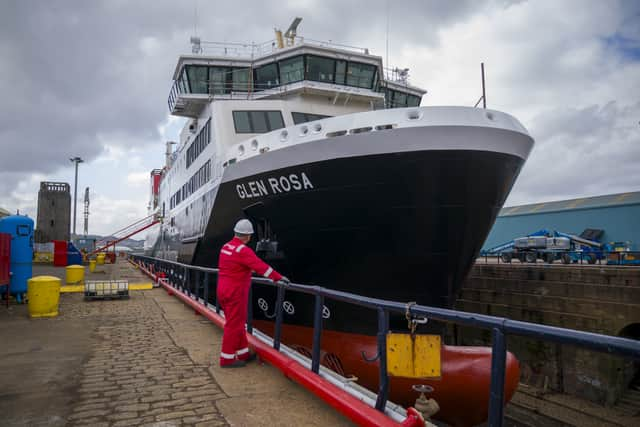
It is becoming the ferry equivalent of the Sagrada Família – the unfinished cathedral in Barcelona. Glen Rosa may not have been under construction for quite so long, but it’s beginning to feel that way.
However, the seemingly never-ending saga is now the most predictable element among the unexpected twists and turns in the wider story of the CalMac fleet. Chronicling it is demanding more and more of my attention, to the extent that I joked with a former senior Scottish government minister that it was keeping me in a job. They said likewise.
However, while Glen Rosa remains easy to locate – it’s still being working on at the Inchgreen dock in Greenock – tracking some of CalMac’s other vessels feels increasingly like a modern-day Spot the Ball competition.

There are the ferries undergoing prolonged overhauls, some as far away as Merseyside, propelling others onto network-wide merry-go-rounds to plug the gap. Then there are the vessels built for one route but finding themselves somewhere else entirely – or not sailing at all.
Even more perplexingly, some new ferries are not going where they were intended because islanders don’t want them. Finally, and perhaps most unpredictable of all, some of CalMac’s oldest and newest ships are poised to make long voyages to find their destinies.
While most of us don’t give a second thought to the whereabouts of individual ScotRail trains, Lothian buses or Loganair planes, ferries perhaps attract a special type of fascination. There are, of course, far fewer of them, but they also have much greater popular significance because, for many islands, they are the only way on and off.
Regular passengers and crew can get very attached to the vessels on their route, as was reflected by the many nostalgic reminiscences triggered by the decommissioning of Hebridean Isles in 2024 after nearly 40 years’ service.
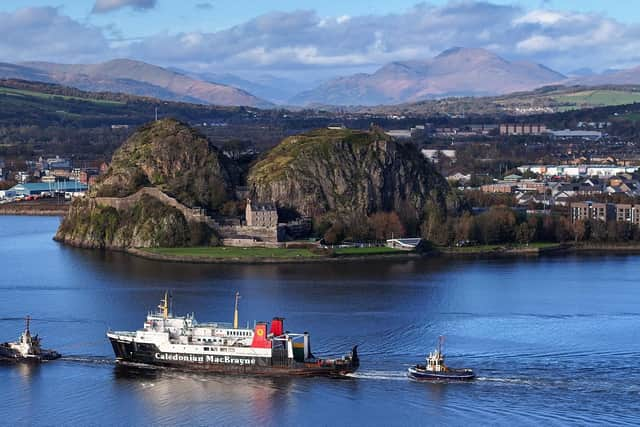
So I’m not surprised by the keen interest shown in my stories about each vessel’s latest escapade. But while I’ve always regarded the railways as a parallel universe for its strangeness, the world of CalMac beats it for unforeseeability.
Who would have predicted that shortly after Glen Sannox entered service in 2025, more than six years late, it would suffer a crack in its hull from propeller vibration, be redeployed to the Western Isles from the main Arran route for which it was built, and then tied up in port as a standby vessel?
Those with particularly accurate crystal balls might perhaps have foretold a change to the initial deployment of CalMac’s newest ferry – which will not be going where it was intended either. That’s because, in contrast to the dismay of Arran islanders at Glen Sannox’s move north, Islay residents said no thanks to Loch Indaal – at least until it proves itself.
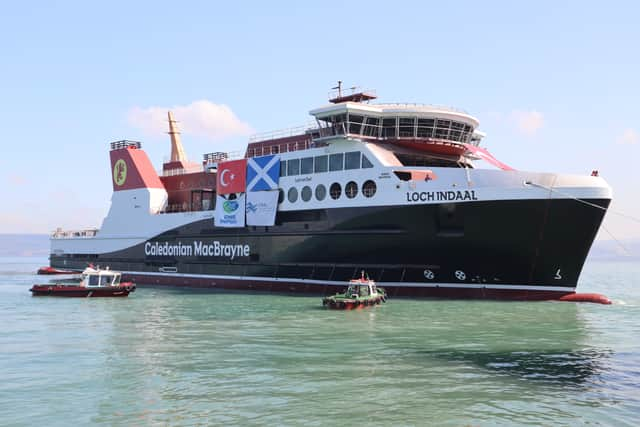
They want to keep their 15-year-old, smaller vessel Finlaggan, arguing that the new kid’s elder sister Isle of Islay hasn’t covered itself with glory due to a series of glitches, and that their existing ferry would be able to provide a fuller service.
But I suspect it would have taken a clairvoyant to have perceived what befell Isle of Islay as it sailed to Scotland in January after being completed in a Turkish shipyard. By the way, if there are any out there who specialise in transport, do get in touch.
The ferry arrived safely in Greenock the following month, but only after becoming stormbound multiple times in the Mediterranean, first in ports and then off Morocco, because, remarkably, that was deemed safer.
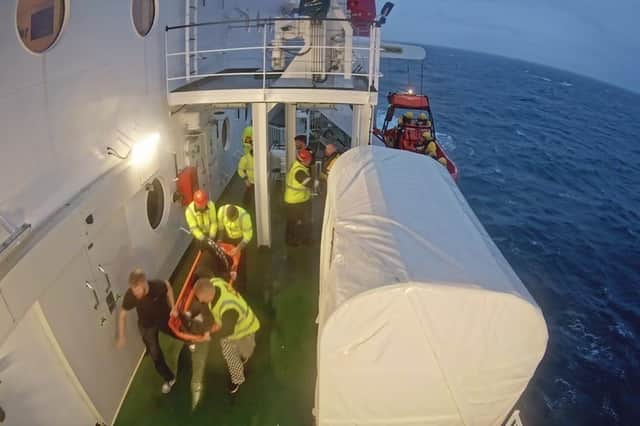
However, to cap it all, only the most on-the-ball seer would have known the crew would also rescue a suspected asylum seeker along the way.
Islay islanders’ apparent love for Finlaggan also reminded me how surprised I was when it entered service in 2011 to be told that some regarded the vessel as a bit fancy and overly gold-plated for their needs.
So it was with a wry smile that I read a letter in The Scotsman on Saturday from a man in South Uist – which is due to receive two similar ferries to Isle of Islay and Loch Indaal – with similar thoughts.
David Griffiths asked whether the two-hour crossings for which the ferries are earmarked warranted a “Titanic-esque staircase, honeycomb walls and adjustable tables, among many other clever, expensive and time-consuming construction details”.
I’ll be looking out for any passengers complaining they are too Spartan.
The other end of CalMac ferries’ life cycle provides further potential uncertainty. Unlike Hebridean Isles, which was scrapped for its valuable spare parts for other vessels of similar vintage still in service, we don’t yet know the fate of the next three to be retired.
It’s about the first time in ten years that the operator’s vessels are being considered for sale rather than the breaker’s yard, with the prospect of at least one of the three, the 31-year-old Isle of Lewis, finding a new life cruising the Mediterranean in the summertime, when conditions are altogether less challenging than Isle of Islay experienced last winter, let alone off the west coast of Scotland at any time of year.
The vessel was due to be retired from its Barra route next month, which may be put back, followed by 34-year-old Arran ferry Caledonian Isles in April and CalMac’s oldest large vessel, the 42-year-old Isle of Arran, which dots about the network, in August.
This could become a whole new volume in the ferry saga. Several of former CalMac vessels are still plying the seas, like ex-Clyde vessel Saturn, now Orion K, which has been based in Orkney, Greece and now Cameroon since being sold 11 years ago.
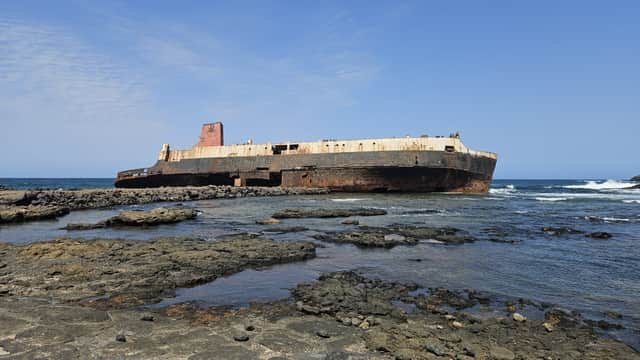
But let’s hope none have an inglorious end like that of Iona, renamed Pentalina B, which ran aground on rocks in Cape Verde in 2014, where it has become an unofficial tourist attraction.
Comments
Want to join the conversation? Please or to comment on this article.