
How Keir Starmer's appeasement of bully Donald Trump has been exposed as a huge blunder
As Keir Starmer prepares to welcome Donald Trump to the UK, he needs to learn from Canadian Prime Minister Mark Carney who became popular by standing up to the US President
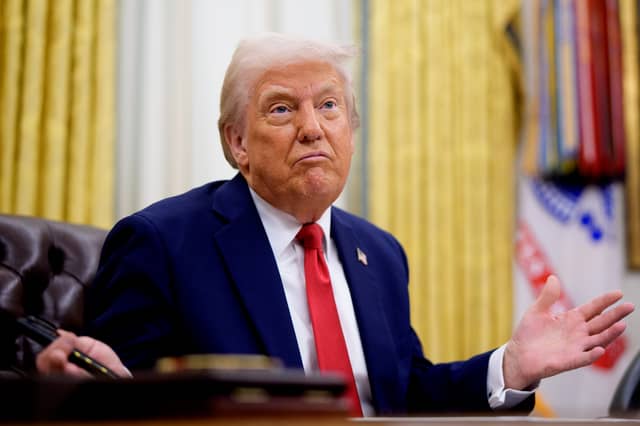

News of Donald Trump’s upcoming state visit to the United Kingdom was not well received in Canada. The invitation from King Charles, presented by Keir Starmer at the White House in February, came at a time when the country’s future as a sovereign state was being actively questioned by its southern neighbour.
This was not the first time it has had to contend with American aggression. It quickly learned its lesson. Mark Carney, the former Governor of the Bank of England, rode a wave of anti-Trump sentiment to win an improbable victory in Canada’s federal election in April.
His country has belatedly come to recognise the fundamental threat that the United States now poses to the liberal values and institutions which at one time both shared. Britain would do well to do the same.
As in Canada, Trump is deeply unpopular in Britain, where the number of people who view the United States as a threat to peace has soared during his time in office. But as the Canadian government has come to terms with the reality that it can no longer rely on the United States for security and prosperity, the Labour government is deluding itself into believing that it is better to placate Trump than endure his wrath, even if doing so requires their frequent and public humiliation. The foolishness of such an approach is now clear.
US an obstacle to peace in Ukraine and Gaza
Starmer’s charm offensive did not spare his country as Trump upended the global trade order earlier this year. A trade deal was quickly secured, but his government was bullied into making concessions, and much remains to be negotiated – an unwelcome reality for a country that has struggled with sluggish economic growth since the 2008 global financial crisis and has seen its politics transformed by constrained resources and diminished opportunities.
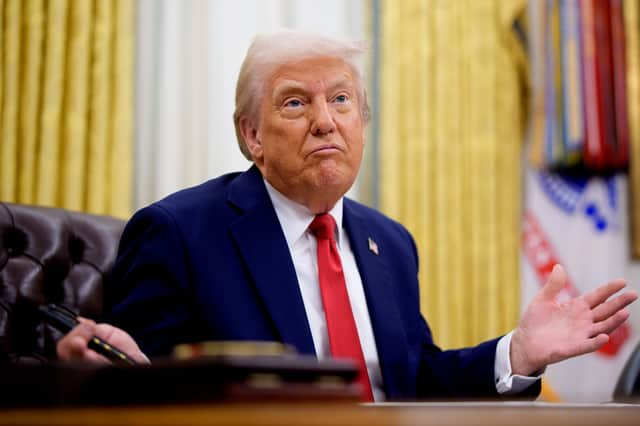
The Trump administration has also served as an obstacle to peace in Ukraine, where Starmer clings to the hope of American security guarantees that are unlikely to materialise, and in Gaza, where the Prime Minister’s aspirations for an end to violence and a lasting settlement are not matched in Washington.
The UK Government’s strategy suggests that it has still not yet come to grips with what it is up against. The Trumpian worldview is simple. There are no friends, no allies, and no shared values. There is a zero-sum competition that the United States must win, and the best way it can do so is by throwing around its considerable economic and military might.
This is a transactional style of foreign policy that seeks in vain to push back against American decline, one that despises any constraints on the privilege that comes with power, whether imposed by international law or democratic public opinion. Trump’s first term in office was both chaotic and destructive, but its very uniqueness allowed for the comforting thought that it might just be an aberration.
Global power vacuum
There can be no such illusions any longer. The Republican party is now the party of Trump, and has become openly hostile to liberal democracy, both at home and abroad. Waiting him out again is not an option. No country is now safe from the spasms of American politics.
Trump’s abdication of his country’s traditional role as the professed champion of the liberal order – no matter how self-serving such a claim often was – has left a power vacuum that no other state can fill on its own.
If liberal democracies are to defend the values and institutions that they have come to rely on, they must stand together and form a common front in the face of American hostility. However, so far they have been categorically unable to do so.
One by one, governments have capitulated to Trump’s demands, forgoing solidarity in the pursuit of their short-term, national self-interest. However, every surrender strengthens Trump and vindicates his worldview and approach to his country’s traditional allies. Appeasement is never the way to respond to a bully.
For Starmer, who has a keen interest in foreign policy and also a strong background in human rights law and who has seen his country search for a new place on the world stage since its departure from the European Union, championing the liberal order would seem like a natural fit.
His own flagging popularity – particularly in the face of a resurgent right-wing populism that has compelled his government to focus on defeating a homegrown brand of Trumpian politics – should provide him with an extra incentive. After all, Carney is not the only national leader who has been rewarded for refusing to bow to Trump.
Labour needs an inspiring story
On the UK’s place in the world, as on much else, the Labour government lacks a story to tell, one that connects its values to practical solutions to the country’s problems and inspires people to believe that a brighter future still lies ahead.
It has, as a consequence, earned a reputation for being excessively cautious and unable to deliver, as it lurches from one crisis to the next with little coherence and few indications that it stands for much of anything.
This is a reputation, one imagines, that Starmer would firmly contest. There is still time for his government to offer a robust defence of the values that he and his party claim to hold dear. And it can start by standing up to the United States.
Dr Graeme Young is a lecturer in social and public policy at the University of Glasgow
Comments
Want to join the conversation? Please or to comment on this article.