
Empty shelves? Why we should all worry about UK's 'woefully inadequate' food production – Philip Lymbery
The UK’s wasteful and import-dependant food system is exposed to a range of potential threats from climate change to geopolitical shocks


Most evenings, millions of us gather around a table. Some of us sit down to a family meal. Others eat alone, catching up on the news or making plans for tomorrow. We celebrate birthdays with food, mark traditions through food, comfort ourselves with food and express love through food. It is woven into the fabric of our lives so completely that we rarely stop to think about where it comes from.
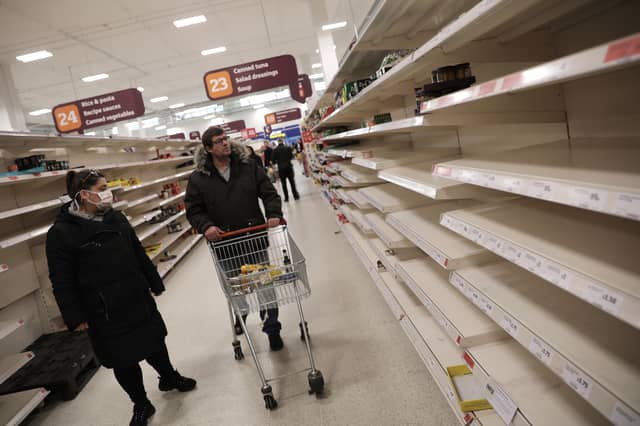
Yet perhaps we should. For generations, we have quietly assumed that food will always be there. That harvests will come. Supermarket shelves will always be stocked. Transport lorries will arrive. We may worry about the cost of food, but rarely its availability.
Increasingly, that confidence looks misplaced. In recent years, we have seen heatwaves hit our farmland with harvest-shrinking drought, crops washed away by floods, and global supply chains disrupted by conflict.
‘Defining challenges’ of climate change and nature loss
The UK government's own national security assessment recently warned that the degradation and collapse of ecosystems threatens national security and prosperity. Without significant increases in resilience, countries could struggle to maintain food security in an increasingly unstable world.
Speaking about the report at the United Nations’ General Assembly in New York, Foreign Secretary Ed Miliband said: “Climate change and nature loss have never been issues for climate and environment ministers alone. They are defining challenges for our citizens, our economies, our foreign policy and our national security.”
Food, it turns out, is not something we can take for granted. And if we want our children and grandchildren to enjoy the same sense of abundance we have known, the way we produce food must change.
At the heart of the challenge lies an uncomfortable reality. Industrialised agriculture is steadily eroding one of the most valuable assets any nation possesses: its soil. Lose soil and, sooner or later, you lose food.
READ MORE: Why we should worry about invisible air pollution from Scotland's farms revealed by new map
Environmentally unsustainable
This message was amplified by leading expert Professor Tim Lang and more than 180 others, including academics, farmers and food-system leaders, in a letter to the Prime Minister, calling for urgent action to strengthen national food security and resilience.
“The food system is exposed to shocks and threats from geopolitics, climate heating, ransomware, energy outages, software malfunction and disinformation. These shocks will fall upon a system that is highly wasteful, import-dependent, [and] environmentally unsustainable,” the letter said.
"Woefully inadequate" is how the letter describes national food production, noting that more than half of UK cropland feeds intensively farmed animals rather than people. The same is true across Europe and the US.
This matters because feeding grain to animals is an inefficient way of producing food. Most of the calories and protein contained in crops are lost in conversion. It’s ‘ghost’ food waste. At a time of growing concern about food security, we are devoting vast areas of productive land to feeding animals in systems that compete directly with people for food.
The benefits of grazing animals
It doesn’t have to be this way. Grazing animals convert grass, something humans cannot eat, into nourishing food. They can also help restore soil health and biodiversity when integrated into nature-friendly farming systems. The problem is not animals. It is the industrial model that has separated them from the land.
The question is no longer whether these risks exist, but whether we are taking them seriously enough. Doing so means looking honestly at the food system itself, including the way billions of farmed animals are raised.
Intensification in recent decades has placed huge pressure on land, water, biodiversity and the climate while causing immense suffering to farmed animals. A food system that fails to feed people first, harms animals, degrades nature and undermines long-term resilience is not fit for the future.
Food may not be there in the abundance we have come to expect unless we transform the way we produce, distribute and consume it. This should concern us all because food security ultimately depends on nature. Healthy soils, clean water, thriving wildlife and a stable climate are not optional extras. They are not just the foundations of good food production, but of life itself.
The good news
Scotland has already recognised the importance of joined-up food policy through its Good Food Nation Act, which provides a framework for food-related issues to be considered across a range of public policy objectives, including health, the environment and animal welfare.
That is an important step forward. But frameworks and legislation alone are not enough. The challenge now across many nations is to translate ambition into action by building food systems that are resilient, healthy, sustainable and humane.
The good news is that many of the solutions are well within our reach and are already being pursued by a growing number of farmers. They know how to grow food in ways that work with nature, reduce animal suffering and build resilience into our farming systems. They know that healthier diets and healthier ecosystems go hand in hand.
Nature-friendly farming using organic and regenerative ways of producing food are inherently conducive to high animal welfare. As well as delivering healthier food today, they conserve the means for producing food tomorrow.
World Food Day – organised by the UN every October – reminds us that the future of food is still ours to shape. If we are serious about nourishing tomorrow, we must build a food system that feeds people first, works with nature rather than against it, and treats animals with compassion. In so doing, we create the foundations for a food-rich future for our children.
Philip Lymbery is chief executive of Compassion in World Farming, president of EuroGroup for Animals and a UN Food Systems Advisory Board member. His latest book is Sixty Harvests Left: How to Reach a Nature-Friendly Future. He is on X/Twitter @philip_ciwf
Comments
Want to join the conversation? Please or to comment on this article.